How to Unclog a Sink That Won't Drain: A Practical Guide
If your sink won’t drain, this urgent, practical guide from Unclog Drain walks homeowners through common causes, safe fixes, and when to call a pro. Learn step-by-step methods to restore drainage fast and prevent future clogs.


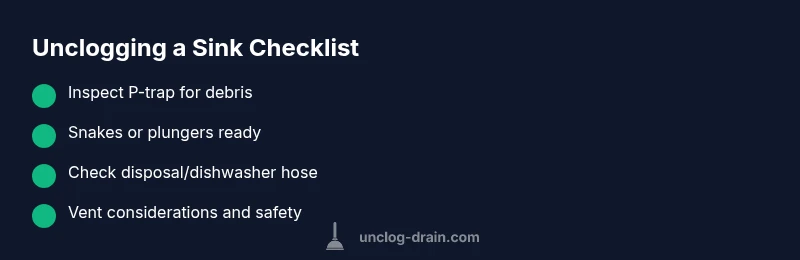
The most likely cause of a sink that won’t drain is a clog in the P-trap or drain line, often from hair, soap, or food debris. Start by removing and cleaning the P-trap, then plunge or use a drain snake to clear the line. If that doesn’t work, check the dishwasher hose and venting, and call a professional for main sewer issues.
Common Causes of a Sink That Won't Drain
A kitchen sink that won’t drain is usually the result of a clog forming in the trap or near the drain pathway. Hair, soap scum, grease, and food particles can accumulate and create a stubborn blockage over time. In homes with a garbage disposal, dissolved scraps and small food bits can back up, especially if the disposal is not run with plenty of running water. If the sink shares a vent with other fixtures, a blocked vent can also make drainage sluggish. The Unclog Drain team notes that many residential clogs originate in the trap or immediate drain area, so focusing on these components first often yields the quickest fix. When you say “my sink won t drain,” remember that simple, methodical checks can save you a call to a plumber.
How to phrase the problem for quick triage:
- Is the water draining from other fixtures slowly or not at all?
- Do you hear gurgling noises after starting the faucet?
- Does the water back up when you run the disposal or dishwasher?
Quick Diagnostic Checks You Can Do Now
Start with the simplest checks before disassembling pipes. Empty the sink and place a bucket beneath the trap area. Look for standing water and check whether the problem is isolated to one basin or affects other fixtures. Remove the trap carefully, visually inspect for hair, soap scum, or food debris, and rinse the components before reassembling. If the water drains after cleaning the trap, you’ve likely solved the issue. If not, continue with a plunger or a drain snake. Check the dishwasher discharge hose for kinks or improper connections, and inspect the disposal inlet for blockages. Finally, consider whether venting might be blocked, especially if other fixtures gurgle. Throughout this process, take note of what you find so you can explain the issue clearly to a professional if needed.
Step-by-Step Fix: P-Trap Cleaning (Easy First)
The P-trap is designed to catch debris before it travels further down the line. To clean it:
- Place a bucket under the trap, then loosen the nuts with adjustable pliers and carefully remove the trap barrel.
- Inspect for hair, mineral buildup, and food particles. Scrape and rinse the parts with warm water and a mild soap.
- Reattach the trap securely, ensuring the washers are properly seated to prevent leaks.
- Run hot water for several minutes to flush any remaining debris from the drain line. Pro tip: reassemble the trap over the bucket to prevent a spill and verify no leaks after reassembly.
Plunging and Snaking the Drain
If removing the P-trap doesn’t clear the clog, move to plunging and/or snaking the drain. Use a sink plunger with a loose-fit cup and ample water to form a seal; plunge firmly and evenly for several cycles, then rinse with hot water. If plunging fails, a hand-crank drain snake can reach further into the pipe to break up the clog. Insert the snake slowly, rotate to catch the obstruction, and pull back debris as you advance.
Dishwasher Hose, Disposal, and Vent Check
Blockages may form where the dishwasher discharge hose connects or in the garbage disposal inlet. Detach the hose from the disposal or sink fitting (with power off) and inspect for debris. Reconnect securely and run the dishwasher briefly to see if draining improves. If the sink shares a vent, a blocked vent can cause slow drainage or gurgling; a professional may be required to clear it safely.
Safety First: PPE and Safe Handling
Always wear gloves and eye protection when dealing with dirty pipes. Never mix chemical drain cleaners with other cleaners, and avoid venting fumes in enclosed spaces. If a pipe is corroded, joint is leaking, or you suspect a sewage backup, stop and call a licensed plumber. These situations can pose health risks and require professional equipment.
When to Avoid Chemical Cleaners and How to Prevent Future Clogs
Chemical cleaners can damage pipes and traps, especially in older homes. Use them sparingly, and only as a last resort when following the product instructions. For prevention, establish a routine: rinse with hot water after cooking, wipe grease from drains, avoid pouring oil down the sink, and periodically flush with a baking-soda-and-hot-water combination. Regular maintenance helps keep drains clear longer.
Maintenance Tips to Prevent Future Clogs
Create a simple prevention routine:
- Rinse drains with hot water weekly to dissolve soap scum and oils
- Use a natural enzyme-based cleaner periodically to break down organic buildup
- Clean the P-trap during every major kitchen cleanup
- Inspect the disposal and hose connections for signs of wear or leaks
- Be mindful of what goes down the drain to avoid introducing grease and fibrous materials
When to Call a Pro: Signs the Problem Is Bigger
If you’ve tried the steps above and the sink still won’t drain, you could be facing deeper issues like a main sewer line blockage, a severely damaged pipe, or a venting problem. Persistent backups or sewage odors warrant professional assessment. Early intervention can prevent bigger, more expensive problems later. The Unclog Drain team recommends consulting a licensed plumber when DIY efforts fail or you notice a recurring pattern of clogs across fixtures.
Steps
Estimated time: 60-90 minutes
- 1
Prepare and safety-check the area
Clear the area under the sink, place a bucket, and turn off any power to appliances connected to the sink. Put on gloves and goggles. Ensure you have all needed tools within reach before you start.
Tip: Always strain for safety first; power off if you have an under-sink disposal. - 2
Disassemble and clean the P-trap
Place the bucket under the trap, loosen the slip nuts, and remove the trap. Clean out hair and gunk with a brush, rinse, and inspect washers. Reassemble firmly and test with water.
Tip: Keep trap screws aligned; over-tightening can crack the plastic. - 3
Plunge or snake the drain
If the trap is clean but water still won’t flow, use a plunger or drain snake to clear deeper clogs. For a snake, insert, twist to grab debris, and pull out slowly.
Tip: Maintain a steady hand and avoid forcing the snake; it can damage pipes. - 4
Check the disposal and dishwasher hose
Disconnect the dishwasher hose and inspect for kinks or clogging. If you have a garbage disposal, run it with plenty of water and listen for changes in drainage.
Tip: Never run power tools near water; verify outlets are off before inspecting. - 5
Test the drain and vent considerations
Run water and observe drainage rate. If you hear gurgling or if other fixtures are affected, venting may be the culprit and may require a professional check.
Tip: Vent issues can be tricky; a licensed pro has the proper equipment. - 6
Decide on next steps
If the sink drains after these steps, you’ve solved the issue. If not, consider calling a plumber for deeper inspection of the main line or vent system.
Tip: Document what you tried; it helps the pro diagnose faster.
Diagnosis: Sink drains slowly or not at all
Possible Causes
- highClog in P-trap or immediate drain
- mediumBlockage beyond trap (drain line or disposal area)
- lowVenting issue causing slow drainage
- lowMain sewer line backup or heavy buildup
Fixes
- easyRemove and clean the P-trap
- mediumUse a drain snake or manual auger to clear the line
- easyInspect and clean the dishwasher hose and disposal inlet
- hardCheck venting or call a professional for main line issues
Common Questions
What should I do first when my sink won’t drain?
Begin by checking and cleaning the P-trap. If water still won’t drain, move to plunging or snaking the drain, then inspect the dishwasher hose and disposal inlet.
First, check the P-trap. If that doesn’t fix it, try plunging or snaking the drain and check the dishwasher hose.
Can I use chemical drain cleaners for a sink clog?
Chemical cleaners can damage pipes, especially in older homes. If you choose to use them, follow the label exactly and avoid mixing products.
Chemical cleaners can harm pipes; use them only as instructed and avoid mixing with other cleaners.
Why does water drain from other fixtures but not the sink?
That often points to a localized clog in the sink’s piping or a partial venting issue. It’s less likely to be a main sewer problem unless multiple fixtures are affected.
If other fixtures drain fine, the sink’s line is usually blocked or venting is affected.
Is it safe to plunge a kitchen sink?
Yes, but use a sink-specific plunger and ensure a good seal. Plunge steadily to avoid splashing and move debris toward the trap.
Plunging can be effective; use a proper sink plunger and steady pressure.
When should I call a plumber?
If you’ve tried the basic fixes and the sink still won’t drain, or you suspect a main sewer or vent problem, call a licensed plumber.
If this keeps happening after trying the basic steps, it’s time to call a pro.
How can I prevent future clogs?
Avoid pouring grease or oily liquids down the drain, run hot water regularly, and clean the P-trap as part of routine maintenance.
Prevent clogs by being mindful of what goes down the drain and doing periodic maintenance.
Key Points
- Start with the P-trap; it’s the most likely source of a clog.
- Use a plunger or snake only after trapping is clean.
- Check dishwasher hose and disposal connection for blockages.
- Vent issues require professional help; don’t force a main sewer repair.
- Prevention matters: hot water flushes and mindful disposal reduce recurring clogs.