Bathroom Sink Not Draining? A Practical Troubleshooting Guide
When your bathroom sink not draining, this urgent, practical guide from Unclog Drain walks you through fast fixes, safe tools, and step-by-step troubleshooting to restore drainage fast. Learn common causes, safety tips, and prevention to avoid future clogs.


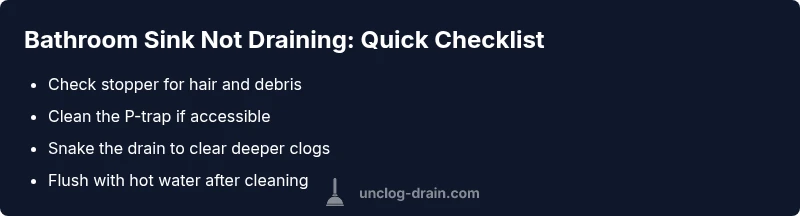
Most bathroom sink not draining is usually a clog in the drain or P-trap from hair and soap scum. Start with the easiest fixes: clean the stopper, then plunge or use a drain snake to clear the line. If slow drainage continues, remove and clean the P-trap, then reassemble and test.
Understanding the problem when a bathroom sink not draining
Water pooling in the basin or a sink that won’t drain normally is a signal that something is obstructing flow. In many homes, the issue starts with everyday hair, soap scum, and mineral buildup near the drain. The phrase bathroom sink not draining is almost always tied to a blockage that reduces flow or stops it altogether. According to Unclog Drain, most bathroom sink not draining problems begin with a simple blockage at or near thetrap, even before professional help is considered. By recognizing the pattern early, you can stop a minor issue from becoming a bigger, messier problem.
Common culprits behind bathroom sink not draining
Hair and soap scum are the leading culprits that clog bathroom sink drains and traps over time. Fibrous hair tangled with soap creates a sticky, resistant layer that slowly narrows the passage. Mineral deposits from hard water can also contribute, especially if you have a history of mineral buildup. A poorly sealed or cracked P-trap can leak and trap debris, increasing the chance of a clog. In some homes, a venting issue in the plumbing system can manifest as slow drainage, particularly if multiple fixtures drain at once. When you see the phrase bathroom sink not draining, prioritize inspecting the trap and stopper because these are the most common choke points. Unclog Drain’s analysis shows that quick attention to the stopper and trap resolves the majority of routine clogs.
Essential safety gear and tool kit for bathroom sink not draining fixes
Before you start, wear gloves and eye protection to guard against splashes. Have a bucket or towel ready to catch water and debris. Basic tools include a screwdriver (to access the stopper), adjustable pliers, a plunger, a hand auger or drain snake, and a small wire brush or old toothbrush for stopper-cleaning. For stubborn clogs, you may need a P-trap wrench to loosen the trap and a container to collect removed water. Keeping these items handy reduces downtime when you’re dealing with bathroom sink not draining.
Diagnostic flow: quick checks for bathroom sink not draining
Start with the simplest checks. Is the stopper free of hair and soap scum? If removing the stopper improves drainage, you’ve likely cleared the obstruction at the top. If not, plunge the drain to see if you can dislodge the clog. If water still drains slowly, move to inspect the P-trap for blockages. A partially clogged P-trap is a common reason for bathroom sink not draining and is often accessible without specialized tools. Finally, if the sink remains slow or blocked, consider using a drain snake to access deeper clogs. If you discover a vent issue or a cracked pipe, this is a sign you should call a professional. These checks form the core of diagnosing bathroom sink not draining issues quickly and safely.
Immediate fixes you can try right now (no professional required)
First, clear the stopper and any visible hair or debris from the drain opening. Reinstall and run hot water to help clear minor buildup. If the sink still won’t drain, use a plunger with steady, firm pressure to try to loosen the clog, ensuring the sink is filled with a small amount of water for effectiveness. For slower drains, a baking soda and hot water combo can provide a gentle clean, but avoid chemical drain cleaners for bathroom sinks as they can damage seals. If bathroom sink not draining persists, move to disassembling the P-trap for a thorough cleaning. Remember: never force components; turn and loosen slowly to prevent pipe damage. These steps cover many bathroom sink not draining scenarios and can often restore normal drainage quickly.
When to pull the P-trap and clean it safely
The P-trap is the curved pipe under the sink designed to hold a water seal and prevent sewer gases. If bathroom sink not draining persists after the above fixes, place a bucket beneath the trap, loosen the slip nuts, and carefully remove the trap. Clean out all debris with a bottle brush or old rag, check for cracks, and reassemble with new plumber’s tape on the threads if needed. Reconnect and run hot water to check for leaks. If you notice persistent slow drainage after cleaning the P-trap, the problem may lie deeper in the drain line or venting, warranting further investigation or professional help.
Using a drain snake (auger) for stubborn clogs in bathroom sink not draining
For deeper clogs, a hand or drill-powered drain snake can reach farther into the drain line. Insert the snake into the drain, rotate clockwise to grab the clog, and gently push through while you pull back out to retrieve debris. Be patient and avoid forcing the snake, which can damage pipes. After removing the clog, run hot water or a mild cleaning solution through the line to flush residual material. If the clog remains after using a snake, a more extensive intervention may be required, and you should consider contacting a plumber. These steps are critical when dealing with bathroom sink not draining that won’t yield to simple fixes.
Maintenance and prevention to stop bathroom sink not draining in the future
Install a fine-mesh stopper screen to catch hair and prevent buildup. Regularly clean the stopper and run hot water weekly to dissolve slow-moving residues. Periodically inspect the P-trap for leaks and corrosion, and keep a clean-out tool handy for quick routine maintenance. If you notice slow drainage recurring across multiple fixtures, check for mineral buildup or consider a professional camera inspection to rule out deeper sewer-line issues. Maintaining your bathroom sink not draining health can save you time and money.
Next steps and when to contact a professional for bathroom sink not draining
If you have followed the steps for bathroom sink not draining and still face repeated slow drainage or complete blockage, it’s time to call a licensed plumber. Complex clogs, broken pipes, or venting problems require professional equipment and expertise. The Unclog Drain team recommends seeking help when the problem extends beyond basic DIY fixes or involves recurring incidents. A pro can perform a thorough diagnosis, including inspecting the drain line, P-trap, and vent stack, and provide a safe, lasting solution.
Steps
Estimated time: 60-90 minutes
- 1
Prepare and safety-check
Put on gloves and safety glasses. Place a bucket under the P-trap area and gather tools. Ensure the area is well-ventilated and you have a plan for clean-up before you begin.
Tip: Keep a record of any part removed to aid reassembly. - 2
Remove and inspect the stopper
Take out the stopper assembly and inspect for hair, soap scum, or foreign objects. Clear visible debris and test the drain flow after reassembly.
Tip: Take a photo of stopper orientation for reference. - 3
Plunge the drain
Seal the overflow plate with a damp cloth if present. Fill the sink with a small amount of water and plunge with consistent pressure to dislodge the clog.
Tip: Use long, steady strokes and avoid tearing the plunger seal. - 4
Disassemble and clean the P-trap
Place a bucket under the trap, loosen the slip nuts, and remove the trap. Clean all debris, inspect for damage, and reassemble with new sealant or plumber’s tape as needed.
Tip: Check for corrosion or cracks and replace if necessary. - 5
Snake the drain
Insert the auger into the drain, rotate clockwise, and push gently to reach deeper clogs. Retrieve debris as you pull back.
Tip: Do not force the auger; gentle pressure yields better results. - 6
Flush and test
Run hot water through the system to clear residue and recheck drainage. If water still stands, consider repeating the snake or moving to deeper pipe checks.
Tip: Test with both hot and cold water to spot leaks. - 7
Final checks and clean-up
Reassemble all parts securely, wipe down surfaces, and monitor for leaks or smells. Document maintenance for future reference.
Tip: Keep your maintenance log nearby for quick reference.
Diagnosis: Bathroom sink not draining or water standing in the basin
Possible Causes
- highHair, soap scum, and mineral buildup in the drain
- mediumClog in the P-trap or drain elbow
- lowVent stack blockage causing poor drainage
Fixes
- easyClean the stopper and remove hair/debris from the drain opening
- easyUse a plunger to dislodge the clog at the trap or drain
- mediumDisassemble and clean the P-trap; check for cracks and reseal
- mediumSnake the drain to clear deeper clogs; push and twist to grab the clog
- hardCall a licensed plumber if the clog persists beyond basic methods
Common Questions
What is the most common cause of a bathroom sink not draining?
Hair, soap scum, and mineral buildup are the leading culprits. Start with stopper cleaning and then inspect the trap. If the clog persists, move to deeper methods like snaking or P-trap cleaning.
Hair and soap scum are the usual culprits. Start with cleaning the stopper and then check the trap; if needed, snake the drain.
Can I fix a bathroom sink not draining without removing the P-trap?
Often yes. Clean the stopper, plunge the drain, and use a snake above the trap. Only remove the P-trap if you must access deeper debris.
Yes, many issues can be solved without removing the P-trap by cleaning the stopper and using a snake above the trap.
Is it safe to use chemical drain cleaners in a bathroom sink?
Chemical cleaners are not recommended for bathroom sinks as they can damage seals and pipes. Mechanical methods like plunging or snaking are safer and more effective for most bathroom sinks not draining.
Chemicals can harm your pipes and seals, so mechanical methods are safer for bathroom sinks.
When should I call a plumber for a bathroom sink not draining?
If the clog persists after using a snake, if there are leaks from the P-trap, or if multiple fixtures behave abnormally, it’s time to call a plumber for a thorough diagnosis.
Call a plumber if the clog sticks around after DIY fixes or you notice leaks or venting problems.
How can I prevent future clogs in a bathroom sink?
Install a fine-mesh stopper screen, clean the stopper regularly, and run hot water occasionally to dissolve buildup. Periodic P-trap checks help catch issues early.
Use a screen, clean the stopper often, and flush with hot water to prevent clogs.
What tools are essential for DIY bathroom sink unclogging?
Keep a plunger, adjustable wrench, P-trap wrench, a drain snake or auger, a bucket, and protective gloves on hand for quick bathroom sink not draining fixes.
You’ll want a plunger, snake, bucket, and gloves for DIY unclogging.
Watch Video
Key Points
- Start with simple checks and escalate as needed.
- Hair and soap scum are common bathroom sink not draining culprits.
- Avoid chemical cleaners; opt for mechanical methods first.
- Disassemble and clean the P-trap if accessible and safe.
- Call a plumber if the issue persists beyond basic DIY fixes.