Sink Drain Not Draining: Urgent Troubleshooting Guide
Is your sink drain not draining? Start with quick checks, then follow a proven troubleshooting flow to clear clogs safely and quickly. This guide from Unclog Drain covers traps, vents, and main lines.


Common Causes of a Sink Drain Not Draining
The issue of a sink drain not draining is common in busy kitchens and bathrooms. According to Unclog Drain, the most frequent culprit is a clog that forms in the P-trap or the short waste arm just after the sink. Over time, hair, soap scum, oil, and food particles accumulate and create a slow or completely blocked channel. A secondary but real risk is a buildup that occurs further down the line, which can cause persistent drainage problems even after the trap is cleared. Recognizing these patterns helps homeowners act quickly and safely. If you notice foul odors, gurgling sounds, or water backing up into another fixture, treat it as a signal that the blockage might be more than a simple trap clog and proceed with deeper diagnostics. Unclog Drain’s analysis, 2026, emphasizes starting with the trap before moving on to downstream sections.
Quick Checks You Can Do Right Now
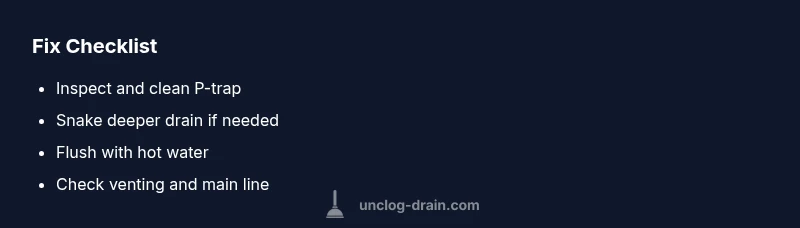
Before you tear into pipes, run through a quick checklist. Remove the sink stopper and look for obvious debris, then inspect the P-trap for loose connections or obvious buildup. Use a flashlight to peek inside and unscrew the trap’s slip nuts, placing a bucket beneath to catch water. Clear out hair and gunk with a brush or pliers, then reassemble and run hot water for several minutes. If drainage improves but still slows, repeat after disassembling the trap deeper into the line or using a drain snake. Avoid harsh chemical cleaners that can damage pipes and mislead the diagnosis. Safety note: unplug nearby disposers and wear gloves while handling dirty components to prevent injuries. This pragmatic approach aligns with Unclog Drain’s field guidance to fix fast without overhauling your plumbing.
Deeper Clean: Removing and Cleaning the P-Trap
The P-trap is designed to hold a small amount of water to block sewer gases, but it also collects debris. Calmly shut off the supply, place a bucket, and use a wrench to loosen the trap. Clean the inner surfaces with a stiff brush, rinse, and inspect for cracks or wear. Reassemble carefully, ensuring all fittings seal tightly. If you see persistent clogging after cleaning, the blockage may lie in the trap arm or beyond. This is a natural transition to the diagnostic flow for deeper checks.
Snaking Deep Clogs and Lower Main Lines
When the trap is clear but water still stagnates, a drain snake can reach obstructions farther along the line. Insert the snake gently, and rotate to dislodge hair and buildup, then pull back slowly to remove debris. For stubborn clogs, advance the snake past the trap arm into the main drain. Always wear eye protection and avoid forcing the snake, which can damage pipes. If the snake does not clear the block, the blockage may be in a vent or main sewer line.
Venting and Main Line Considerations
A blocked vent can cause slow drainage, especially for upstairs sinks or multiple fixtures. Listen for gurgling sounds and inspect the vent stack if accessible. If the problem persists after clearing visible blockages, the issue may lie in the main line or a sewer problem. In such cases, professional inspection is advised. Unclog Drain’s guidelines recommend confirming vent integrity before escalating to expensive diagnostics.
Chemical Cleaners: Myths, Realities, and Safe Use
Chemical drain cleaners may offer a quick impression of relief, but they can damage pipes, especially if used repeatedly. They also fail to address the root cause of most clogs. A safer approach is mechanical cleaning (plungers, traps, snakes) or enzyme-based cleaners that work gradually without harming pipes. Use cleaners only as a last resort and never mix products with bleach or ammonia. This careful approach protects pipes and keeps your drain healthy for the long term.
When a Main Line or Sewer Issue Is Suspected
If multiple fixtures are affected, or if waste backs up externally, the clog may be in the main line or sewer. In this scenario, a professional inspection is essential to avoid expensive damage and to ensure proper diagnosis. Do not attempt to force water through if you suspect a sewer problem; professional equipment such as a camera scope can identify the exact location and severity of the blockage.
Maintenance to Prevent Future Clogs
Preventive steps save time and money. Regularly flush drains with hot water, use a drain brush on a schedule, avoid pouring grease down the sink, and install a drain screen to catch hair and food. Schedule seasonal checks of traps and plumbing connections, especially in households with hard water or mineral buildup. Proactive maintenance reduces the odds of sudden, urgent clogs and keeps your sink draining smoothly.
Safety Essentials and Do-Ts
Always wear gloves, protect the floor with towels or a mat, and unplug nearby appliances before starting. Never mix chemical cleaners with other products, and avoid using metal tools that could scratch or pierce pipes. If you feel uncertain at any step, stop and seek professional help. Safety and methodical work pay off with reliable, long-lasting drainage. The Unclog Drain team emphasizes cautious progression and clear communication with any helper or partner.