Double Sink Not Draining: No Clog Troubleshooting Guide
Urgent DIY guide to fix a double sink that won’t drain when there’s no visible clog. Quick checks, diagnostic flow, safe fixes, and prevention tips for homeowners.


The most likely culprits are a partial main drain blockage or venting issues. Start with safety checks, clear the traps, and try a drain snake before inspecting the vent. If you have a disposal, reset or disable it briefly while you work. Avoid chemical cleaners that can damage pipes. This quick approach buys time for accurate diagnosis.
Understanding the Symptom: What a double sink not draining means
When your double sink isn’t draining, homeowners often panic. The phrase double sink not draining no clog can feel confusing, because water seems to disappear slowly or back up in both basins even though you can't see a solid blockage in the trap. In reality, this symptom usually points to issues that lie beyond a simple hair or food debris jam. Common culprits are partial blockages deeper in the main drain line, shared piping, or venting problems that prevent air from escaping as water flows. Starting with the simplest checks—the traps under each basin and the disposer connection, if you have one—often reveals the root cause. If the water remains stubbornly in the pipe after you clear visible debris, it's time to broaden the diagnosis to the main line and ventilation path. This approach mirrors best-practice troubleshooting without jumping to conclusions.
Quick Checks You Can Do Right Now
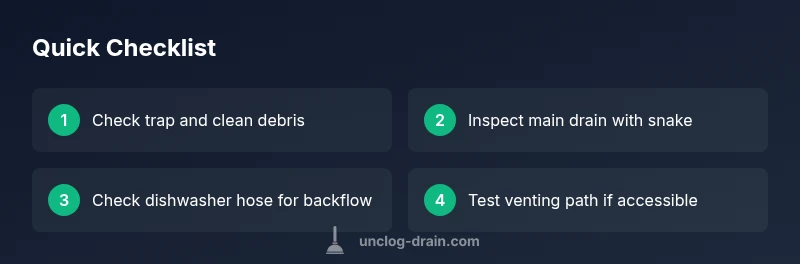
Before you reach for tools, ensure safety: turn off any disposal, unplug power to the unit if applicable, and protect the floor with towels or a liner. Check both traps (P-traps) under the sinks for obvious debris and ensure joints are tight. If water sits in the p-trap, clear it and reassemble carefully. Test each side by running hot water and watching flow. If water still stands, probe the drain line with a hand auger from both basins. Avoid pouring chemical drain cleaners into a double sink with metal traps; they rarely fix the real issue and can damage seals. This phase is about isolating whether the problem is local (trap, tailpiece) or more systemic (main line or vent).
Hidden Causes: Beyond Visible Clogs
Even when you don't see a clog in the trap, slow drainage can be caused by issues deeper in the drain network. A partial blockage in the main drain line or a shared pipe segment can throttle flow from both basins. Venting problems, such as a blocked vent stack, can create a vacuum effect that slows drainage or causes gurgling sounds. Misconnected dishwasher drains or a dirty trap seal can also backflow into the sink, mimicking a clog. Understanding these hidden causes helps you choose the right tool (trap cleaner vs. main-line snake) and reduces the urge to dump harsh chemicals.
Diagnostic Mindset: Symptom → Diagnosis → Solution
Approach drainage issues with a logical flow: observe the symptom, hypothesize potential causes, and test each hypothesis with simple steps. If traps are clear and the main line is open, the issue is likely venting or dishwasher-backflow. If traps are dirty or poorly sealed, re-seal and retest. This mindset keeps you from guessing and guides you toward the most effective remedy. Remember: start simple, then move to deeper investigations only as needed. This steady, methodical approach aligns with Unclog Drain's troubleshooting methodology.
Step-by-Step Fixes for Common Scenarios
The following fixes cover the most common root causes. Begin with the easiest and safest option first and progress to more involved tasks only if necessary. After each fix, run both basins to confirm drainage. If the problem persists, move to the next step.
Safety, Warnings, and When to Call a Pro
Drain work can involve sharp tools, contaminated water, and chemical exposure. Always wear protective gloves and eye protection, and keep children away from the workspace. Do not force a tool into piping; if you sense resistance, stop and reassess. If you encounter venting challenges, rooftop access, or suspect a sewer-line issue, it’s wise to contact a licensed plumber. Early professional input can prevent accidental damage and expensive repairs.
Prevention and Maintenance for a Smooth-Running Double Sink
Prevention is simpler than repair. Regularly inspect and clean traps, keep hoses clear of debris, and avoid pouring cooking fats or grease down the drain. Periodically flush lines with hot water, and consider a mild baking-soda-and-vinegar treatment as a preventive measure (followed by plenty of hot water). By staying proactive, you reduce the risk of future slow drainage and backups in a double sink setup.
Steps
Estimated time: 60-90 minutes
- 1
Prepare and safety check
Put on gloves and eye protection. Clear the area, place a bucket under the traps, and disconnect any disposal if present. Ensure power to the disposal is off before handling it.
Tip: Keep towels nearby for spills and have a flashlight ready to inspect tight spaces. - 2
Isolate and inspect traps
Place a bucket beneath each P-trap, loosen the slip nuts, and remove the traps. Clean out any debris, then reinstall ensuring tight seals without overtightening.
Tip: Take photos during disassembly to aid reassembly. - 3
Snake the drains
Insert a drain snake into the tailpieces and main line from both basins. Run the snake slowly, pushing and rotating to break up debris. Retrieve and clean the snake, then test drainage.
Tip: Work in small increments to avoid pushing debris further down. - 4
Check the dishwasher connection
Inspect the dishwasher drain hose for kinks or a loose connection. Re-route if necessary and ensure it enters the disposal or tailpiece above the trap.
Tip: Never connect the hose below the trap level. - 5
Evaluate venting needs
If gurgling or slow drainage persists, the vent may be blocked. Inspect accessible vents and clear any blockage. If rooftop work is required, call a pro.
Tip: Vent work can be hazardous; assess safety and go no higher than your comfort level. - 6
Test and reassemble
Run hot water through both basins to test drainage. Reassemble all parts tightly and check for leaks. If flow improves, you’ve likely solved the issue.
Tip: Document the changes and monitor discharge over the next few days.
Diagnosis: Water backs up or drains slowly from both basins with no visible trap clog.
Possible Causes
- highPartial blockage in the main drain line or shared drainage path
- mediumVentilation issue causing slow drainage or gurgling
- lowDishwasher drain hose misconnection or backflow into sink
- mediumDirty or mis-sealed P-traps causing poor flow
Fixes
- easyDisassemble and clean both P-traps; inspect joints for leaks
- mediumSnake the main drain line from both basins to clear partial blockages
- hardInspect vent path (rooftop or reachable vent); clear blockage or hire a pro
- easyCheck dishwasher drain hose routing and connection to prevent backflow
Common Questions
Why would a double sink drain slowly with no visible clog?
Slow drainage without a visible clog usually means a partial blockage deeper in the main drain, venting issues, or misconnected hoses. Work through traps, then the main line and venting in a methodical sequence.
Slow drainage with no visible clog usually points to the main drain, venting, or hose connections. Start by checking traps, then move outward.
Can venting affect a double sink drainage problem?
Yes. A blocked or improperly vented system can slow drainage and cause gurgling. Inspect accessible vents and plan for rooftop access if required.
A blocked vent can slow drainage and cause gurgling; check accessible vents or call a pro for rooftop work.
Is it safe to use chemical drain cleaners on a double sink?
Chemicals can damage metal traps and pipes and don’t fix venting or deep blockages. Mechanical methods and proper cleaning are safer and usually more effective.
Chemical cleaners can harm metal pipes and traps and often don’t fix the real issue.
When should I call a plumber for venting issues?
If vent work is needed beyond easy access or if drainage remains slow after basic fixes, a licensed plumber should assess the system.
If vent work is beyond your reach or problems persist, it’s time to call a plumber.
What’s the first step in troubleshooting a slow double sink drain?
Begin by inspecting and cleaning the P-trap under each basin, then proceed to the main drain if needed.
First, check the traps, then move to the main drain if needed.
How long does a DIY snake take to clear a partial blockage?
A partial blockage often clears after a few passes with the snake, but time varies with debris type and line length.
It can take a few passes with the snake; time varies with the blockage.
Watch Video
Key Points
- Start with traps, then main drain.
- If drains are still slow, check venting.
- Avoid chemical cleaners; use mechanical methods.
- Test both basins after fixes and maintain traps regularly.