Double Sink Clogged? Fast DIY Fixes That Work Now
Discover proven DIY steps to unclog a double sink fast. From troubleshooting quickly to tools, Unclog Drain guides homeowners to fix drains confidently today.


Most double sink clogs come from a blocked P-trap or shared drain line. Start with simple checks: clear the strainer, flush each basin with hot water, and use a plunger or a manual snake. If water still backs up in both basins, move to the trap and tailpiece, then call a pro if needed.
Why a double sink clogged happens
Water in both basins can back up when there's a common obstruction downstream or a trap that's blocked. According to Unclog Drain, a double sink clogged scenario most often stems from a blocked P-trap or a blockage in the drain line just beyond the tailpiece. When hair, grease, and food particles accumulate in the trap, they form a dense barrier that slows or stops water flow. In many homes, the double sink shares a single trap, so a clog on one side will eventually affect the other as the water has nowhere to go. Another frequent factor is a clogged disposal or a misaligned tailpiece creating a slight bend that hinders flow. Finally, root intrusion in older sewer lines can slow drainage across all fixtures, including the double sink. Understanding these dynamics helps you prioritize the right fix and avoid wasted effort. The goal is to remove the blockage safely and restore gravity-driven drainage, rather than relying on harsh chemicals or guesswork.
Common causes of a double sink clogged
The most frequent culpritsAre hair and soap scum accumulating in the P-trap, food waste wedged in the trap arm, or a misconnected/disconnected tailpiece after the sink. A second common cause is a clog in the downstream branch line that serves both basins, which means clearing only one basin won’t fully resolve the problem. If you have a garbage disposal, an obstructed disposal connection or jammed end can back up into both basins. In older homes, venting problems or a cracked pipe can also slow drainage, especially when multiple fixtures are used at once. Finally, a full sewer line, though less common, will present as persistent backups in the double sink and other downstairs drains. Identifying the exact location—P-trap, tailpiece, or main line—helps pick the right fix and avoid unnecessary disassembly.
Quick checks you can perform safely
Before disassembling anything, perform a few non-invasive checks:
- Inspect the strainer and remove visible debris from both basins.
- Run hot water down each basin for 20-30 seconds to loosen residue.
- Check for slow drainage after removing the immediate strainer; if only one basin drains slowly, the problem is likely within that side’s tailpiece or trap.
- Gently use a plunger on the blocked side, then switch to the other basin to test for flow.
- If you own a garbage disposal, reset and run water only while the disposal is off to assess the line. If these steps don’t move the clog, proceed to P-trap cleaning and snake work. Always wear gloves and eye protection.
How to use a plunger and snake in a double sink
A proper seal and technique are key:
- Start with stove-top style plunging: fill the basin halfway, cover the other basin with a damp cloth, and plunge firmly for 20-30 seconds.
- If no movement, switch to the other basin and repeat.
- For the snake, feed slowly and rotate clockwise to break the clog; pull out debris as you work.
- When you feel a release, run hot water to flush the line.
- If you still see backup, extend the snake into the branch line beyond the trap arm or consider cleaning the P-trap more thoroughly. Safety note: never attempt a snake longer than the trap arm without appropriate safety equipment and knowledge.
When to avoid DIY and call a pro
DIY fixes cover most common clogs, but some situations require a professional:
- Persistent backups after P-trap cleaning and snake use across both basins.
- Signs of a broken pipe, corroded fittings, or sewer line issues.
- Strong sewer odors or standing water near the plumbing.
- You lack the necessary tools or confidence to work under a sink safely. A licensed plumber can perform camera inspection to locate deep blockages and advise on pipe integrity changes.
Prevent future clogs with smart maintenance
Prevention saves time and money:
- Clean the P-trap every 6-12 months and remove hair and grease buildup.
- Use a basin to catch solids and avoid pouring cooking grease down the drain.
- Use a drain strainer to minimize food particles entering the line.
- Consider enzymatic cleaners as a maintenance aid (not as a primary cleaner).
- Schedule annual inspections if you’re in an older home with older piping.
Tools checklist and safety practices
- Pliers, adjustable wrench, bucket, old towels, goggles, gloves
- A 1/4- to 1/2-inch drain snake or hand auger
- A small bottle of non-caustic cleaner or natural options (baking soda and vinegar) for maintenance
- A flashlight to inspect inside the pipes
- Always turn off water and power to nearby appliances when working near the disposal or wiring; test for leaks after reassembly
Steps
Estimated time: 45-60 minutes
- 1
Prepare and safety-check
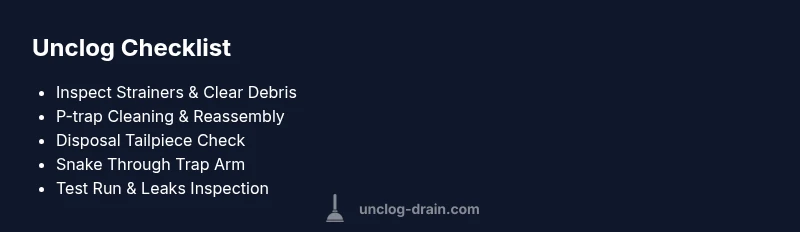
Gather tools, put on gloves and eye protection, and lay towels to catch spills. Turn off the water supply to avoid accidental leaks or sprays. Empty both basins.
Tip: Double-check the disposal switch is OFF before touching any disposal-related components. - 2
Inspect and remove the strainer
Remove the sink strainers from both basins and clear any visible gunk. Rinse strainer parts and set aside for cleaning.
Tip: Place debris into a trash bag to prevent re-clogging. - 3
Disassemble and clean the P-trap
Place a bucket underneath, unscrew the nuts, and carefully lower the P-trap. Clean out hair, grease, and mineral buildup and inspect for cracks.
Tip: Check the gasket; replace if damaged to prevent leaks. - 4
Flush tailpieces and branch connections
Reinstall the P-trap loosely, run water to check for leaks, and inspect the tailpieces. Clean any clogs found in the tailpiece or trap arm.
Tip: Use a flashlight to inspect hard-to-see bends for blockages. - 5
Use a snake or auger
Feed the snake into the trap arm or drain line beyond the trap. Rotate and push gently to break up the clog; pull out the debris.
Tip: Work slowly to avoid damaging pipes. - 6
Test and restore
Run hot water for several minutes in both basins. Reassemble all parts, check for leaks, and ensure water drains smoothly from both sides.
Tip: If backing persists, consider professional help.
Diagnosis: Double basins drain slowly or back up together in a kitchen with a double sink
Possible Causes
- highBlocked or partially blocked P-trap
- mediumClogged branch line or disposal tailpiece
- highMain drain line or sewer line clog
- lowVentilation issue causing slow drainage
Fixes
- easyClean and re-seat P-trap, removing all debris
- easyRun a hand auger/snake through the trap arm to clear blockages
- easyInspect and clear the disposal tailpiece or elbow if connected
- hardIf the main line is clogged, stop DIY and call a licensed plumber
Common Questions
What is usually the first thing I should check when my double sink is clogged?
Start with the sink strainers and clear visible debris from both basins. Then flush with hot water and try a plunger on the blocked side before disassembling the trap.
First, clear the strainers and flush with hot water, then try a plunger before taking the trap apart.
Can I use chemical drain cleaners for a double sink clogged?
Chemical cleaners are generally not recommended for double sinks because they can damage pipes and dispose lines if not used correctly. They also won’t fix deeper blockages in most cases.
It's usually better to avoid chemical cleaners for a double sink clogged and try mechanical methods first.
Should I remove the garbage disposal when clearing the clog?
If the disposal is connected and you suspect the clog is in the disposal line, you may need to inspect the disposal connection and tailpiece. Do not operate the disposal while inspecting.
Check the disposal connection if you have one, but do not run it while you’re inspecting for clogs.
What if the clog is still there after DIY fixes?
If the clog persists after disassembly and snake work, you likely have a deeper blockage or a main line issue. It’s time to call a licensed plumber for a camera inspection and professional snaking.
If it’s still clogged after DIY fixes, call a pro for camera inspection and deeper snaking.
How long should a DIY unclogging take?
Most DIY unclogging sessions take 30-60 minutes, depending on the clog’s location and your familiarity with tools.
Most DIY attempts take about 30 to 60 minutes, depending on the clog.
How can I prevent future double sink clogs?
Use a strainer, avoid pouring grease down the drain, and perform regular trap cleaning. Periodic enzyme cleaners can help maintain flow.
Keep a strainer in place, don’t pour grease, and clean the trap now and then to prevent clogs.
Watch Video
Key Points
- Start with easy checks before disassembly
- Prioritize P-trap cleaning as the first fix
- Use a hand auger before moving to main-line work
- Avoid chemical cleaners in confined spaces
- Call a plumber for persistent or complex clogs