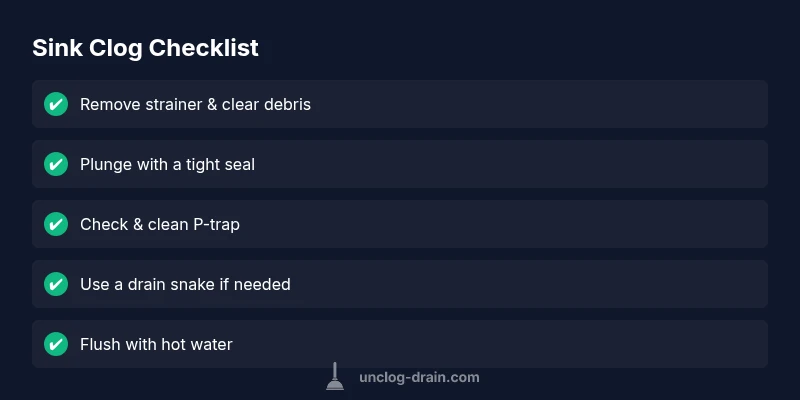
Clogged Sink: Quick, Safe DIY Repairs
Learn fast, practical steps to unclog a sink at home. This guide covers common causes, safe DIY fixes, essential tools, and when to call a plumber for a clogged sink.


Most clogged sinks are caused by kitchen grease, hair, and soap scum building up in the drain or P-trap. Start with the simplest fixes: remove the strainer, plunge the drain, and inspect the trap. If water still won’t drain, use a drain snake or disconnect and clean the P-trap beneath the sink. These steps solve the majority of DIY clogs.
Overview of the Problem
A clogged sink is among the most common and frustrating household plumbing issues. When water drains slowly or backs up, it interrupts daily chores like dishwashing and handwashing. Most clogs form gradually from grease, soap scum, hair, and food particles that accumulate in the drain line and P-trap. According to Unclog Drain, a lot of clogs originate in the trap or the immediate drain, not the main sewer line, which means you can usually fix them with safe at-home methods. The key is to identify where the blockage lives: is it right at the strainer, a section of pipe just beyond the trap, or deep in the trap itself? With a clear plan, you can attack the clog efficiently and reduce the chance of a messy spill.
Quick Checks You Can Do Now
Before you reach for tools, perform a few quick, safe checks that clear many clogs. Remove the sink strainer and look for obvious debris. Clean the visible area to remove soap film or grease. If you have a garbage disposal, run it briefly with cold water to clear small shreds that might be contributing to the clog. Place a plunger over the drain and pump with steady pressure; ensure a tight seal. If you sense suction but no water movement, move to the next step. Inspect the trap beneath the sink for cracks, corrosion, or loose fittings that could mimic a clog by allowing air or water to bypass flow. These initial steps often resolve minor blockages without tools.
Common Causes of a Clogged Sink
Clogs in sinks usually stem from routine usage, compounded over time. In kitchens, grease and oil from cooking can solidify on the pipe walls, catching food particles and soap film. Hair and soap are frequent culprits in bathroom sinks. A partially blocked P-trap creates a bottleneck that slows drainage even when the basin seems clear. Venting issues down the line can also hinder drainage by preventing proper air pressure equalization. Based on Unclog Drain analysis, most homeowner clogs occur in the trap or the immediate drain, not in the sewer main. Knowing the source helps you target the right spot with the least invasive method.
Diagnostic Flow: Symptom to Solution
Start with the symptom: slow draining water or backups when you run water. If drainage slows only in the sink, the issue is localized; if other fixtures are involved, the problem could be a main line or venting issue. Common causes rank high: grease buildup, hair/soap film, or a stuck debris block in the P-trap. For each cause, apply the corresponding fix: clean the P-trap, plunge, then use a drain snake for deeper clogs. If you still see standing water after attempting fixes, the clog may be past the P-trap or in a downstream line that requires professional service.
How to Unclog: Step-by-Step Fixes (Overview)
This section previews the most reliable DIY methods, arranged from easiest to more involved. Start with a trap-cleaning approach, then progress to plunging, and finally use a drain snake for deeper obstructions. A hot-water flush after each fix helps dissolve grease. If the clog resists, don’t force a solution that could damage pipes; instead, proceed to professional options. Always confirm the sink drains freely after each step before moving on.
Safety, Warnings & What Not To Do
Safety first. Do not mix chemical drain cleaners with other cleaners or with bleach, as dangerous gases can form. Never use a chemical on a live electrical disposal or near an open drain without proper ventilation. When in doubt, prefer mechanical methods—plungers, augers, and manual cleaning—over harsh chemicals. Indicate clearly that you have turned off the water supply if needed and wear protective gloves. If you encounter persistent backups, a suspected main-line issue, or wastewater backup in multiple fixtures, stop DIY efforts and contact a licensed plumber.
Prevention and Long-Term Care
Maintaining a clog-free sink is easier with routine habits. Use a sink strainer to catch hair, food particles, and debris. Avoid pouring fats, grease, or oils down the drain; wipe them into a trash can instead. Run hot water down the drain for 15-30 seconds after each use to help clear residue. Regularly clean the P-trap by placing a bucket underneath, loosening the nuts, and removing the trap to rinse away buildup. If you have a disposal, run it with cold water and never with hot water to prevent clog-causing grease from sticking to the pipes. Scheduling periodic checks makes future clogs far less likely.
When to Call a Professional
If you have tried the basic methods and the sink still drains slowly or backs up, there may be a deeper issue. A blockage beyond the trap or a venting problem often requires professional equipment and expertise. Don’t force a tool into a pipe if you are unsure of what you are doing or if you notice damaged fittings, leaks, or foul odors. A licensed plumber can assess the drain system, check for venting problems, and inspect the sewer line if needed.
Steps
Estimated time: 30-60 minutes
- 1
Safety prep & tool gathering
Put on gloves and eye protection. Collect a bucket, adjustable wrench, plunger, a drain snake, bucket, rags, and an old towel to catch spills. If you have a garbage disposal, ensure the unit is off before working near it.
Tip: Know where the shut-off valve is and have it accessible before you start. - 2
Remove visible debris & strainer
Lift out the strainer and clear any loose debris from the mouth of the drain. Wipe down the flange and inspect for obvious blockages. This step often clears the simplest clogs and makes subsequent steps easier.
Tip: Place a cloth underneath to catch falling debris. - 3
Plunge the drain properly
Seal the drain with a sturdy plunger and give several firm, rhythmic pushes. After each push, pull back to break the seal and avoid splashing. Repeat 8-12 times, then run water to test drainage.
Tip: Use a cup of water to ensure a good seal if the plunger loses suction. - 4
Inspect & clean the P-trap
Place a bucket beneath the P-trap, loosen the nuts, and remove the trap. Clear out hair, grease, and gunk, then rinse the trap with warm water before reassembling. Run water to confirm flow improves.
Tip: Do not bend or force the trap; inspect washers for leaks when reinstalled. - 5
Snake for deeper clogs
Insert a drain snake into the pipe and rotate to grip and pull out the clog. If resistance continues, push a bit deeper and slowly reel in the debris. Remove the snake and run hot water to flush.
Tip: Clean the snake thoroughly after use to avoid spreading debris. - 6
Flush & evaluate
Pour a kettle of hot water down the drain to dissolve residual grease. If drainage remains slow, recheck the P-trap and consider repeating the snake step. If the issue persists, proceed to professional help.
Tip: Avoid boiling water if you have PVC pipes past the trap.
Diagnosis: Slow draining sink or backup when water is run
Possible Causes
- highGrease buildup or soap scum in the drain or P-trap
- highDebris lodged in the P-trap
- mediumVent issues or a distant clog in the main line
Fixes
- easyRemove and clean the P-trap; reassemble and test drainage
- easyUse a plunger with proper seal and technique to clear the blockage
- mediumInsert a drain snake to clear deeper blockages beyond the P-trap
- hardCall a plumber for persistent backups or suspected main-line/vent problems
Common Questions
What are the most common causes of a clogged sink?
Grease, hair, and soap scum are the top culprits, often collecting in the trap or immediate drain. A vent issue or a deeper main-line clog can also cause slow drainage. Regular maintenance helps prevent the buildup.
Grease, hair, and soap scum are the usual culprits. If the problem persists, a vent or main-line issue may be involved.
Can I unclog a sink without removing the P-trap?
Often yes. Plunging and using a drain snake can clear many clogs without disassembling the trap. If water still backs up, removing the P-trap to clean it is the next safest step.
You can usually unclog it with plunging or a snake before removing the trap.
Is a drain snake safe for my pipes?
Yes when used correctly. Feed the snake slowly, don’t force through bends, and clean it after use. If you hit resistance that won’t budge, stop to avoid pipe damage.
A drain snake is safe if you use it gently and clean it afterwards.
Are chemical drain cleaners dangerous for a clogged sink?
They can be hazardous and may damage pipes or fixtures. They should be avoided in favor of mechanical methods like plunging or a snake, especially in homes with old plumbing.
Chemical cleaners can damage pipes; mechanical methods are safer for most homes.
When should I call a plumber?
If you’ve tried the basics and the clog remains, if wastewater backs up in multiple fixtures, or you suspect a main-line or vent issue, it’s time to call a licensed plumber.
Call a plumber if the clog persists after DIY fixes or if you suspect a main-line problem.
How can I prevent future clogs?
Use strainers, never pour grease down the drain, and flush with hot water regularly. Periodically inspect the P-trap for buildup and clean as needed.
Use strainers and avoid pouring fats; flush with hot water to prevent buildup.
Can a clogged sink indicate a sewer-line issue?
Rarely, but if multiple fixtures show slow drainage or backups, the issue may be deeper in the sewer line. A plumber can diagnose with camera inspection if needed.
If several fixtures back up, a sewer-line problem might be present and needs a professional check.
Watch Video
Key Points
- Start with simple fixes first
- Clean the trap to remove most clogs
- Use a drain snake for deeper blockages
- Call a pro if multiple fixtures backup or clogs persist