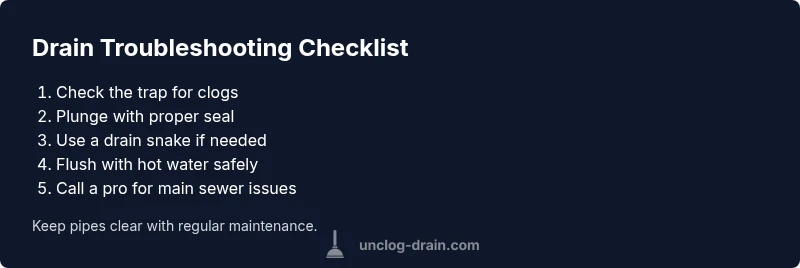
Drain Won't Unclog: Troubleshooting Guide for Stubborn Drains
Urgent troubleshooting guide for stubborn drains. Learn common causes, quick fixes, safe techniques, and when to call a pro. Practical steps from Unclog Drain to restore flow fast.


When a drain won t unclog, the most likely cause is a partial blockage in the trap or the pipe beyond it. Start with the simplest fix: plunge the drain, then try a manual snake. Avoid chemical drain cleaners. If water remains backed up, move to mechanical methods or call a professional—do not force it.
Why drain won t unclog
When you search for a fix, you’ll often see quick tips that promise instant relief. In reality, when a drain won t unclog, it’s usually because a partial blockage sits in the trap or the pipe just beyond it, or because mineral buildup has glued debris to the pipe walls. This situation calls for a methodical approach rather than random plunging or chemical tricks. By treating the problem as a system issue—start local, then expand outward—you reduce the risk of pushing debris further down or causing a leak. According to Unclog Drain, the first steps should always verify the easiest suspects before moving deeper. The drain won t unclog scenario is a signal to pause, plan, and escalate deliberately. With the right sequence, you protect your pipes and save money on unnecessary repairs.
drain won t unclog
drain won t unclog
undefined
undefined
undefined
undefined
undefined
undefined
undefined
undefined
Steps
Estimated time: 45-60 minutes
- 1
Gather tools and safety gear
Collect rubber gloves, eye protection, a bucket, plunger, snake, and towels. Set up a workspace and protect nearby surfaces to keep cleanup quick and contained.
Tip: Wear eye protection to guard against splashes. - 2
Shut off water and prepare the area
Turn off the sink shut-off valve and drain water to reduce overflow risk. Place towels and a bucket to catch spills so you don’t make a bigger mess.
Tip: Have a bucket ready for trapped water. - 3
Inspect and clean the P-trap
Place a bucket under the trap, loosen the slip nuts, remove the trap, and clear hair and debris. Rinse the trap and reassemble tightly.
Tip: Only hand-tighten fittings to avoid threading damage. - 4
Plunge with a proper seal
Reinstall the plunger and pump firmly 6–8 times to dislodge the blockage. Ensure the plunger contact is airtight for maximum suction.
Tip: Ensure the plunger covers the drain completely. - 5
Snake deeper if needed
If plunging doesn’t clear it, insert the drain snake and rotate to break the clog. Pull back slowly to retrieve debris without pushing it deeper.
Tip: Work slowly to avoid packing debris further. - 6
Test flow and clean up
Run hot water for several minutes to flush the line and monitor drainage. Reassemble any parts and wipe surfaces dry.
Tip: Dispose of removed material properly.
Diagnosis: Drain won't unclog after basic fixes.
Possible Causes
- highPartial clog in P-trap or pipe near the sink
- mediumClog deeper in the main drain or further along the line
- lowVenting issue causing air pressure problems
- mediumMineral buildup or soap scum in pipes
- lowSewer line blockage or backup
Fixes
- easyClear the P-trap and clean debris
- easyUse a drain snake to break up deeper clogs
- easyFlush with hot water and safe cleaners (baking soda/vinegar)
- mediumCheck venting path or consult a professional for vent issues
- hardCall a professional for main sewer or stubborn clogs
Common Questions
What should I do first when a drain won t unclog?
Begin by inspecting and cleaning the P-trap, then try a plunger. If needed, use a drain snake. Avoid rushing to harsh chemicals.
Start with the trap, then plunge or snake if needed, avoiding chemicals.
Are chemical drain cleaners safe to use?
Chemical cleaners can damage pipes and vents and often fail on stubborn clogs. Use mechanical methods first and follow label instructions if you choose cleaners.
Chemicals can damage pipes; use mechanical methods first.
Can a clogged drain affect other fixtures?
Yes. A clog can back up into other fixtures if the main line is involved. Stop using water and seek pro help for backups.
Clogs can affect other fixtures; consider professional help for main line issues.
When should I call a professional?
If the clog persists after basic fixes or you suspect a sewer backup, contact a licensed plumber.
If it stays clogged after DIY steps, call a professional.
Is venting related to drain clogs?
Vent problems can cause slow drainage and gurgling. If you suspect a vent issue, especially in multi-story homes, consult a professional.
Vent issues can affect drainage; a pro can diagnose venting.
How long does a drain snake take?
Using a hand auger for a simple clog takes minutes; stubborn clogs may require more time or professional equipment.
Snakes clear simple clogs quickly; stubborn ones take longer.
Watch Video
Key Points
- Start with the trap to rule out local clogs
- Avoid chemical cleaners as a first resort
- Escalate to mechanical methods if needed
- Prevent future clogs with routine maintenance