How to Unclog a Toilet Without a Plunger: Reddit DIY Guide
Discover safe, plunger-free methods to unclog a toilet. This Unclog Drain guide covers DIY steps, essential tools, timing, and when to call a plumber. If unsure.


To unclog a toilet without a plunger, try a toilet auger (snake) or a safe DIY combo like dish soap plus hot water. Start with prep, avoid chemical drains, and test with a flush; if the clog persists, stop and switch to professional help. Document results for future reference.
Reddit reality: unclogging toilets without a plunger
In online communities like Reddit, homeowners frequently share no-plunger approaches for stubborn toilet clogs. The phrase unclog toilet no plunger reddit surfaces in threads where DIYers compare augers, hot water, dish soap, and occasional household hacks. According to Unclog Drain, many users report success when combining lubrication with controlled pressure rather than force. The goal is to move the blockage without splashing or damaging the porcelain. Remember: stay patient, follow safe steps, and always respect your toilet’s design and septic system constraints.
Core principles: why a plunger isn’t always required
A common misconception is that a plunger is the only tool for clogs. In reality, clogs form from compacted waste, toilet paper, or mineral buildup, and they respond to different mechanical or chemical cues. Lubrication lowers friction, while a gentle pressure pulse helps fluids navigate finer obstructions. In addition, gravity and the shape of the trap influence how water and air move, which your chosen method can exploit. Unclog Drain’s guidance emphasizes safety, gradual progress, and avoiding aggressive force that could crack the bowl or damage the gasket.
No-plunger methods: overview of reliable options
There are several no-plunger methods with solid success rates when applied correctly:
- Dish soap and hot water: lubricates and uses surface tension to loosen the clog.
- Baking soda and vinegar: creates fizz that can help loosen build-up, but avoid mixing with harsh chemicals.
- Toilet auger (snake): the most targeted mechanical approach, designed to reach the trap and break the blockage.
- Controlled hot water flushes: a careful temperature strategy can push the clog through without overflow. Each method has its own conditions for best results, and many DIYers switch between options if one approach stalls.
Step-by-step overview for the main methods
This section provides a practical, no-plunger playbook that many homeowners find effective, especially when the clog is due to paper or minor waste buildup. Always start with lubrication and proceed to mechanical clearing before resorting to more aggressive tactics. Always keep pets and children away during the process and ventilate the bathroom if you use any chemical aids.
Safety first: risks and how to minimize them
Never mix caustic drain cleaners with vinegar or other household chemicals, as dangerous fumes can form. Avoid boiling or near-boiling water if your toilet is old or has delicate porcelain liners, and never use household cleaners that aren’t intended for toilets. If the bowl shows signs of cracks, leaks, or persistent overflow, stop and consult a professional. Unclog Drain emphasizes that safety and a conservative approach protect both your bathroom and your plumbing system.
Quick-start checklist for immediate relief
- Gather tools: auger, gloves, dish soap, bucket, and flashlight.
- Prepare the space: lay towels, protect floors, and ensure children/pets are out.
- Apply lubrication or soap: simulate a flood-light to ensure thorough coverage before adding water.
- Test pressure method: cautiously introduce hot water to generate a push.
- Inspect and flush: check water level and restore flow in 1-2 cycles.
Prevention: longer-term strategies to reduce future clogs
To minimize future clogs, adopt regular maintenance such as avoiding excessive toilet paper, using a modest amount, and flushing only after a full drain. If you have a septic system, be mindful of what you flush and schedule periodic inspections. Routine maintenance can significantly cut down on emergency calls and unexpected overflows.
Tools & Materials
- Toilet auger (snake)(Choose a 3- to 5-foot model for household toilets.)
- Dish soap(Liquid, unscented if possible; helps lubricate the clog.)
- Rubber gloves(Protect hands from wastewater and grime.)
- Bucket(For hot water and cleanup.)
- Hot water (not boiling)(Heat to about 130-140°F (54-60°C), not boiling to avoid cracking the porcelain.)
- Baking soda(Optional, used with vinegar in some methods.)
- White vinegar(Optional, used with baking soda.)
- Flashlight(Helps inspect the bowl and trap area.)
- Coat hanger or stiff wire (DIY snake)(Only if you don’t have a dedicated auger.)
Steps
Estimated time: 30-60 minutes
- 1
Prep and safety
Gather tools, put on gloves, and block the bathroom to prevent splashes. Check for pets or children and ensure good ventilation. This prep reduces the risk of contact with wastewater and keeps the process orderly.
Tip: Wear eye protection if you expect splashes or backflow. - 2
Lubricate the clog with dish soap
Squirt a generous amount of dish soap into the bowl and let it sit for 5–10 minutes. This lubrication helps the water and solids move more freely when you apply the next step.
Tip: Warm soapy water is gentler on porcelain than cold water. - 3
Add hot water to create pressure
Carefully pour hot water from about arm’s length, aiming to push the clog downward. The goal is a gentle pressure that helps fluids flow without overflowing.
Tip: Do not use boiling water to avoid cracking the porcelain. - 4
Insert and crank the toilet auger
Insert the auger into the bowl, rotate the handle, and slowly advance the cable while pulling back slightly to engage the clog. Work it in short strokes to avoid kinking.
Tip: Keep a steady, controlled motion for effective engagement. - 5
Test with a flush
Attempt a light flush after several cautious cranks. If the flow improves, repeat the above steps or switch to a different technique before reattempting a full flush.
Tip: If the water rises quickly, stop to prevent overflow. - 6
Cleanup and sanitize
Wipe down surfaces, rinse tools with clean water, and wash hands with soap and water for at least 20 seconds. Sanitize the area to prevent cross-contamination.
Tip: Disinfect tools after use and store them dry.
Common Questions
Can I use hot water to unclog a toilet without a plunger?
Yes, hot water can help loosen a clog when used carefully. Avoid boiling water to prevent cracking the porcelain and never mix hot water with certain cleaners. If the clog remains after a few attempts, stop and try an alternative method.
Hot water can help loosen the clog—just don’t use boiling water and be careful not to damage the ceramic.
Is a toilet auger safe for all toilet types?
A toilet auger is generally safe for most standard toilets. Use it slowly and follow the manufacturer’s instructions to avoid scratching the bowl or bending the shaft. If resistance is strong, stop to prevent damage.
Yes, a toilet auger is typically safe if you use it gently and follow the guide.
Will baking soda and vinegar help unclog a toilet?
Baking soda and vinegar can loosen certain buildup, but they are not guaranteed to clear solid blockages. They are safest as a supplementary step, not a primary method for stubborn clogs. Avoid mixing with bleach or other cleaners.
They can help loosen some buildup, but they’re not a guaranteed fix for stubborn clogs.
When should I call a plumber?
If water overflows, the clog persists after multiple methods, or you notice slow drainage in multiple fixtures, it’s time to call a plumber. A professional can assess for deeper blockages or sewer line issues.
Call a plumber if the clog won’t budge after several attempts or if you suspect a more serious blockage.
What’s the safest order of steps to unclog without a plunger?
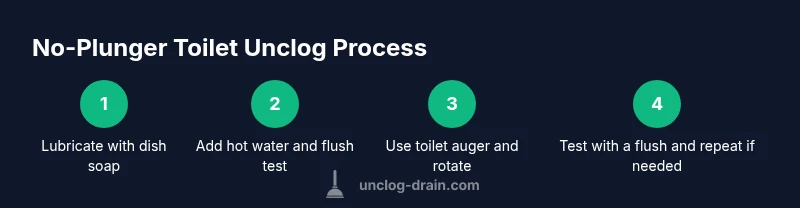
Start with lubrication (dish soap), then hot water, then the auger. Test after each stage. If the clog remains after these steps, stop and seek professional help.
Try lubrication, then hot water, then the auger, testing after each step.
Watch Video
Key Points
- No plunger? No problem—try a toilet auger first.
- Lubrication + controlled pressure can move many clogs safely.
- Avoid harsh chemical cleaners to protect people and pipes.
- If the clog persists, stop and seek professional help.