Clogged Toilet Without Plunger: Step-by-Step DIY Fix
Learn practical, step-by-step methods to unclog a toilet without a plunger. From a toilet auger to safe household tricks, this Unclog Drain guide helps you prevent overflow and restore flushing fast.


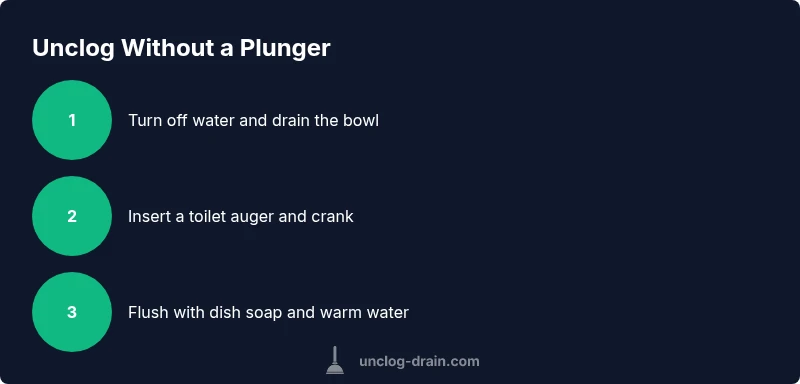
To unclog a toilet without a plunger, use a toilet auger (snake) or safe household methods such as hot water with dish soap, or baking soda and vinegar. Start by removing excess water, then insert the auger to break the clog or swirl soapy water into the trap. If overflow begins, stop and drain before retrying.
What it means to have a clogged toilet without a plunger
Dealing with a clogged toilet without a plunger can feel intimidating, but you have practical, low-risk options. The key is to stay calm, control the water level, and pick a method suited to the type of clog. Some blockages respond to strategic flushing aids, while others respond best to mechanical tools like a toilet auger. In this guide from Unclog Drain, we outline safe techniques you can perform with things already in most homes. Remember to use personal protective gear and to work slowly to avoid splashes. A method that works for one family might not for another, so assess the situation before choosing your approach. The goal is to restore normal flushing without creating a bigger mess or risking damage to the fixture.
Quick safety note: protect yourself and your bathroom environment
Before you start, protect the floor and nearby surfaces with towels or old rags. Wear rubber gloves and consider eye protection if you anticipate splashback. Ventilate the room if you’re using any cleaning agents, and never mix chemical products. If you notice a persistent foul odor or the toilet backs up into the tub or floor, it may indicate a more serious clog or a sewer-line issue that requires professional help. According to Unclog Drain analyses, most household clogs can be resolved with careful steps and the right tool, but safety remains paramount.
Core methods you can try without a plunger
The most reliable approaches without a plunger involve a toilet auger, soap-based lubrication, and controlled water addition. A toilet auger is designed to navigate past the trap and break up or pull out the obstruction. If you don’t have an auger handy, you can attempt soap and hot water to lubricate the blockage and create pressure inside the trap. Dish soap creates a slick layer that helps the water push through the clog, especially when combined with a careful flush of warm water. Baking soda and vinegar can also create effervescence that helps dislodge lighter organic clogs. Remember: do not pour boiling water into a porcelain bowl, as extreme temperature changes can crack the fixture. These methods are best used on mild to moderate blockages; stubborn clogs may require a professional tool or service.
How to use a toilet auger (snake) correctly
A toilet auger is a compact flexible cable with a curved head designed for toilets. Start by turning off the water supply to minimize overflow, then lower the auger into the bowl. Gently crank clockwise as you push the cable into the drain, feeding it until you feel resistance. When you reach the clog, continue to rotate to break it up or hook it so you can pull it out. Withdraw slowly while cranking to avoid damaging the porcelain. Clean the auger head after use to prevent spreading residue.
Household tricks worth trying (with care)
- Dish soap and hot water: Squirt dish soap into the bowl and wait 5–10 minutes; then slowly pour hot water from a height to generate pressure and loosen the clog. Do not use boiling water, which can crack the porcelain. - Baking soda and vinegar: Add 1 cup baking soda, followed by 1–2 cups vinegar, then wait 15–20 minutes before flushing with warm water. The fizz can dislodge light blockages and push debris through the trap. - DIY plungish technique with containers: If a small amount of water remains, gently pour water into the bowl in small bursts to simulate a siphon effect—be ready for a splash. These methods reduce strain on the trap and fixtures while buying you time to assess the blockage.
When to call a professional and what to expect
If multiple attempts fail, if you notice water backing up into other fixtures, or if the toilet consistently clogs after flushing, it’s time to call a plumber. A professional can inspect the trap and drain line for root intrusion, a broken sewer line, or a misaligned vent. Early professional input can prevent further damage and costly fixes. Unclog Drain recommends evaluating the situation carefully and recognizing when a professional is needed to avoid damaging the toilet or plumbing systems.
Tools & Materials
- Rubber gloves(Thick gloves to protect hands)
- Toilet auger (snake)(1/2 to 3/4 inch diameter, 3–4 ft length)
- Dish soap(Lubricant to help water flow through the clog)
- Hot water(From the tap; avoid boiling water)
- Bucket or large container(To catch spills or hold water during cleanup)
- Old towels or rags(Protect floors and absorb spills)
- Flashlight(Useful in dark bathrooms)
- Optional: pliers or grip tool(For removing debris if accessible by hand)
- Optional: chemical drain cleaner(Only if used with caution and never mixed with other cleaners)
Steps
Estimated time: 25-40 minutes
- 1
Shut off water supply and drain the bowl
Turn the toilet shut-off valve behind the toilet to stop inflow. Flush once to remove as much water as possible, then use a sponge or towel to soak up remaining water. Leaving a small water line helps reduce overflow risk during subsequent steps.
Tip: If the valve is hard to turn, don't force it—consult a plumber to avoid leaks. - 2
Prepare your workspace and safety gear
Put on rubber gloves and lay towels around the base. Clear the area so you can move freely without bumping the toilet or creating more mess. Have a bucket handy for water and debris.
Tip: Keep a damp rag nearby to wipe splashes as you work. - 3
Insert and rotate the toilet auger
Gently insert the auger into the toilet bowl and begin turning the handle clockwise while feeding the cable. Push slowly until you feel resistance, then rotate to break up the clog or hook onto the blockage for removal. Retrieve the cable slowly to avoid scraping the porcelain.
Tip: Do not force the cable through hard resistance—back off and reassess to prevent damage. - 4
Lubricate with dish soap and hot water
Pour a generous amount of dish soap into the bowl to lubricate the drain. Then slowly pour hot water from a height (about 12 inches) to generate pressure that helps push the clog through. Avoid boiling water to prevent porcelain cracks.
Tip: If you hear gurgling or see bubbles, pause and wait a few minutes before continuing. - 5
Try baking soda and vinegar (optional)
If the auger hasn’t cleared the path, add baking soda first, then vinegar. Allow the mixture to fizz for 10–15 minutes, then flush with warm water. This method can loosen organic clogs without harsh chemicals.
Tip: Never mix with additional cleaners; do not seal the bowl tightly—allow pressure to escape. - 6
Flush and evaluate progress
Flush the toilet slowly to observe whether the water drains smoothly. If the water remains high or drains slowly, repeat the auger and soap steps once more before seeking professional help. If it clears, test multiple times with small flushes to confirm steady performance.
Tip: If water begins to rise again, stop immediately and remove some water with a cup or sponge to prevent overflow.
Common Questions
Is it safe to use hot water to unclog a toilet without a plunger?
Yes, hot water can help loosen a light clog when used carefully with dish soap. Avoid boiling water to prevent porcelain damage.
Hot water with dish soap can help loosen light clogs, but never use boiling water to protect the toilet.
What is the best tool to use if I don’t have a plunger?
A toilet auger (snake) is the preferred tool when a plunger isn’t available. It reaches the trap and clears or pulls the clog without damaging the porcelain.
Use a toilet auger when you don’t have a plunger; it reaches the trap and clears the clog.
Will chemicals help unclog a toilet without a plunger?
Chemicals can help in some cases but should be used cautiously. They can damage seals or react poorly with other cleaners, so follow label directions and avoid mixing products.
Chemicals can help sometimes, but use them with caution and follow the label. Avoid mixing cleaners.
How long should I wait after using baking soda and vinegar?
Allow 15–20 minutes for fizzing action, then flush with warm water. If the blockage persists, repeat once before seeking professional help.
Wait about 15 to 20 minutes, then flush. If it’s still clogged, try once more or call a pro.
When should I call a plumber for a clogged toilet?
Call a plumber if the toilet backs up repeatedly, if multiple fixtures share the drainage line, or if you’re unsure about sewer-line issues.
Call a plumber if clogs recur or if multiple fixtures back up; sewer issues require professional assessment.
Can I damage the toilet with an auger?
Using a toilet auger improperly can scratch the porcelain or bend the inner components. Use steady pressure and avoid forcing the cable.
Yes, improper use can damage the toilet; use gentle pressure and don’t force the auger.
Watch Video
Key Points
- Choose safe, non-plunger methods first.
- A toilet auger is the primary tool for plunging without a plunger.
- Lubrication with dish soap and controlled hot water can help.
- Avoid boiling water and chemical mix-ins that can damage the toilet.
- Call a plumber if repeated attempts fail or the clog recurs.