Unclog Toilet No Plunger: Safe DIY Guide
Learn proven no-plunger methods to unclog a toilet safely. This Unclog Drain guide covers step-by-step techniques, tools, safety tips, and when to seek professional help.


You can unclog toilet no plunger using safe, household methods that minimize mess and protect your plumbing. This guide walks you through step-by-step techniques, timing tips, and safety precautions so you can restore flow without a traditional plunger, plus when to call a pro. It emphasizes tools, materials, and common mistakes to avoid.
Why a plunger isn't always the best first move
A plunger is a familiar tool for clogs, but it isn’t always the safest or most effective starting point for every toilet. A failed plunge can push the blockage deeper, splash water, or stress the wax gasket around the flange. For many households, starting with no-plunger methods reduces mess and protects the porcelain and seals. According to Unclog Drain, the best approach is to diagnose the clog and choose a safe, non-destructive method first. The goal is to restore flow with minimal disruption, using household tools and proven techniques. In this guide we’ll cover when to avoid the plunger, which no-plunger methods tend to work best, and how to assess the situation quickly to prevent overflow. Knowing when to pivot away from a plunger can save time, money, and a frantic bathroom hour. If water already rises toward the rim or the bowl shows resistance to flow after one attempt, shift to alternate strategies. The Unclog Drain team emphasizes patient, methodical steps rather than aggressive plunging. This sets the stage for safer no-plunger unclogging that homeowners can perform with confidence.
Quick, safe no-plunger alternatives
Directly attempting to relieve a clog without a plunger involves a few reliable, low-risk methods. A common starting point is dish soap and hot water to lubricate the blockage and encourage movement through the trapway. Another option is the toilet auger or snake, used carefully to break the clog without harming the porcelain. Enzyme-based cleaners can help dissolve organic buildup in older toilets, though they require time. Avoid chemical drain cleaners that are caustic or can damage seals; they should be considered only as a last resort or when recommended by a professional. Finally, a controlled flush with steady water pressure from the supply line can help judge whether the flow improves after initial treatment. If you’re trying to unclog toilet no plunger options, these approaches avoid the risks of plunging while still delivering results when applied correctly.
Understanding toilet design and why some clogs resist
To successfully unclog without a plunger, it helps to understand how toilets are built. The typical modern toilet uses a trapway, a S- or P-trap, and a flush valve that directs water into the bowl. Blockages can form in the trap, the bowl throat, or the lateral drain line beyond the trap. Paper buildup, wipes, and non-flushable items are common culprits. Older models may have smaller traps or less aggressive flush volumes, which makes some clogs persist longer. By recognizing where the blockage resides, you can tailor no-plunger strategies—lubrication, timed waiting, or mechanical agitation with an auger—more effectively and avoid unnecessary scouring of the bowl. The aim is to restore normal flow while preserving the toilet’s seals and finish.
Hot water and dish soap method: how it works
This approach relies on lubrication and buoyancy to free the clog. Start by adding a generous squirt of dish soap into the bowl, then carefully pour hot (not boiling) water from shoulder height into the bowl. The soap coats the clog, while the hot water can help loosen compacted material. Wait 10–15 minutes to let the mixture penetrate the blockage. If the water level drops, repeat the process once more before attempting any mechanical method. This method reduces the chance of splashing and collateral mess compared to aggressive plunging, and it keeps your plumbing components intact. Always avoid boiling water, which can crack porcelain or warp the wax seal.
Enzyme cleaners and mechanical tools alternatives
Enzyme-based cleaners slowly digest organic buildup in the trapway and drain lines. They’re a safer option for routine maintenance and mild clogs, though they require time to work—often several hours to a day. For a faster result, a toilet auger (snake) can mechanically break apart obstructions. Use a light touch, rotate the handle gently, and advance the cable gradually until you feel it grip the clog. Never force the auger with excessive pressure, which can scratch the porcelain or kink the cable. If used properly, these tools provide an effective no-plunger path to relief while reducing chemical exposure inside your pipes.
The toilet auger (snake): when and how to use it
A toilet auger is designed to reach blockages inside the toilet trapway. Begin by inserting the flexible end into the bowl and keeping the handle at a comfortable height. Gently twist while advancing the cable; do not push with brute force. When you feel resistance, rotate and pull back slightly to help break free the clog. Pull the cable back slowly to avoid kicking debris back toward you. Rinse and wipe the cable after use to prevent lingering odors. This method is a reliable no-plunger option, particularly for paper buildup or minor obstructions that don’t clear with soap and hot water alone.
Safety, overflow prevention, and cleanup
Overflow protection starts with turning off the water supply and placing towels around the base. Always wear gloves and use a bucket to catch any spills. After clogs are cleared, flush a small amount of water to confirm flow; then slowly restore the supply. Sanitize the area and wash your hands thoroughly. If a clog recurs shortly after attempting no-plunger methods, reassess the underlying issue—frequent clogs can indicate broader plumbing problems or venting issues that require professional inspection.
Prevention and maintenance to reduce future clogs
Preventive care is the best defense against repeat clogs. Practice mindful flushing: avoid flushing large amounts of toilet paper at once, and do not flush wipes, sanitary products, or non-flushable items. Consider a weekly maintenance routine with enzyme cleaners to keep buildup from forming in the trapway. Install a toilet paper stock that dissolves quickly and consider a
When to call a professional plumber
Some situations clearly require a pro's expertise. If after several attempts the toilet remains clogged, or water continues to rise toward the rim, stop and call a professional to avoid an overflow incident. Plumbing systems can have hidden issues like vent blockages, sewer line problems, or damaged seals that DIY methods cannot safely address. The Unclog Drain team strongly recommends seeking professional help when safety risks arise or when repeated no-plunger attempts fail to restore normal function.
Tools & Materials
- rubber gloves(Protect hands from splashes and germs)
- bucket(2-3 gallon capacity for water and cleanup)
- towels or old rags(Protect floor and catch spills)
- toilet auger / snake(Flexible cable tool designed for toilets)
- dish soap(Lubricates and helps loosen clog)
- hot water (not boiling)(Use hot tap water; avoid boiling to prevent cracking)
- flashlight(Inspect interior and trap area)
Steps
Estimated time: 30-60 minutes
- 1
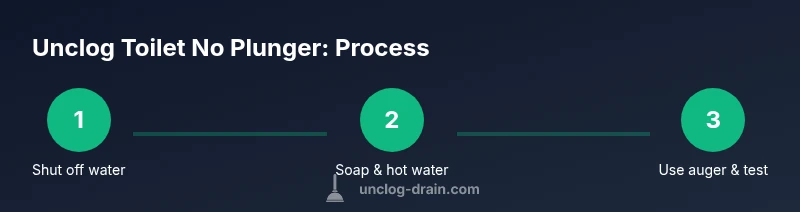
Shut off the water supply and remove standing water
Locate the shut-off valve behind the toilet and turn clockwise until it stops. If the bowl contains water, use a towel to soak up excess moisture and a bucket to catch spills. This prevents overflow and gives you a dry surface to work on.
Tip: Keep a dry cloth nearby and ensure ventilation; this reduces mess. - 2
Assess the clog and visualize the trap
Take a quick look inside the bowl to gauge whether the clog is in the trap or beyond. A visible obstruction in the trap or a continuously rising water level indicates a deeper blockage requiring a mechanical method.
Tip: A flashlight helps you spot the blockage without getting close to splashes. - 3
Apply dish soap and hot water
Pour a generous amount of dish soap into the bowl, then slowly pour hot water from about shoulder height. Let it sit for 10–15 minutes to lubricate and loosen the clog.
Tip: Do not use boiling water; extreme heat can crack porcelain. - 4
Wait and test after soaking
During the wait, avoid repeated flushing which can splash. Check the water level after the wait to see if it has eased.
Tip: If the level remains high or bubbles aggressively, proceed to the auger. - 5
Use the toilet auger to break the clog
Insert the auger into the bowl and rotate the handle gently while advancing. When you feel resistance, twist and pull back a little to break the clog.
Tip: Keep the cable aligned with the trap; avoid forcing past tight bends. - 6
Retract, inspect, and test
Slowly retract the auger, keeping a gentle twist. Wipe the end and pull any debris into the bucket. Then flush once to test flow.
Tip: If debris is present, stop and remove the material carefully to prevent splashes. - 7
Try alternative methods if needed
If the clog remains, consider enzymatic cleaners or repeat a soap-and-hot-water cycle. Do not rely on harsh chemical drain cleaners for frequent use.
Tip: Enzymes take time; avoid combining chemicals with enzymatic cleaners. - 8
Restore water supply and sanitize
Turn the supply valve back on and flush to confirm normal flow. Clean and sanitize the area and wash hands thoroughly.
Tip: Dispose of waste properly and disinfect the surrounding floor and tools. - 9
Evaluate for recurring clogs and plan preventive steps
If clogs recur, consider repeating the no-plunger approach with maintenance routines or scheduling a professional evaluation.
Tip: Consistent minor clogs can signal venting or sewer-line issues needing a plumber.
Common Questions
Can I unclog a toilet without a plunger?
Yes. You can use dish soap with hot water, a toilet auger, and enzymatic cleaners to address clogs. If water rises or the clog remains after several attempts, stop and consider professional help.
Yes, you can unclog a toilet without a plunger using dish soap, hot water, and a toilet auger. If it doesn’t clear after multiple attempts, call a professional.
Is hot water safe for unclogging?
Hot water is generally safe if it is not boiling. Boiling water can crack porcelain and damage seals, so use hot tap water and allow it to cool slightly before pouring.
Hot water is okay as long as it’s not boiling; let it be hot but safe to touch.
When should I call a plumber?
Call a plumber if the toilet keeps clogging after multiple no-plunger attempts, or if water continues to rise. Persistent issues can indicate venting or sewer-line problems.
Call a plumber if the clog persists after several attempts or water level keeps rising.
What tools are essential for no-plunger unclogging?
A toilet auger, rubber gloves, a bucket, towels, and dish soap are the core tools. A flashlight helps inspect the trap area.
Key tools include a toilet auger, gloves, bucket, towels, and dish soap.
Can enzymatic cleaners fix a stubborn clog quickly?
Enzymatic cleaners can dissolve organic buildup over time but are slower. They’re better for maintenance than immediate relief.
Enzymatic cleaners work slowly but are good for ongoing maintenance.
Will chemical drain cleaners damage my toilet?
Yes. Harsh chemical cleaners can corrode seals and damage pipes; avoid them unless advised by a professional.
Harsh chemical cleaners can damage seals; use with caution or avoid altogether.
Watch Video
Key Points
- Turn off water first to prevent overflow
- Start with soap and hot water before mechanical tools
- Use a toilet auger for deeper clogs
- Avoid harsh chemical cleaners unless advised
- Call a pro if water rises or multiple attempts fail