No Plunger? How to Unclog a Toilet Quickly and Safely
Discover a safe, practical approach to unclogging a toilet without a plunger. This comprehensive guide covers step-by-step techniques, essential tools, safety, troubleshooting, and prevention tips from Unclog Drain.


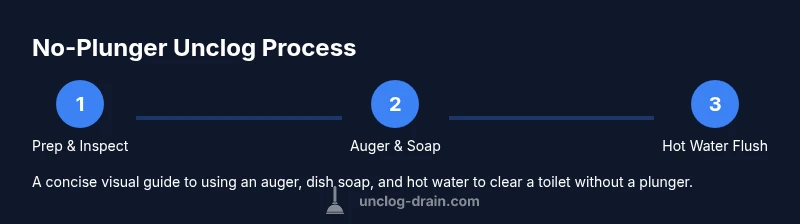
No plunger? You can unclog a toilet safely using a toilet auger, targeted dish soap, hot water, and gentle, controlled pressure. Start with protective gloves and a tarp or towels to catch splashes, then work through the steps to break up the blockage and restore flow. This no-plunger approach minimizes mess and overflow risk.
Understanding the No-Plunger Scenario
When a toilet clogs, you may not have a plunger on hand, or you might be dealing with a fixture that requires gentler, more controlled methods. A no-plunger approach focuses on mechanical tools like a toilet auger and safer, low-chemical techniques to minimize splash and protect your plumbing. According to Unclog Drain, the most reliable results come from a combination of a small-diameter auger, protective gear, and deliberate, repeatable actions. In a no-plunger how to unclog toilet scenario, you’ll learn practical strategies that work with standard household water pressure and conservative use of cleaners. This method reduces the risk of damaging the porcelain, seals, or the sewer line, and it helps you regain a fully functional bathroom without sprinting for a plunger at the worst moment.
Essential Tools and Safety Precautions
Preparing your workspace and gear is as important as the technique itself. Put on rubber gloves and eye protection to shield yourself from splashes. Lay down old towels or a disposable absorbent mat around the base of the toilet to catch spills. Have a sturdy bucket nearby for any excess water, and keep a towel or rag handy for quick cleanup. A toilet auger (snake) is the primary mechanical tool for a no-plunger approach, followed by hot water and dish soap to lubricate and loosen the clog. Avoid mixing chemical cleaners in the bowl, especially in septic systems, and never use boiling water that could crack ceramic. Unclog Drain recommends inspecting the toilet bowl and trap area first to gauge how aggressive your technique should be, and to keep pets and children away from the work zone.
No-Plunger Techniques: Core Concepts
The key to a successful no-plunger unclog is understanding where the blockage sits and how to engage it without large, forceful plunging. A toilet auger should be inserted carefully into the bowl until resistance is met, then rotated slowly to break through the clog at its core. Use short, steady cranks rather than aggressive twists to avoid scratching the porcelain. A small amount of dish soap can help lubricate the drain line, while hot water can soften organic matter. Do not rely on chemical drain cleaners in a toilet; they can damage seals and septic systems and may not reach clogs effectively. If the auger encounters resistance beyond 6–8 inches, stop to reassess rather than forcing the tool. This approach is evidence-based and aligns with Unclog Drain’s 2026 guidance on safe DIY drain relief.
Step-by-Step Unclogging Without a Plunger
A practical, no-plunger method combines mechanical action with gentle flushing to restore flow. Start by preparing the area, then use the auger to reach the clog, lubricate with dish soap, and test flushes at each stage. If water begins to rise, stop and let it settle before continuing. A short burst of hot water from a height can create pressure that helps dislodge the blockage, but avoid boiling water that can crack the ceramic. If the clog persists after several auger passes and hot-water cycles, move to alternate strategies or call a pro. This sequence minimizes mess and improves the odds of success on the first attempt.
Troubleshooting Common Pitfalls
Several issues commonly trip people up in no-plunger unclog attempts. If the auger binds quickly, don’t force it; recheck alignment and try a slightly different angle. Oversoaping can leave a slippery film that slows drainage, so use only a small amount of dish soap. Refrain from using multiple cleaners simultaneously; chemical reactions can create dangerous fumes or pressure buildup. If the toilet overflows, turn off the water supply from the valve behind the toilet and use towels to absorb the spill while you work. Finally, if you cannot restore flow after repeated attempts, it’s safer to consult a plumber rather than risk a larger blockage or damaged plumbing.
Prevention and Maintenance to Avoid Future Clogs
Prevention is your best defense against future clogs. Teach household members to avoid flushing non-flushable items, especially wipes, sanitary products, and excessive paper. Consider a shallow, removable trap surface to catch debris near the bowl and routinely flush with clear water to keep pathways open. Regularly check the toilet for slow drainage and address it early with gentle techniques rather than waiting for a full blockage. For septic systems, use environmentally friendly cleaners and avoid strong chemical drain solutions. By adopting these habits, you’ll reduce the chances of sudden clogs and keep the bathroom running smoothly.
When to Call a Professional
If water continuously rises or the clog stubbornly resists your best efforts, don’t push your luck. Overflow can rapidly damage floors and fixtures, and a persistent blockage might indicate a more serious problem in the drain line or trap. In those cases, a licensed plumber can perform a camera inspection, diagnose sewer-line issues, or implement more advanced tools without risking the toilet or home plumbing. The Unclog Drain team recommends seeking professional help when repeated attempts fail or when you notice unusual gurgling, foul odors, or backflow into other drains.
Tools & Materials
- latex gloves(Long-nose or utility gloves for extended protection)
- eye protection(Goggles or safety glasses)
- old towels or absorbent mats(Place around base to catch spills)
- bucket(For catching overflow or waste water)
- toilet auger (snake)(Choose a model with a 3-6 ft shaft; PTFE-coated preferred)
- dish soap(A small amount to lubricate the drain)
- hot water(Hot but not boiling; 120–140°F (49–60°C))
- non-abrasive cloth(For cleanup after the job)
- plunger(Only if other methods fail (not part of this no-plunger approach))
Steps
Estimated time: 30-60 minutes
- 1
Prep the area and wear protection
Put on gloves and eye protection. Lay towels around the base and place a bucket nearby to catch any overflow. This reduces splash risk and prepares you for a clean, controlled operation.
Tip: Keep a drain cleaner or cleaner near the doorway; don’t mix cleaners in the bowl. - 2
Inspect the toilet and choose your tool
Check water level and loosen any visible debris. Select a toilet auger suited to your toilet’s trap and prepare to insert it gently into the drain.
Tip: Insert the auger slowly to avoid scratching the porcelain. - 3
Insert auger and break the clog
Gently insert the auger into the drain until you feel resistance. Rotate the handle and push forward with light pressure to engage the clog.
Tip: Don’t force; if resistance remains, retract slightly and retry from a different angle. - 4
Lubricate with dish soap
Add a small amount of dish soap into the bowl to help lubricate the path and reduce friction as you work the auger.
Tip: Use only a small amount to avoid creating a conserve of soap that may hamper drainage. - 5
Use hot water to soften the clog
Pour hot water into the bowl from a height to generate a gentle hydraulic push, aiding in dislodging the blockage.
Tip: Avoid boiling water to prevent porcelain damage. - 6
Test flush and reassess
Carefully test a flush. If water clears, move to cleanup; if not, repeat steps 3-5 once or twice but stop if the water continues to rise.
Tip: Frequent tests help you gauge progress without creating a mess. - 7
Clean up and sanitize
Remove towels, rinse the bucket, and sanitize your gloves and tools before storing.
Tip: Always sanitize tools after use to prevent contamination.
Common Questions
Can I unclog a toilet without a plunger?
Yes. A toilet auger and safe, mechanical methods can clear many clogs without a plunger. Start with protective gear and proceed in small, controlled steps to avoid splashes and damage.
Yes. You can unclog a toilet without a plunger using a toilet auger and careful, controlled steps.
What is a toilet auger and how do I use it?
A toilet auger is a flexible, snake-like tool designed to reach into the toilet trap. Insert it gently, rotate while applying light pressure, and advance until you feel the clog break free.
A toilet auger is a flexible tool you rotate gently to break up clogs.
Is it safe to use chemical drain cleaners in a toilet?
Most toilet chemical cleaners should be avoided because they can damage seals, pipes, and septic systems. Mechanical methods are safer and effective for many clogs.
Chemical cleaners can damage your plumbing, so use mechanical methods instead.
How long does it take to unclog a toilet without a plunger?
Typical attempts take 20 to 45 minutes, depending on the clog’s depth and your familiarity with the tools. If it persists, pause and reassess or call a pro.
Usually from twenty to forty-five minutes, depending on the clog.
When should I call a plumber?
If water overflows, if you still have a blockage after multiple attempts, or you notice gurgling and foul odors, a professional inspection is warranted to avoid damage.
Call a plumber if it overflows or remains clogged after several tries.
Will hot water damage the toilet?
Hot water can help loosen clogs, but avoid boiling water which may crack porcelain. Use hot, not boiling, water and monitor carefully.
Hot water helps loosen clogs, but don’t use boiling water.
Watch Video
Key Points
- No-plunger methods can effectively unclog most toilets
- Use a toilet auger as your primary tool
- Lubricate with dish soap and cautiously use hot water
- Avoid chemical drain cleaners in toilets
- Call a pro if repeated attempts fail