How to Unclog a Hotel Toilet Without a Plunger
Learn how to unclog a hotel toilet without a plunger using safe, hotel-friendly techniques. This educational guide covers preparation, no-plunger methods, when to escalate to maintenance, and prevention tips for guests.


You can unclog a hotel toilet without a plunger by using safe, hotel-friendly methods. Start with a quick safety check, then try hot water with dish soap, add a gentle flush technique from a height, and use a toilet auger if available. If these fail, notify hotel maintenance to prevent damage or overflows.
Why hotel toilets clog quickly—and what no plunger means
Hotel plumbing faces unique usage patterns. A single guest might flush items that aren’t meant to go down the drain, or use percent-height flushes that leave residue in the trap. When a plunger isn’t at hand, residents and guests can still take decisive steps to restore function without causing damage. The Unclog Drain team has seen countless hotel scenarios where a careful, methodical approach prevents overflow and preserves plumbing integrity. The key is to act calmly, avoid harsh chemicals, and rely on tried-and-true no-plunger techniques that minimize disruption for other guests.
In most cases, a clog stems from paper products, toiletries, or a partially blocked trap. Recognizing the difference between a slow drain and a full blockage helps you choose the right approach. If water remains at the rim after a brief flush, stop and switch to non-chemical methods. Quick, measured actions reduce the risk of sewer gas exposure or water damage to the room and neighboring units. Remember: you are working in a shared space, so proceed with discretion and safety in mind.
Safety first: assess the situation before you start
Before attempting any unclogging technique, take a moment to assess the situation. Check that the area around the toilet is dry and that there’s no active overflow. Put on protective gloves, and keep children and pets away from the bathroom. Open a window or turn on the bathroom exhaust if available to manage humidity and keep odors contained. Do not attempt aggressive chemical cleaners or anything that could cause a chemical reaction; these substances can release fumes or damage seals, and many hotels prohibit their use in guest rooms. If you notice any sign of sewer gas or suspected overflow toward nearby rooms, evacuate the area and contact hotel maintenance immediately. When in doubt, pause and call the front desk for guidance—your safety and the building’s integrity come first.
Addressing a clog in a hotel environment often means balancing expedience with caution. If the toilet is close to overflowing or has already spilled, prioritize containment: place towels around the base, block the flow with a temporary barrier, and avoid stepping back from the situation until you’re sure the overflow is controlled. The goal is to reduce mess while protecting the plumbing system from further strain.
Hotel-friendly no-plunger techniques: safe approaches
When a plunger isn’t available, the next best options rely on basic physics and gentle agitation. Start with a soap-and-hot-water method: squirt a generous amount of dish soap into the bowl, then add hot water from a height to create a suction effect that can help loosen the clog. Let the mixture sit for a few minutes before attempting another flush. If your hotel has a toilet auger (a flexible snake), carefully insert it into the toilet drain and rotate to break up the blockage. Use the auger slowly and avoid forcing it, which can damage the porcelain or seals. Do not mix chemical cleaners with soap or other cleaners; this can create dangerous fumes or pressure buildup.
- Soap-and-hot-water method: The soap reduces surface tension and helps break up the clog; the hot water provides some pressure to push the blockage through.
- Toilet auger: A longer-reaching tool designed to clear obstructions without removing the entire toilet. Rotate gently and pull back any debris slowly.
- Visual checks: After each method, flush the toilet slowly to observe progress and avoid splashing.
If the clog persists after these steps, document the issue and escalate to maintenance rather than continuing to apply force. Hotel plumbing is designed to handle routine use, but aggressive attempts can cause leaks or backups across rooms.
In all cases, keep safety in mind: protect floors with towels, avoid standing water, and never use a plunger in this scenario as requested by the task. The Unclog Drain team notes that non-destructive methods are generally effective when used patiently in hotel settings.
Using a toilet auger: when and how
A toilet auger is a long, flexible tool that can reach deeper into the trap and clear blockages that surface-level methods miss. If you’re in a hotel room that provides an auger or if the front desk has offered one, follow these steps: insert the auger’s tip into the drain, turn the handle to extend the cable, and gently work it through the bend in the pipe until you feel resistance. Then rotate to break up the clog, and slowly retract the cable while pulling debris away from the drain. Flush once or twice to confirm the obstruction is removed. If you’re unsure about how to use the tool, contact hotel maintenance for assistance rather than pushing hard on the cable.
Pro tip: use steady, not forceful, motions. Excessive pressure can damage the toilet seal or the sewer line. If the auger becomes tangled, stop immediately and seek professional help—forcing it can worsen the blockage or cause damage that leads to costly repairs. A properly used auger often resolves the issue without the need for more invasive interventions.
What to do if the clog persists or overflows
If the clog remains after trying the no-plunger methods and you observe continuous overflow, treat this as an urgent maintenance issue. Notify the front desk and request immediate assistance. Do not attempt to flush again, and avoid adding any more liquid or solid materials to the bowl. If overflow occurs, contain the mess with towels and seal the area to prevent water from seeping into carpets or surrounding rooms. Documentation is helpful: note the time of the incident, what methods you tried, and any visible signs of damage or leakage. This information assists maintenance teams in diagnosing the problem quickly and safely.
In many hotels, some equipment is kept behind a service door or in a maintenance closet. If you’re comfortable, you can offer to retrieve a standby toilet auger from the service area, but only if you have permission and know the correct handling procedures. Otherwise, wait for professional staff to handle the situation. The priority is guest safety and maintaining hotel operations without compromising plumbing systems.
Aftercare and prevention: keep hotel plumbing smooth
Once the clog is cleared, perform a quick flush trial with a small amount of water to ensure normal operation. Avoid flushing large quantities of toilet paper or foreign objects in the next few uses. If you have a guest room policy, follow it to minimize risk—for example, only flush items designed for toilets and avoid disposing of hygiene products in the toilet. Regular maintenance checks in hotels can prevent many common clogs; as a guest, you can reduce risk by using public restrooms responsibly and reporting repeated issues to the front desk.
Finally, consider simple preventative habits that reduce clog risk: dispose of wipes and other non-flushable items in the trash, keep flushes gentle, and report any unusual behavior of the toilet promptly. By following these steps and coordinating with hotel staff, you can minimize disruption for other guests while keeping plumbing intact. According to Unclog Drain, consistent, safe practices are the best defense against recurring clogs in hotel environments.
Tools & Materials
- Toilet auger (snake)(Long enough to reach the trap; avoid forcing beyond the bend)
- Rubber gloves(Protect hands from debris and waste)
- Dish soap(Helps lubricate and loosen minor clogs)
- Hot water (not boiling)(Heated from room faucet; avoid boiling to prevent porcelain damage)
- Bucket or large container(For transferring water if needed)
- Towels or absorbent pads(Contain spills and protect flooring)
- Flashlight(Improve visibility inside the bowl and trap)
- Phone or desk phone to contact maintenance(Have it ready for quick escalation)
Steps
Estimated time: 25-40 minutes
- 1
Assess the scene and gather tools
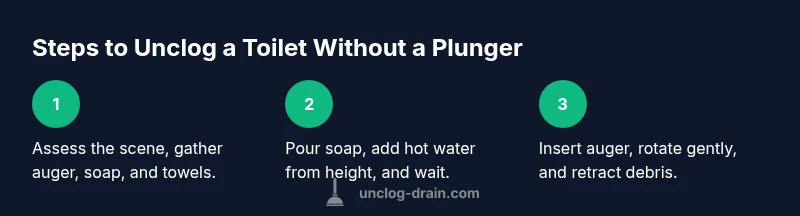
Put on gloves, clear the area, and gather the auger, dish soap, hot water, towels, and a bucket. Check for signs of overflow and determine if you can proceed safely. This preparation reduces mess and protects the plumbing system from additional stress.
Tip: Wear protective gloves and avoid stepping in standing water. - 2
Add dish soap and hot water
Squeeze a generous amount of dish soap into the bowl. Slowly pour hot water from a height to create a gentle suction that helps mobilize the blockage. Let sit for a few minutes before testing the flush again.
Tip: Let the soapy water sit to loosen the clog; avoid aggressive flushing during this stage. - 3
Extend and operate the toilet auger
Insert the auger into the drain and turn the handle clockwise while pushing gently. Continue until you feel resistance, then retract slowly while pulling debris toward the drain. Repeat if necessary until the blockage yields.
Tip: Do not apply excessive force; slow, steady turning reduces risk of damage. - 4
Test the flush and observe
Flush once or twice with a controlled amount of water to observe whether the clog clears. If the water drains slowly, repeat the auger or soap-and-water method. Stop if you see signs of overflow.
Tip: A successful flush should move water without rising toward the rim. - 5
Escalate when necessary
If the blockage persists or there is ongoing overflow, contact hotel maintenance immediately. Do not continue attempting aggressive methods. Document the issue if possible to aid the maintenance team.
Tip: Having clear incident details speeds up professional assistance.
Common Questions
Can I use chemical drain cleaners when the plunger isn’t available?
Chemical drain cleaners can damage seals and create fumes, especially in enclosed hotel bathrooms. They are not recommended for guest-room use. If you must consider alternatives, rely on mechanical methods like a toilet auger or professional assistance.
Chemical cleaners aren’t advised for hotel toilets; use mechanical methods or maintenance help.
What should I do if the toilet keeps overflowing after trying no-plunger methods?
If overflow occurs, stop flushing, contain the area with towels, and contact hotel maintenance immediately. Do not continue attempting to fix it yourself, as this could worsen the situation.
Stop flushing and call maintenance if overflow continues.
Is using a toilet auger safe for guest-room toilets?
Yes, when used correctly, a toilet auger is designed for unblocking toilets without removing the bowl. Follow the manufacturer’s guidance and avoid forcing the tool.
A toilet auger is safe if used gently and correctly.
When should I contact hotel maintenance instead of trying again?
Contact maintenance if the clog persists after multiple no-plunger attempts or if there is any sign of overflow or sewage odor. Persistent clogs often indicate a deeper issue that requires professional attention.
Call maintenance if it remains clogged after several attempts.
What prevention tips help avoid future hotel toilet clogs?
Use only flushable items designed for toilets, avoid flushing wipes, and report recurring issues to the front desk. Small habits reduce the risk of future blockages.
Flush only safe items and report recurring issues.
Watch Video
Key Points
- Identify safety steps before acting
- Use non-destructive methods first
- Employ a toilet auger only when needed
- Escalate to maintenance for persistent clogs
- Prevent future clogs with simple habits