How to Unclog a Hotel Toilet: A Guest’s DIY Guide
Learn safe, hotel-friendly methods to unclog a toilet in a guest room. Step-by-step techniques, essential tools, and when to call hotel maintenance for persistent clogs.


By following these steps, you can safely unclog a hotel toilet using common tools and household-safe methods. You’ll learn when to try a plunger or auger, how to avoid damaging the fixture, and when to escalate to hotel maintenance. This guide emphasizes safety, minimal mess, and preserving plumbing integrity during your stay.
Understanding Hotel Toilet Clogs and Causes
Hotel toilets clog for a range of reasons, and understanding them helps you choose the right approach. In many cases, clogs form because guests flush too much toilet paper at once, or foreign objects get caught in the trap. Mineral buildup in hard water areas can also slow drainage over time, especially in aging plumbing. The Unclog Drain team notes that consistent maintenance reduces the risk, but during a guest stay, the most common culprits are paper overload and accidental blockages from small objects that find their way into the bowl.
Recognizing the signs of a developing clog is key. If water rises quickly after a flush or drains unusually slowly, you likely have a partial obstruction. Acting promptly can prevent overflow and reduce the chance of damage to the fixture. Remember: hotel pipes are designed for standard residential use, but repeated rapid fluctuations or aggressive plunging can stress flanges and seals. Keep the environment calm, use minimal water, and prepare to escalate if needed.
Tools and Preparations You Might Need
Before you dive in, gather a small set of tools to increase your chances of success without creating a mess. Basic plunger and a closet auger are your two primary options; gloves protect your hands, and towels guard the floor from splashes. Having a bucket and some old towels handy can help manage overflow. If you’re staying in a room with a less accessible toilet or unusual plumbing, a flashlight allows you to inspect the trap and bowl more effectively.
In many hotel rooms, you’ll find a generic plunger with a rubber cup and a metal shaft. A closet auger is designed to navigate the toilet trap without scratching porcelain. If you don’t have access to an auger, a plunger is often enough to create a seal and push the clog through. Always test the plunger’s seal first; a poor seal can push air instead of water and make the clog worse.
Safety, Etiquette, and Hotel Policies
When dealing with a clogged toilet in a hotel, safety and etiquette matter. Avoid chemical drain cleaners; they can react with pipes and seals and may violate hotel policies or trigger maintenance calls. Protect yourself and the room by laying down towels to catch water, turning off the water supply if the flush mechanism leaks, and wearing gloves. If you suspect the clog originates from the building’s main line or you see sewage backup, stop immediately and contact hotel staff. Guests should also respect privacy and not tamper with other fixtures, as hotel plumbing systems are shared and sensitive.
According to Unclog Drain, persistent clogs often come from overloads or misused items; following non-chemical methods first minimizes risk and keeps the system healthy. If your attempts fail, it’s wise to involve hotel maintenance rather than forcing a fix that could worsen the problem.
Plunger-First vs. Auger: Choosing Your Strategy
Most hotel clogs respond to a well-executed plunger. Start with a flange-style plunger if available, ensuring a good seal around the drain opening. Plunge with steady, vertical thrusts for 15–30 seconds, then pause to observe drainage. If the water level remains high or starts to overflow, stop and reassess. A closet auger can help when the clog is deeper in the trap or involves detergents, paper, or non-flushable objects that a plunger can’t dislodge. Insert the auger, crank the handle slowly, and pull out resistance gradually to avoid harming the porcelain.
Unclog Drain recommends a careful, stepwise approach: try the plunger first, switch to the auger if needed, and never mix aggressive chemical cleaners with mechanical methods. When used correctly, a closet auger minimizes the risk of splashes and reduces the chance of creating a larger blockage further down the line.
Post-Clearance Steps and Prevention
Once the clog clears, flush a couple of times to ensure flow is steady. If the water level rises again or gurgling continues, halt and recheck for partial blockages. Clean up the area with towels and sanitized wipes, and dispose of waste properly to avoid odors.
To prevent future clogs, avoid flushing large amounts of paper at once, and never flush items like wipes, feminine products, or plastic wrappers. If you’re staying in a hotel frequently, consider leaving a short note for staff about bathroom usage guidelines in the room’s guest information folder. Regular maintenance by the facility staff remains the best long-term defense against recurrent clogs.
When to Call Hotel Maintenance
If your attempts fail after a thorough plunger and auger session, or if you notice slow drainage in multiple fixtures, it’s time to contact hotel maintenance. Persistent clogs can indicate a deeper issue in the building’s main line or a faulty trap seal that requires professional equipment and expertise. Do not attempt to force a fix beyond your skill level; professionals have access to tools and procedures that protect the plumbing and minimize disruption to other guests. The goal is a quick, safe resolution with minimal mess and no damage to the room or fixtures.
Tools & Materials
- Flat rubber plunger (flange-type preferred)(Ensure a tight seal around the toilet drain opening)
- Toilet auger (closet auger)(Crank slowly, avoid scratching porcelain)
- Rubber gloves(Protect hands from contamination)
- Old towels or absorbent mat(Protect floor and catch overflow)
- Bucket(Manage overflow or water collection)
- Flashlight(Inspect trap and interior of bowl)
- Dish soap (optional)(Can help lubricate if used cautiously)
Steps
Estimated time: 30-45 minutes
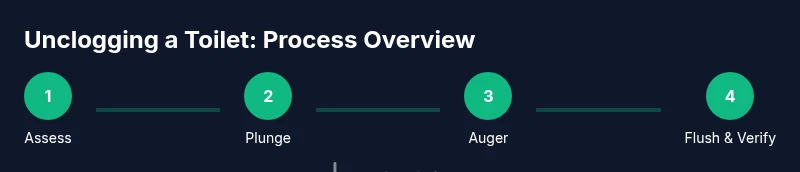
- 1
Assess the situation
Observe water level and determine if it’s safe to plunge without overflowing. If there’s already overflow, remove excess water with towels or a bucket before starting.
Tip: Do not drown the toilet with extra water; keep it manageable to prevent spills. - 2
Prepare the area
Lay towels around the base and gather your tools. Put on gloves and place a towel over the edge to catch any splashes. Ensure the bathroom is well-lit.
Tip: Clear the area to avoid tripping on cords or spills. - 3
Try the plunger
Seal the plunger around the drain and push straight down with steady, vertical thrusts for 15–30 seconds. Lift to see if drainage improves, then repeat a few times.
Tip: Keep the seal tight; a loose seal wastes effort and can splash back. - 4
Switch to the auger if needed
If plunging fails, insert the closet auger into the bowl and rotate the handle gently to extend the coil. When you feel resistance, pull back slowly to pull the obstruction free.
Tip: Do not force; apply controlled pressure to avoid pipe damage. - 5
Flush and verify
After clearing, slowly press the flush and observe the water level. If the bowl empties smoothly, continue with a couple of additional flushes to confirm clearance.
Tip: Watch for any slow drainage or gurgling; these indicate a residual blockage. - 6
Cleanup and escalate if needed
Dispose of towels and wash hands thoroughly. If the clog recurs after a short period or affects other fixtures, contact hotel maintenance promptly.
Tip: Document any recurring issues with room management for faster service.
Common Questions
Is it safe to use chemical drain cleaners in a hotel toilet?
No. Chemical drain cleaners can damage hotel plumbing, create hazardous reactions, and may violate hotel policies. Use mechanical methods first and seek maintenance for persistent clogs.
Chemical cleaners are not recommended for hotel toilets. Use plungers or augers first, and contact maintenance if the clog persists.
What if the plunger causes overflow?
If overflow begins, stop plunging, remove excess water with towels, and reassess. Check the plunger seal and try again with a gentler, steady motion.
If you see overflow, stop and absorb the water. Check the seal and retry carefully.
Can I use hot water to clear a clog?
Hot water can help with minor buildup, but it’s not reliable for major clogs and may risk cracking ceramic if very hot. Use lukewarm to warm water if you add it.
Hot water isn’t a guaranteed fix and can risk damage; use it cautiously if at all.
Should I flush repeatedly after plunging?
Yes, perform a couple of careful flushes to confirm clearance, but avoid forcing more water than the bowl can handle at once.
Flush a couple of times to confirm clearance, but don’t push the water too hard.
What should I do if the clog returns soon after?
If the clog recurs, stop attempting ad hoc fixes and contact hotel maintenance; there may be a deeper issue in the plumbing system.
If it recurs, contact maintenance—there could be a larger plumbing problem.
Is retrieving an object from the trap safe for a guest?
Guest object retrieval is not advised; leave it to trained staff with proper tools to prevent injury or damage.
Don’t try to retrieve objects yourself; call staff for safe removal.
Watch Video
Key Points
- Assess before acting to prevent overflow.
- Start with a plunger, then use an auger if needed.
- Avoid chemical cleaners in hotel toilets.
- Escalate to maintenance for persistent or ambiguous clogs.
- Protect the area and clean up thoroughly after finishing.