Toilet Not Draining No Clog? Quick Troubleshooting Guide
If your toilet won't drain with no visible clog, this urgent DIY troubleshooting guide helps you diagnose quickly, fix safely, and know when to call a plumber.


When your toilet isn’t draining and you can’t see a clog, start with basic, low-risk fixes: plunge firmly with a flange plunger to clear a partial obstruction, then try a closet auger if needed. If water still won’t drain after two attempts, stop and call a plumber to check the sewer line and vent stack. Quick, careful steps prevent water damage and bigger costs.
Understanding the Problem: Toilet Not Draining No Clog
A toilet not draining with no visible clog is surprisingly common and can be alarming. You may flush and see water rise but barely drain, or you might hear gurgling from the drain or nearby fixtures. In many cases, the issue isn’t a hairball or toilet paper stuck in the rim—it's a partial obstruction further down the line, a venting problem, or a subtle main-line backup. Recognizing that the symptom can have multiple causes helps you choose safer, faster fixes and avoid unnecessary chemical cleaners that can harm your toilet or pipes. According to Unclog Drain analysis, most no-clog drain issues respond to mechanical fixes first, before escalating to professional service. Keeping a calm approach and following a step-by-step plan is essential when every minute counts around a potential overflow.
Quick Home Checks That Don’t Involve Disassembly
Start with non-invasive checks that often resolve the problem without taking the toilet apart. Verify the toilet tank is delivering a full flush by inspecting the float and fill valve. Ensure the flush lever isn’t loose or obstructed and that the chain has proper tension. Check the sink or tub drains in the same bathroom to see if a shared vent or drainage issue is affecting multiple fixtures. Inspect the bathroom’s floor around the toilet for any signs of leakage, which could indicate a seal problem or a hidden crack. If water continues to rise during flushing, avoid repeated flushes to prevent overflow and consider placing towels nearby as a precaution. Safety first: do not mix chemical cleaners and avoid acidic or caustic products that can damage porcelain.
How Toilets Drain: What Slow Drains Look Like and Why No Visible Clog Happens
A toilet drains through a siphon action created by a properly vented trap. When a clog exists, you typically notice slow draining, gurgling, or water backing up into the bowl. But a “no clog” drain can still fail to empty due to issues like a partial obstruction far down the drain line, a blocked vent stack, or a sewer line problem. A clogged vent prevents air from entering the plumbing system, creating suction that slows drainage. A partial downstream blockage may not be visible at the bowl but can still severely impede flow. Understanding these dynamics helps you select the right tool for the job and prevents using the wrong method that could push debris further into the system.
Diagnostic-Flow Overview: Symptom → Diagnosis → Solutions
When you observe a toilet not draining with no visible clog, begin with simple, safe checks, then move to mechanical tools. If initial attempts fail, broaden the diagnosis to hidden blockages, vent issues, or sewer line concerns. The goal is to distinguish between a local toilet problem and a system-wide drainage issue. This diagnostic mindset, supported by tools like a flange plunger and closet auger, is your best path to a quick resolution while avoiding damage or overflow.
Common Fixes: From Plunger to Auger – Safe, Practical Solutions
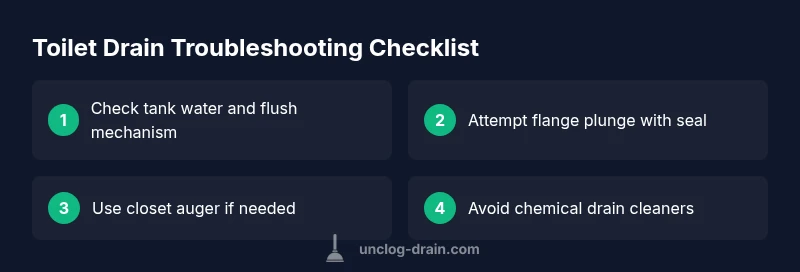
Start with the simplest fix: a proper flange plunger. Use a firm, sealing motion to attempt to clear a partial obstruction. If that doesn’t work, move to a closet auger designed for toilets. Follow the manufacturer instructions to avoid scouring the bowl or damaging the porcelain. Avoid chemical drain cleaners; they can corrode seals and harm the septic system. After mechanical fixes, flush several times with cold water to verify the drain is functioning. If you still see drainage problems, consider a more thorough inspection, but do not force the issue beyond what is safe for your plumbing.
Safety, Warnings, and When to Stop and Call a Pro
If you notice sewage odors, multiple fixtures backing up, or the water level rising to the rim, stop DIY attempts immediately. These are clear signs of a potential main sewer backup or vent stack problem, which requires professional evaluation. Always wear gloves and eye protection when dealing with toilets, and never mix cleaners or expose yourself to raw sewage. If you’re unsure about the correct tool or risk level, err on the side of caution and contact a licensed plumber. Unclog Drain recommends seeking professional help when there’s uncertainty about venting, main lines, or septic systems.
Prevention Tips: Keeping Your Toilet Draining Smoothly
Preventing future clogs starts with a few habits and routine checks. Don’t flush items that don’t disintegrate easily (baby wipes, wipes labeled flushable, feminine hygiene products). Consider a regular maintenance routine: inspect the toilet seal for leaks, keep the bowl clean to prevent buildup, and manage the toilet’s water level to ensure a strong, consistent flush. If your home has older plumbing or a history of slow drains, schedule periodic inspections and consider vent cleaning or main line checks as part of preventative maintenance. Regular care reduces emergency calls and keeps your drainage system healthy.
What to Do If the Problem Persists
If the toilet still won’t drain after two solid attempts with a flange plunger and a closet auger, stop and call a plumber. A professional can determine if a downstream blockage, vent issue, or sewer line problem is present. In many cases, a plumber can clear the line with specialized tools, perform a camera inspection, or advise replacement options for aging pipes. Early professional input can prevent water damage, reduce mess, and avert more costly repairs later.
Steps
Estimated time: 45-75 minutes
- 1
Secure the area and prep
Place towels, wear gloves, and gather tools (flange plunger, closet auger). Check for overflow risk and turn off water supply if a backup seems imminent.
Tip: Have a bucket ready to catch any overflow from the bowl. - 2
First plunge
Use a flange plunger with a tight seal over the drain opening. Push and pull with steady, full-length strokes for 15-20 seconds, then check drainage. If water remains, repeat a few more times before moving on.
Tip: Keep the plunger upright to maintain suction; avoid breaking the seal during strokes. - 3
Try a closet auger
Follow the device instructions to extend the auger into the drain and gently rotate while advancing. Break up or pull the blockage as you progress.
Tip: Do not force the auger past resistance; stop if you feel obstruction or unusual resistance. - 4
Flush and test
Slowly flush with cold water to observe whether the bowl drains fully. If it still struggles, repeat the plunging or auger steps once more.
Tip: Use cold water; hot water can cause porcelain to crack in some toilets. - 5
Avoid chemical drain cleaners
Chemical cleaners can damage the toilet and pipes and may not reach deep blockages. Opt for mechanical methods first and safe alternatives if needed.
Tip: If you consider enzyme-based cleaners, allow ample time for activity and follow product guidelines. - 6
Decide on next steps
If after multiple attempts drainage remains poor or water backs up, call a plumber for a camera inspection and professional diagnosis.
Tip: Document symptoms (noise, number of flushes, time to drain) to help the technician diagnose quickly.
Diagnosis: Toilet won't drain and bowl remains full or slowly drains despite flushing
Possible Causes
- highPartial clog further down the drain line (inside toilet trap or pipe)
- mediumVent stack blockage preventing air entry and causing slow drainage
- lowMain sewer line backup or septic system issue
Fixes
- easyUse a flange toilet plunger to attempt dislodging a partial downstream clog
- easyTry a closet auger (toilet auger) to address deeper obstructions
- hardIf venting or main line backup is suspected, stop DIY attempts and contact a plumber
Common Questions
What does it mean if my toilet won't drain but I don't see a clog?
A lack of visible clog doesn’t rule out a hidden obstruction or vent issue. The problem could be a partial blockage further down the line, a blocked vent, or even a sewer-backup condition. Mechanical methods like plunging or augering often resolve the issue without disassembly.
No visible clog doesn’t mean nothing’s clogged. It can be a hidden blockage or vent problem. Start with plunging or an auger, and call a pro if unresolved.
Is using a chemical drain cleaner safe for a toilet not draining no clog?
Most plumbers discourage chemical drain cleaners for toilets, as they can damage seals and septic systems and may not reach deeper blockages. Mechanical methods are preferred first. If you choose to use a chemical, do so sparingly and follow manufacturer directions.
Chemical cleaners can harm seals and the septic system, so use caution and prefer mechanical methods first.
When should I call a plumber for a slow-draining toilet?
If plunging and using a closet auger don’t restore drainage after two solid attempts, or if you notice sewage odors, multiple fixtures backing up, or water rising toward the rim, contact a licensed plumber. A professional can diagnose vent issues or main sewer problems and perform camera inspections.
Call a plumber if two solid tries don’t fix it or if backup signs appear.
Can vent problems cause a toilet to not drain properly?
Yes. A blocked vent stack can prevent air from entering the drainage system, creating a vacuum that slows drainage and can cause gurgling. Inspecting or clearing a vent is best left to a pro if you’re not comfortable on the roof.
Vent blocks can trap air and slow drainage; a professional should handle roof vent checks.
Are there any safe DIY checks I can perform after a no-clog drain?
Yes. Confirm the water level in the toilet tank, ensure the flush valve seals correctly, and test with a flange plunger. If the issue repeats, avoid repeated aggressive plunges and seek professional help to prevent damage.
Check the tank, seal, and use the proper plunger. If it persists, call a pro.
Watch Video
Key Points
- Start with safe, mechanical fixes before chemicals.
- Differentiate no-clog drain from sewer or vent problems.
- Call a pro if the problem persists after two solid attempts.
- Prevention matters: avoid flushing non-dispersible items.