Plumber for Clogged Toilet: Quick Troubleshooting Guide
Dealing with a clogged toilet? Learn fast troubleshooting steps, when to DIY, and when to call a plumber for clogged toilet. Clear guidance for homeowners.


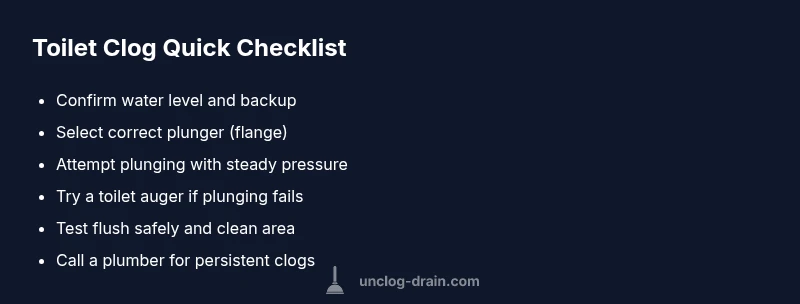
Most clogs are a trap or drain blockage. Begin with a plunger, then a toilet auger if plunging fails. If water backs up or the clog persists after several attempts, contact a plumber for clogged toilet. According to Unclog Drain, safe DIY fixes work for minor clogs, but avoid risky chemicals.
Common Causes of Toilet Clogs\n\nAccording to Unclog Drain, the most frequent culprits behind a clogged toilet are buildup in the bowl trap, paper or foreign objects clogging the rim feed, and partial blockages in the waste line. A simple blockage in the trap can prevent water from moving freely, causing slow draining or backups. Over time, excessive toilet paper or flushable wipes (even those labeled flushable) can accumulate and snag on the bend of the toilet trap, forming a stubborn clog. In some homes, a blocked vent pipe or a partial sewer-line issue can create pressure that makes the bowl drain poorly or back up into the tub or shower. By recognizing these common causes, you can choose the most effective first steps and decide when professional help is warranted. Unclog Drain analysis shows that most residential clogs originate from everyday use: too much toilet paper, objects flushed accidentally, or a combination of both. Being aware of these factors helps you act quickly and safely, limiting the risk of overflows or damage to the porcelain and plumbing.
Quick Checks You Can Do Before Calling a Plumber\n\nFirst, assess the water level in the bowl and the presence of backup in the drain. Do not flush again. If the water remains high, proceed to plunging with a flange plunger. Make sure the plunger forms a tight seal and push straight up and down without twisting. If plunging doesn't clear the clog after 15-20 vigorous pumps, try a toilet auger carefully, inserting it into the drain and turning the handle clockwise to dislodge the blockage. Avoid forcing the auger beyond the trap; if you encounter resistance, stop. If water backs up into the tub or there is a sewage odor, stop and call a plumber rather than continuing to pressurize the line. Based on safety considerations, always wear gloves and eye protection. These checks help you determine if a DIY fix is appropriate or if the situation requires professional plumbing intervention.
When to Call a Professional Plumber for a Clogged Toilet\n\nIf multiple fixtures are blocked, if water backs up into other fixtures, if you hear gurgling, if you smell sewage, if plungers and augers fail; If the toilet has a history of frequent clogs or you can't access the trap area; If you suspect a sewer-line issue or vent problem, call a plumber.
DIY Tools and Safety You Need\n\nEssential tools for basic unclogging include a flange plunger, a toilet auger (snake), rubber gloves, a bucket, towels, and a flashlight. Wear PPE to protect your hands and eyes, and keep kids and pets away during the process. Avoid metal jewelry that could catch on components and create scratches. Store chemicals safely and never mix cleaners in the same drain. These basics prepare you for a controlled, safe attempt that minimizes risk of overflow or personal injury.
Step-By-Step: Safe, Practical Fixes You Can Try\n\nThis section outlines the general approach and safety considerations. If you’re uncomfortable with any step, skip to professional help. Use the recommended tools, follow the order below, and monitor for progress. When in doubt, pause and reassess to avoid spills or damage. The steps below map to the more detailed procedure in our full guide and are designed for common residential toilets.
Preventing Future Toilet Clogs\n\nPreventing clogs is easier than clearing them. Use less toilet paper, avoid flushing wipes or feminine products, and consider a bin for non-flushables. Regularly check the toilet trap area during routine maintenance and be mindful of what goes down the drain. Schedule a periodic drain maintenance check if your home has older pipes or a history of slow drains.
Steps
Estimated time: 45-60 minutes
- 1
Safety and Prep
Before you start, put on gloves and safety glasses. Move valuables away and protect the floor with towels. Clear the area so you can work without tripping or spilling water.
Tip: Protective gear reduces contact with sewage and helps you stay focused. - 2
Check Water Level and Backup
Look at the water level in the bowl. If it’s close to the rim, proceed with plunging. If there’s a backup in the shower or tub, reassess before continuing.
Tip: A dry floor makes cleanup easier and safer. - 3
Plunge Effectively
Use a flange plunger and seal around the drain. Plunge with short, forceful strokes, keeping the seal intact. Pause to check progress after 15-20 pumps.
Tip: A good seal and steady rhythm maximize suction. - 4
Try the Toilet Auger
Insert the auger into the drain and gently rotate clockwise while pushing forward. Stop if you feel resistance in the trap and pull back slightly. Withdraw slowly after a few rotations to avoid jamming.
Tip: Rotate slowly and don’t push hard through resistance. - 5
Flush Test and Reassess
Slowly flush to test whether the water clears. If the water rises or backs up, stop and consider professional help. Do not repeatedly flush a persistent clog.
Tip: If it gurgles, that’s a sign to stop DIY attempts. - 6
Clean Up and Sanitize
Remove tools, wipe surfaces, and sanitize your hands and gloves. Clean towels and buckets promptly to prevent odors. Store gear for next maintenance.
Tip: Disinfect after use to prevent cross-contamination.
Diagnosis: Toilet is clogged or won’t drain after flushing
Possible Causes
- highBlockage in the toilet trap from toilet paper or foreign objects
- mediumPartial blockage further down the waste line
- lowVent pipe obstruction causing pressure build-up
- lowSewer line issue or misaligned drain components
Fixes
- easyUse a flange plunger to clear the trap
- easyCarefully run a toilet auger to break up the blockage
- easyAvoid chemical drain cleaners in toilets; consider professional help if persistent
Common Questions
Should I use chemical drain cleaners for a clogged toilet?
Chemical cleaners are not recommended for toilets. They can damage seals, corrode pipes, and create hazardous fumes. Start with mechanical methods like a plunger or auger and call a professional for stubborn clogs.
Avoid chemical cleaners in toilets. Use a plunger or auger first, and call a plumber if needed.
Can I use a regular plunger on a clogged toilet?
Yes. A flange plunger provides a better seal for toilets. Ensure a tight seal and use steady, forceful pumps without twisting.
Yes, use a flange plunger with steady pumps.
When is a toilet auger necessary?
If plunging fails or the blockage is beyond the trap, a toilet auger can reach deeper into the drain to break up the clog.
If plunging fails, try a toilet auger to reach deeper into the drain.
Is it safe to DIY unclog a toilet?
For minor clogs with proper tools, DIY can be safe. For recurring or severe clogs, sewage odors, or backups, hire a plumber to avoid damage.
DIY can work for simple clogs, but call a plumber for persistent issues.
What should I do if sewage backs up into my bathroom?
If sewage backs up, leave the area, avoid contact, shut off water if needed, and call an emergency plumber. Do not attempt aggressive DIY fixes.
If sewage backs up, evacuate area and call a plumber right away.
How long does it take a plumber to fix a clogged toilet?
A typical service call takes about an hour, depending on the cause and accessibility. Complex sewer-line work can take longer.
Most fixes take about an hour, but it varies with the clog.
Watch Video
Key Points
- Start with the plunger first.
- Use a toilet auger if plunging fails.
- Avoid chemical cleaners in toilets.
- Call a plumber for recurring or sewage-backed clogs.