How to Tell If a Clogged Toilet: Fast DIY Troubleshooting
Urgent, practical guide to identify a clogged toilet, diagnose common causes, and fix it fast with safe DIY steps and when to call a pro.


If your toilet won't flush or drains slowly, the most likely cause is a partial or full clog in the bowl or drain line. Start with simple checks and a plunger, then move to a closet auger if needed. This quick test helps you decide whether to DIY or call a pro.
How to tell if clogged toilet: quick signs you can't ignore
If you’re trying to solve a household mystery, understanding how to tell if clogged toilet is happening is the first step. Common red flags include a slow-flushing bowl, repeated partial flushes, gurgling noises from the drain, and water rising toward the rim after flushing. In many homes, clogged toilets begin with a routine buildup of toilet paper, wipes, or foreign objects that catch on bends in the trap. If you notice any of these signs, prioritize a systematic approach rather than guessing, because a small issue can become a bigger backup within hours. This guide aligns with the Unclog Drain method: assess quickly, act safely, and escalate only when needed. The keyword here is proactive detection—knowing how to tell if clogged toilet means you can prevent a messy overflow and protect your bathroom’s plumbing.
Common causes behind a clogged toilet
Toilet clogs don’t appear from nowhere. The most frequent culprits are excessive toilet paper, toilet paper shedding fibers, and buildup of hygienic wipes or sanitary products that aren’t designed to dissolve in water. In some homes, a partial clog forms in the toilet trap, forcing waste to back up into the bowl. A deeper drain problem, such as a clogged main line or venting issue, can masquerade as a toilet problem even when the bowl seems only mildly affected. Understanding these causes helps you differentiate between a simple, DIY fix and a larger plumbing job. Observe patterns: does the clog only occur after certain flushes, or is it persistent after repeated plunging? Unclog Drain notes that most residential clogs originate inside the toilet bowl or drain, not in the sewer line.
First, try the simplest fixes
Begin with the easiest steps that require no special tools. Ensure the toilet has enough water to cover the plunger’s rubber disk, then apply steady, even pressure with a flange plunger. If the water level falls and flushes improve, you’re on the right track. If not, wait for the bowl to refill, re-seal the plunger, and repeat a few times. Avoid aggressive pumping that could splash. While plunging, observe whether the water level drops or remains stubbornly high—this will guide your next move and help you decide if a more advanced tool is necessary.
When a plunger isn't enough: using a closet auger safely
If plunging doesn’t clear the blockage, a closet auger can reach deeper into the trap and drain line. Feed the auger slowly until you meet resistance, then rotate to break through the clog or hook the object. Do not force it; apply gentle, consistent pressure. Use gloves and eye protection if possible. After removal, slowly retract and flush to confirm clearance. If you still see high water or backflow, stop and revert to a professional option—continuous backflow can indicate a more serious blockage.
Diagnosing at the drain: check the toilet trap and vent system
A clog isn’t always in the bowl; it can be further down the line. Check the area around the toilet for standing water leakage that might indicate a deeper blockage. Listen for gurgling in the drain vent; a blocked vent can cause slow drainage and repeated backups. If you suspect a vent issue, do not seal vents or attempt risky DIY fixes—vent problems can require professional evaluation and may involve roof access or mainline assessment. A careful diagnostic approach saves you time and potential damage to fixtures.
Safety and environmental considerations
When tackling a clogged toilet, prioritize safety. Wear gloves and eye protection; never mix chemical drain cleaners with other products, and avoid flushing large quantities of paper or wipes at once. Chemical cleaners can damage porcelain and pipes if used improperly, and they won’t fix all types of clogs. If you notice sewage backing up into other fixtures, or if you have a septic system, stop immediately and call a professional. Maintain good ventilation and keep pets and children away from the work area to avoid exposure to wastewater.
Preventing future clogs with simple habits
After you clear a clog, adopt preventive habits that reduce recurrence. Break up toilet paper into smaller pieces, flush only what’s necessary, and avoid flushing disposable wipes or non-dissolvable products. Regularly inspect the toilet’s flush mechanism and valve for wear. If your household tends to use harsh cleaners, switch to milder products that won’t corrode piping over time. A consistent maintenance routine cuts down on emergency calls and keeps your bathroom running smoothly.
What to do if the clog recurs or toilets back up
If the clog returns after a DIY fix, or you experience sewage backup, stop attempting DIY solutions immediately and contact a licensed plumber. Recurrent clogs often indicate deeper issues such as a mainline obstruction, venting problems, or septic system distress. Document the symptoms and any tools used so a pro can jump to an accurate diagnosis. While waiting for help, avoid pouring more water into the system and keep the area clear to prevent accidents or contamination.
Quick test and maintenance routine
Endurance with toilets depends on a routine check. Set aside a few minutes weekly to inspect the toilet for slow flushing, listen for gurgling, and avoid heavy waste in a single flush. If you’re unsure how to tell if clogged toilet based on a pattern you observe, keep a simple log of symptoms and fixes tried. This habit reduces guesswork and speeds up the path to a durable solution.
Steps
Estimated time: 30-45 minutes
- 1
Prepare and assess
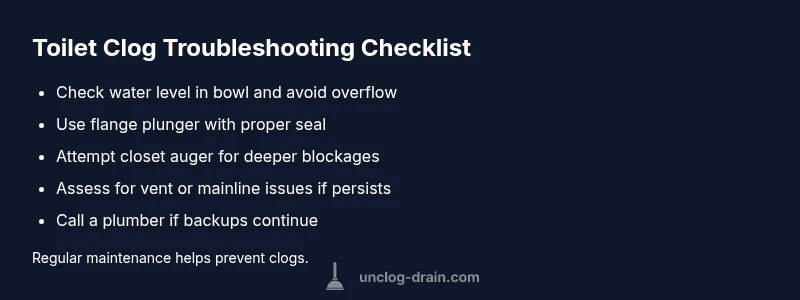
Put on gloves and clear the area. Check water level in the bowl and confirm there isn’t sewage backup elsewhere. Gather a flange plunger and a closet auger as your primary tools. This step sets the stage for safe, effective fixes.
Tip: Keep towels handy for clean-up and avoid splashing. - 2
Plunge the bowl
Place the plunger so the flange is fully submerged and create a tight seal. Push and pull with steady pressure for 15–20 seconds, then pause and test flush. Repeat if needed until the water drains freely.
Tip: A firm, vertical motion is more effective than quick, shallow pumps. - 3
Try a closet auger
Insert the auger into the drain and rotate while advancing slowly. When you feel resistance, gently push and pull to break up or retrieve the clog. Avoid forcing past the obstruction.
Tip: Do not twist wildly; controlled movements reduce pipe damage risk. - 4
Rinse and re-test
After removal, flush slowly to observe water behavior. If the toilet accepts a full flush and returns to normal operation, you’ve likely resolved the clog. If water still backs up, review the previous steps and consider a professional assessment.
Tip: Keep a log of steps tried for future reference. - 5
Address deeper issues
If basic fixes fail, don’t force more attempts—deeper blockages or vent issues can require professional equipment. A licensed plumber can diagnose mainline or vent problems with cameras and specialized tools.
Tip: Early professional help can prevent extensive damage.
Diagnosis: Toilet won’t flush, drains slowly, or water rises toward the rim after flushing
Possible Causes
- highPartial clog in the bowl trap or drain line
- lowFlush lever binding or improper operation
- lowVentilation problem causing pressure buildup
Fixes
- easyUse a flange plunger to clear minor clogs; ensure a good seal and steady pressure
- easyInsert a closet auger to reach deeper blockages and clear the line safely
- mediumAvoid chemical drain cleaners; address root causes and call a pro if the clog persists
Common Questions
What is the quickest sign that my toilet is clogged?
The quickest signs are a slow flush, a bowl that takes longer to drain, gurgling sounds from the drain, or water rising toward the rim after flushing. If you observe these, it’s likely a clog forming somewhere in the bowl or drain line.
Look for a slow flush, gurgling sounds, or water rising; these usually mean a clog.
Can toilet unclogging products harm my pipes?
Chemical unclogging products can damage pipes and seals if misused. They don’t always reach the clog effectively, and they can create harmful fumes. Mechanical methods are generally safer for DIY fixes.
Chemical drain cleaners can hurt pipes; safer to use plungers or augers first.
Is a plunger effective for all clogs?
A plunger works well for partial or shallow clogs in many cases. If the blockage is deep in the drain line, you may need an auger or professional help.
Plungers fix many clogs, but deep blockages may need an auger.
When should I call a plumber?
Call a plumber if you have sewage backup, if multiple toilets are clogged, or if a DIY fix fails after several attempts. Persistent backups can indicate mainline or vent problems.
Call a plumber if backup occurs or a DIY fix doesn’t clear the clog.
What tools do I need for DIY unclogging?
Essential tools include a flange plunger, a closet auger, gloves, and a bucket. A toilet brush helps clean up after the job. Avoid mixing tools not designed for toilets.
You’ll need a flange plunger and maybe a closet auger, plus gloves.
How can I prevent clogs in the future?
Prevent clogs by flushing only toilet paper, avoiding wipes, and disposing of non-dissolvable items properly. Regular maintenance and gentle cleaners help keep pipes clear.
Flush only toilet paper and avoid wipes; regular maintenance helps.
Watch Video
Key Points
- Identify signs early to prevent overflow.
- Start with plunging before moving to deeper tools.
- Avoid chemical cleaners for most clogs.
- Call a plumber if backflow or persistent clogs occur.
- Prevent future clogs with proper disposal habits.