Toilet Keeps Clogging? Urgent Troubleshooting Guide
Dealing with a toilet that keeps clogging? This urgent DIY guide covers safe plunging, auger use, vent checks, prevention, and when to call a plumber for help.


Toilet clogs are usually caused by paper overload or flushing items that shouldn’t go down the bowl. Start with a proper flange plunger to form a tight seal and plunge with steady pressure, then move to a toilet auger if needed. If the clog persists, test again gently and avoid chemical cleaners that can harm the porcelain.
Why toilets keep clogging: common causes
According to Unclog Drain, most toilet clogs begin with excessive toilet paper or flushing items that shouldn’t go down the bowl. The Unclog Drain team found that simple habits—like flushing wipes, cotton balls, or sanitary products—cause repeated jams. A partial blockage can also form in the trap or drain line, gradually slowing flow until a flush becomes a struggle. Regular maintenance and mindful flushing can dramatically reduce these events. In homes with septic systems, solids can accumulate more quickly when the tank is not pumped on schedule, leading to frequent backups. By understanding these common causes, you can target the fix rather than guessing.
Diagnosing the problem before you plunge or snakethe end
Start by observing the toilet during a flush. Is the water level high and then slowly receding, or does the water rise and threaten overflow? Remove excess bathroom items nearby and prepare towels. If you notice a gurgling sound in the vent or a slow drain in other fixtures, the issue may be broader than a single bowl. The Unclog Drain analysis notes that improper flushing is a major contributor to recurring clogs, so addressing habits is part of the cure. Document what was flushed recently to help avoid repeating mistakes.
Quick fixes you can try now (start with the easiest)
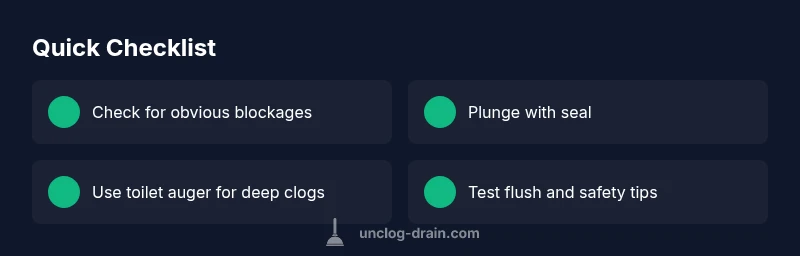
Begin with a high-quality flange plunger. Ensure a tight seal and a steady push, then pull back with controlled force. If the water drains slowly but visibly, you’re on the path to success. Repeat as needed, but avoid forcing the water down or mixing cleaners. If a plunger alone doesn’t clear the blockage, switch to a toilet auger designed for toilets. Safety first: keep hands dry and wear gloves. Remember, if overflowing begins, stop and turn off the water supply before proceeding.
When and how to use a toilet auger safely
A toilet auger (snake) can reach deeper clogs that plunging misses. Use the protective sleeve and insert gently, turning the handle slowly to avoid scratching the porcelain. If you feel resistance, back off slightly and try again with a slightly different angle. Clear the debris and pull the cable out slowly to avoid pushing the clog further into the drain. The goal is to dislodge or retrieve the obstruction without harming the trap or seals.
Venting, drainage, and why they matter
A blocked vent stack reduces the toilet’s ability to drain properly, which can worsen clogs. If other drains in the house are slow, a vent obstruction or a buried sewer issue could be the culprit. Clear avoidance of chemical cleaners is advised; instead, use mechanical methods. Proper venting also reduces the risk of sewer gas buildup and helps prevent repeated blockages. If you’re unsure about vent issues, consider professional inspection.
Prevention: keeping future clogs at bay
Make a habit of flushing once per use and avoid flushing any items that aren’t toilet paper. Install a toilet paper limit (one or two sheets per flush is reasonable for most households) and use flushable wipes only if they are truly flushable and used sparingly. Regular maintenance, including a quarterly check of the bowl and trap area, helps catch minor buildup early. For households with septic systems, schedule pump-outs on a routine basis to keep solids from accumulating and straining the system.
Safety myths and common mistakes to avoid
Do not mix chemical drain cleaners with ammonia, bleach, or other cleaners. Mixing cleaners can create dangerous fumes and damage the porcelain or pipes. Never use metal coathangers or makeshift tools in the bowl—these can crack the rim or push the clog further. Always wear gloves and eye protection if you’re scraping or scooping. Finally, avoid performing DIY work if you’re unsure about your plumbing setup. Unsafe attempts can worsen floods or sewage exposure.
When to call a plumber: when DIY isn’t enough
If you can’t clear the clog after multiple attempts or if you suspect a sewer line problem, it’s time to call a professional. A licensed plumber can safely remove hard blockages, inspect the vent, and diagnose any deeper issues with your plumbing system. The Unclog Drain team recommends seeking professional help when there are signs of recurring clogs or an unusual backup in multiple fixtures.
Steps
Estimated time: 60-75 minutes
- 1
Gather your tools and prep the area
Lay towels, gloves, a bucket, a plunger with a flange, and a toilet auger if available. Clear the area of small items that could fall in the bowl. Check that the water supply valve is accessible in case you need to shut it off.
Tip: Have a trash bag handy for used wipes or paper that come up during plunging. - 2
Stop the overflow and protect the space
If the toilet begins to overflow, do not flush again. Turn off the water supply at the wall valve and remove excess water from the bowl with a sponge or towel. This prevents a flood while you work.
Tip: Keep a towel under the base to catch any stray water. - 3
Plunge with a proper seal
Position the flange of the plunger over the drain opening to maximize suction. Push and pull with steady force without tearing the seal. If water starts to drain, continue for 15-30 seconds and test.
Tip: Use a toilet-specific plunger for best results. - 4
Try the toilet auger if needed
Feed the auger into the trap and slowly rotate the handle to dislodge the clog. Do not force hard; back off if you feel resistance and reattempt gently. Retrieve and clean the cable after use.
Tip: Wear eye protection in case debris splashes. - 5
Flush test and observe
Slowly re-open the water supply and flush a few times to confirm flow. If the toilet still struggles, stop and reassess for deeper blockages or vent issues.
Tip: If you smell sewage, stop and call a pro.
Diagnosis: Toilet keeps clogging after flushing
Possible Causes
- highOveruse of toilet paper or flushing non-flushables
- highPartial blockage in the trap or drain line
- mediumVent blockage or slow drainage in other fixtures
- lowSewer line issue or septic tank backup
Fixes
- easyStart with a proper plunger to clear surface and gradual buildup
- easyUse a toilet auger for deeper clogs
- mediumInspect and clear the vent if accessible, or call a pro for vent issues
- hardIf you suspect sewer line backup, stop DIY and contact a licensed plumber
Common Questions
Why does my toilet keep clogging after I flush?
Most clogs come from paper overload or flushing non-flushables. Work through a plunger-first approach, then use an auger if needed, and re-test after each step.
Clogs usually come from paper overload or non-flushables; start with a plunger, then a toilet auger if needed.
Can chemical drain cleaners fix toilet clogs?
Chemical cleaners are not recommended for toilets; they can damage porcelain and pipes and may not fully clear the clog. Use mechanical methods first.
Chemical cleaners aren’t recommended for toilets; they can damage them and often don’t fully clear clogs.
Is a clogged toilet a plumbing emergency?
A clogged toilet is usually not an immediate emergency unless there is an overflow. If overflow occurs, shut off water and call a pro.
It's usually not an emergency unless it overflows. If it does, turn off the water and call a plumber.
How can I prevent future clogs?
Flush only toilet paper and human waste. Avoid wipes, cotton swabs, and other items. Consider a limit on sheets per flush and regular maintenance.
Flush only toilet paper and waste. Avoid wipes and other non-flushables and perform regular maintenance.
When should I call a plumber?
If the clog persists after multiple attempts or you suspect sewer line issues, call a licensed plumber for a professional assessment.
If it won’t clear after several attempts, or you suspect sewer issues, call a plumber.
Key Points
- Stop flushing non-flushables to prevent clogs
- Plunge first, then escalate to an auger if needed
- Check venting and drainage to rule out broader problems
- Call a plumber if DIY fixes fail or you suspect sewer issues