Urgent Troubleshooting: Toilet Is Clogged and Full of Water
Urgent DIY guide to quickly unclog a toilet that’s clogged and full of water. Learn safe, fast fixes, diagnostic flow, tools, and when to call a pro from Unclog Drain.


When the toilet is clogged and full of water, the blockage is usually in the trap or drain line. Begin with a flange plunger to build a strong seal, using steady, up-and-down pressure. If that fails, try a toilet auger to reach deeper clogs. Do not flush again and shut off the water supply if water continues to rise.
Urgent Overview: Why the Toilet Is Clogged and Full of Water
If you notice the toilet is clogged and full of water, you’re facing a blockage that can overflow quickly. The most common culprits are a partial clog in the toilet trap, or an obstruction further down the drain line. In multi-story homes or with older plumbing, a backup can also involve the main sewer line. The moment you see standing water that won’t drain, treat it as an urgent plumbing issue. Quick, careful action minimizes mess, avoids water damage, and reduces the chance of permanent clogging. Throughout this guide, Unclog Drain provides practical steps homeowners can take before calling a professional.
Quick Diagnostics You Can Run in Minutes
Start with the simplest checks before tools. Verify the shut-off valve behind the toilet is fully open, and confirm the fill valve is functioning (you should see a steady refill after a flush). If other drains in the home slow or gurgle, you may be dealing with a bigger backup. Look for objects that could cause a clog in the bowl (e.g., excessive toilet paper, wipes). Do not pour chemical cleaners into a toilet that’s already overflowing. If the water level rises toward the rim during attempts to flush, stop and move to a safer approach.
Plunger vs Auger: Which Tool to Use First
A flange plunger is your first line of defense for a toilet clog. It creates a better seal in the drain compared to a generic cup plunger. Use slow, steady thrusts to push the blockage back through the trap. If plunging doesn’t clear the clog after several vigorous cycles, switch to a toilet auger. An auger can reach deeper obstructions that a plunger can’t dislodge. Avoid forcing a tool through the toilet if you feel significant resistance—pause and reassess to avoid damaging the porcelain.
Safe Plunging Technique for Standing Water
With standing water, timing matters. Place the plunger so the flange is fully submerged and oriented to seal around the drain. Use short, forceful pushes rather than long, slow ones. Maintain constant pressure for 15–30 seconds, wipe the bowl rim, and repeat. If the water remains stubborn, add a few more plunges, then pause to reassess. If the water keeps rising, it’s safer to stop and switch to an auger rather than risking a spill.
Using a Toilet Auger to Break Through Clogs
A toilet auger extends into the toilet bowl and can break up or retrieve a clog that’s lodged in the drain pipe. Insert the drum into the toilet and rotate the handle clockwise while gently pushing forward. When you encounter resistance, pull back slightly and then push again to dislodge the obstruction. After several attempts, pull the snake out slowly to avoid pushing the clog further into the system. Flush a small amount of water to test flow and repeat if needed.
Safety, Warnings, and Common Mistakes
Never mix chemical drain cleaners with plungers or augers. Strong chemicals can splash back, injure you, or damage septic systems and pipes. Wear gloves and eye protection to reduce exposure to dirty water. If you’re uncertain about you or your plumbing’s condition, avoid risky DIY maneuvers and call a pro. Remember, a rushed, forceful plunge can crack the porcelain, leading to more expensive repairs. Unclog Drain recommends taking a measured, safety-first approach and stopping if you smell gas or hear sewage backing up beyond the toilet.
Preventive Practices to Reduce Future Clogs
Regular maintenance pays off. Use a small amount of baking soda and water to keep the drain clean, avoid flushing non-flushable items, and keep wipes out of the toilet. If you have a septic system, don’t flush items that can accumulate, like paper towels or sanitary products. Consider a weekly rinse with hot water and a mild, septic-safe cleaner to prevent mineral buildup. A proactive approach minimizes future calls for emergency fixes and keeps toilets flowing smoothly.
When To Seek Professional Help and How They Solve It
If the toilet remains clogged and full of water after two or three robust attempts with a plunger and auger, or if you hear gurgling from other fixtures, it’s time to contact a licensed plumber. A professional can confirm whether the problem is in the trap, the drain line, or the main sewer line, and may perform a camera inspection to locate the blockage. The Unclog Drain team notes that timely professional help reduces the risk of water damage and saves money in the long run.
Steps
Estimated time: 30-60 minutes
- 1
preparation and safety checks
Turn off the water supply to the toilet at the shut-off valve. Put on gloves and goggles. Clear the area and place towels to catch any splashes. This step prevents overflow and protects you from dirty water.
Tip: Don’t skip the water shut-off step; it prevents a flood if plunging or augering goes deep. - 2
assess the blockage
Inspect the bowl for visible obstructions and try a quick flush with minimal water to gauge the depth of the clog. If you see standing water, you’re facing a real backup—plan to use a plunger first.
Tip: If you can see the water level drop slightly after a partial flush, it may respond to plunging. - 3
plunge with a flange plunger
Seal the drain and apply 15–30 seconds of steady, forceful strokes. Refill if the water escapes around the plunger, then try another set. Remove excess water with a sponge if you can.
Tip: Keep the plunger fully submerged and never use a cup plunger for a toilet. - 4
try a toilet auger if plunging fails
Insert the auger into the bowl and rotate the handle while pushing gently forward. Retract and push again to break up or retrieve the clog. Do not force through; back off if resistance is strong.
Tip: Be patient; augers can take a few passes to reach the clog. - 5
address overflow and clean up
If water reaches the rim, carefully remove excess water with a dipper or towel and restore a slow flush cycle to test. Clean the bowl and surrounding area after you regain control of the situation.
Tip: Never let standing water linger; bacteria multiply quickly. - 6
test flush and decide on next steps
Flush again to confirm flow. If water drains normally, monitor for 24–48 hours and adjust habits to prevent future clogs. If not, contact a licensed plumber for camera inspection or sewer line assessment.
Tip: Document your steps and keep a record of times you attempted fixes for the plumber.
Diagnosis: Toilet is clogged and full of water
Possible Causes
- highBlockage in trap or drain line
- mediumPartial obstruction in sewer line or main
- lowFaulty fill valve or flapper causing overflow
Fixes
- easyUse flange plunger to attempt clearance
- mediumUse toilet auger to reach deeper clogs
- easyShut off water supply and remove standing water; call a plumber if water rises or persists
Common Questions
What should I do first when the toilet is clogged and full of water?
Turn off the toilet’s water supply, avoid flushing, and start with a flange plunger. If water rises, stop and switch to an auger. Safety comes first to prevent spills.
First, shut off the water and don’t flush. Then try a flange plunger; if that doesn’t work, use a toilet auger.
Can chemical drain cleaners help a toilet with standing water?
Chemical cleaners are not recommended for toilets with standing water. They can splash back, damage seals, and disrupt septic systems. Use plungers or augers instead.
No—avoid chemical cleaners. Use a plunger or auger to unclog safely.
Is it safe to use a toilet auger on a clog?
Yes. A toilet auger is designed for toilets and can reach obstructions in the trap and drain. Use steady pressure and avoid forcing it through a stubborn blockage.
Yes, a toilet auger is safe and often effective for deeper clogs.
When should I call a plumber?
If water continues to rise after trying plunging and augering, or you suspect a main sewer line issue, call a licensed plumber promptly.
Call a plumber if backups persist or you hear unusual gurgling in other drains.
Can too much toilet paper cause clogs?
Excessive toilet paper can contribute to clogs. Flush in smaller portions and consider spreading out heavy toilet paper use.
Yes, too much toilet paper can clog the drain.
Why would other drains back up with a clogged toilet?
A backup in a main sewer line or a cross-connection can cause other drains to slow or overflow. This often requires professional assessment.
If other drains back up, you may have a bigger sewer issue; call a pro.
Watch Video
Key Points
- Shut off water if overflow occurs
- Start with flange plunger before other tools
- Use a toilet auger for deeper clogs
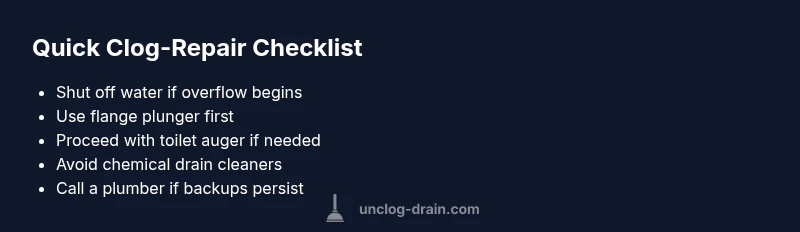
- Call a plumber if backup persists or you hear gurgling in other drains