Toilet Clogged for No Reason: Quick Troubleshooting Guide
Discover fast, safe steps to diagnose and fix a toilet clogged for no reason. Unclog Drain guides homeowners through simple checks, fixes, and prevention to keep drains flowing in 2026.


A toilet clogged for no reason usually points to a hidden or downstream blockage, venting issue, or mineral buildup rather than a loose object. Start with basic checks: confirm proper tank function, test the flush, and try a plunger or toilet auger before calling a pro. If symptoms persist, escalate to a diagnostic flow.
Common Causes of a Toilet Clogged for No Reason
Toilet problems with no obvious cause are more common than you might think. According to Unclog Drain, many clogs appear even when you haven't flushed anything unusual. A toilet clogged for no reason can stem from gradual mineral buildup in the trap or drain line, a venting issue that traps air and slows flow, or paper and waste that accumulate beyond the bend. Sometimes a foreign object slips into the toilet from a bin, a bathroom accessory, or a child’s toy, and remains unseen until it catches on the bend. The result is a slow drain or a sudden blockage that feels sudden but is usually the culmination of several small factors. In older homes, rust and mineral deposits can reduce the pipe diameter over time, increasing the chance of clogs. If you have a septic system, high water usage or a misfiring septic tank can also contribute. Finally, if someone in the house is flushing inappropriate items or too much toilet paper at once, the balance is tipped and the toilet bogs down. Understanding the most common culprits helps you pick the right fix without guessing.
Quick Checks You Can Do Now
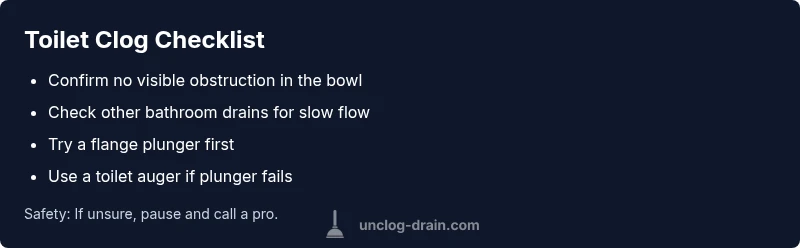
Before you reach for tools, run through a quick checklist to narrow down the cause. First, look for visible blockages in the bowl and ensure you are using the right flush technique. If water rises in the bowl but won't drain, you likely have a clog downstream. Check whether other drains in the bathroom or house are slow; if they are, the problem may be a main sewer line or vent issue rather than a single toilet. Inspect the water level in the tank; a misadjusted flapper or fill valve can create inconsistent flushes that mask a real clog. Finally, consider whether you recently introduced new products like wipes, facial tissues, or thick paper that could be pushing through slowly. If any of these checks point to a simple blockage, you can address it with a plunger or toilet auger. Safety note: never mix chemical cleaners with septic systems or use products not rated for toilets. If you’re unsure, pause and call a pro.
A Practical Diagnostic Framework
Think of the problem as a flow from symptom to root cause to fix. Start with the symptom: does the toilet flush at all, or only slowly? Next, test related drains: are sinks and showers draining normally? If other fixtures are slow, you may have a venting or main sewer issue. Consider external factors like high water usage or recent changes in the home. Map possible causes: (high) deep clog or foreign object, (medium) vent stack blockage, (low) main sewer line. For each, outline a corresponding fix: plunging for a surface clog, vent clearing if accessible, and professional assessment for main-line concerns.
Venting, Sewer Lines, and the Journey of Waste
A lot of no-reason clogs come from the plumbing vent—the pipe that lets sewer gases escape and equalizes pressure. If the vent is blocked by leaves, a bird nest, or debris, air pressure can stall flushing and push waste back into the bowl. Similarly, the main sewer line can be backed up by root intrusion, heavy rainfall, or a misaligned connection. These issues won’t fix themselves with a quick plunge; they require targeted access, diagnosis, and sometimes professional equipment. If you notice gurgling from other fixtures, water backing up in tubs, or a strong sewer odor, stop DIY attempts and call a licensed plumber. In many cases, the root cause is downstream from the toilet and won’t be reachable with a simple plunger.
Safety Tips and Common Mistakes
When addressing a toilet clog, always turn off the water supply before diving in to avoid a flood. Wear gloves and eye protection, and never reuse a damaged auger or force tools into a fragile seal. Avoid chemical drain cleaners in toilets; they can damage the porcelain, seals, and septic system, and they may release harmful fumes. Do not flush harsh items like wipes, paper towels, or sanitary products—these can worsen a clog. If you’re ever unsure about your safety or scope, stop and consult a pro. Remember, repeated DIY attempts on a stubborn clog can lead to bigger problems and higher repair costs down the line.
Prevention and Maintenance
The best defense against a toilet clog is prevention. Use only appropriate toilet paper and avoid flushing non-paper items. Install a modest amount of toilet paper per flush and consider a dedicated trash bin for products like wipes or cotton swabs. Regularly inspect the fill valve and flapper for proper operation to prevent phantom flushes that can drive unnecessary water into the drain. If you have a septic system, distribute water usage more evenly across the day and schedule periodic septic maintenance. Periodic professional checks can catch venting or sewer issues early before they become major blockages.
Real-Life Scenarios and Troubleshooting Mindset
In real homes, a toilet clogged for no reason often boils down to a hidden clog, a vent problem, or a late-stage buildup. Approach problems methodically: start with the simplest fix, observe the outcome, and escalate only if symptoms persist. This mindset helps prevent wasted time and excessive frustration. If you keep failing to clear the clog after a careful sequence of steps, documenting the symptoms (water level, sounds, when it occurs) can help a plumber diagnose the root cause faster when you call for help.
Steps
Estimated time: 45-60 minutes
- 1
Shut off water and prepare area
Locate the valve behind the toilet and turn it clockwise to shut off water. Remove excess water from the bowl with a sponge or tub to keep the work area dry, then put on protective gloves.
Tip: Keep a towel nearby for spills and snap a quick photo if you plan to call a pro later. - 2
Inspect and remove visible blockages
Look inside the bowl for obvious obstructions. If you see a loose object within reach, remove it carefully with pliers or gloves. Do not flush again until you’re sure the obstruction is cleared.
Tip: Only handle items you can see; do not probe deeper with metal objects. - 3
Use a toilet plunger correctly
Place the flange of the plunger inside the drain opening and create a tight seal. Use long, controlled strokes to push and pull, maintaining the suction for 15-30 seconds per cycle. Repeat several times.
Tip: If water doesn’t cover the plunger bell, add a small amount of water to improve suction. - 4
Try a toilet auger if plunger fails
Insert the auger into the bowl and rotate the handle to break through the clog. Feed the cable slowly, then retract and repeat until the flow returns. Avoid forcing the auger aggressively to prevent damage.
Tip: Keep the auger tip inside the drain opening; do not twist or torque aggressively. - 5
Test flush and reassemble
Turn the water back on and let the tank refill. Flush a few times to confirm the clog is gone and the toilet drains properly. If the issue remains, proceed to professional help.
Tip: If flushing worsens the problem, stop and call a plumber to prevent overflow.
Diagnosis: Toilet won't flush or drains slowly
Possible Causes
- highVisible or hidden clog downstream
- mediumVent stack blockage causing pressure problems
- lowMain sewer line issue or septic back-up
Fixes
- easyBegin with a mechanical fix: plunger with a flange, then toilet auger if needed
- mediumInspect and clear vent if accessible (rooftop vent or plumbing vent opening)
- hardCall a licensed plumber for main-line or septic issues
Common Questions
Why does my toilet clog for no reason?
Clogs often arise from mineral buildup, venting problems, or gradual waste accumulation. A hidden obstruction or a downstream issue can create sudden symptoms even without a clear object causing the blockage.
Clogs usually come from buildup or vent issues, or a hidden obstruction down the line.
Can toilet paper cause a clog even if I flush regularly?
Yes. Flushing too much toilet paper or using very thick varieties can create a dense wad that slows or stops flow, especially in older pipes or septic systems.
Yes—excessive toilet paper can clog the drain, particularly in older systems.
Is it safe to use chemical drain cleaners in a toilet?
Most plumbers discourage chemical cleaners in toilets because they can damage porcelain, seals, and septic systems. Mechanical methods are usually safer and more effective.
Chemical cleaners aren’t recommended for toilets; they can damage parts and septic systems.
What if multiple drains are clogged at once?
A simultaneous issue often signals a vent problem or main sewer line backup. Don’t attempt aggressive DIY fixes; contact a licensed plumber for a proper assessment.
If several drains are clogged, it’s likely a main-line issue; call a pro.
When should I call a plumber?
Call a plumber if the clog persists after safe DIY steps, if you notice recurring backups, or you suspect vent or main-line problems beyond DIY reach.
Call a plumber if the clog won’t clear after safe fixes or you suspect vent/main-line trouble.
Key Points
- Identify whether the clog is local or system-wide
- Use mechanical fixes first before chemical methods
- Vent and main-line issues require professional help
- Prevent future clogs with proper paper use and routine maintenance