Toilet Backed Up: Fast, Safe Troubleshooting Guide
Urgent, step-by-step troubleshooting for a toilet backed up. Learn safe methods, how to identify common causes, and how to unclog quickly with homeowner-friendly techniques.


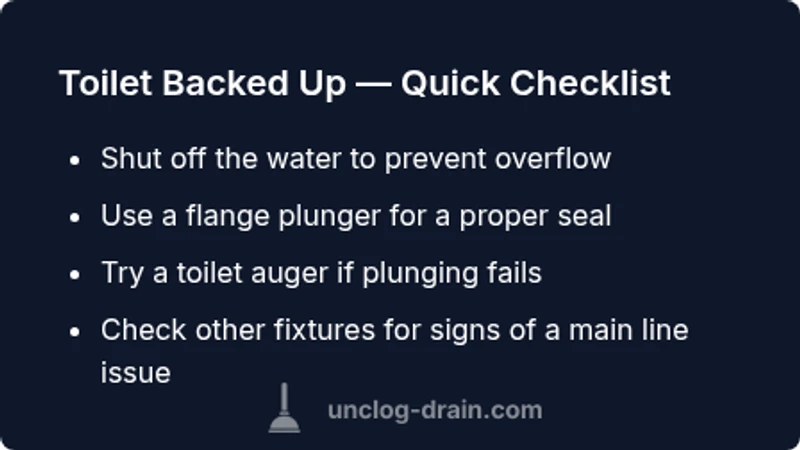
A toilet backed up is usually caused by a clog in the toilet trap or drain line. Start with a plunger, then progress to a toilet auger, and avoid chemical drain cleaners which can damage seals. If water rises or won’t drain after plunging, stop and call a plumber for a professional assessment.
What a Toilet Backed Up Really Means
When your toilet backed up, the most common culprit is a partial or full obstruction somewhere in the waste path. The quickest path to relief is a calm, methodical approach using the right tools and a clear plan. According to Unclog Drain, homeowners who stay focused on mechanical methods—plunger first, then auger or snake—tend to see results faster and minimize risk to plumbing components. A backup can also hint at a larger issue if multiple fixtures are involved, so it’s important to assess the situation fully before trying drastic measures. The goal is to restore normal function without creating new problems, such as an overflowing bowl or a compromised wax ring. Keep a towel and bucket handy and plan for a few careful steps rather than a single, aggressive move.
The keyword here is safety. Never mix chemical cleaners with other products, and never force a tool beyond the point of resistance. These practices can damage rubber seals, create hazardous fumes, or push the clog deeper into the line. If you’re ever uncertain, err on the side of caution and seek professional help. The Unclog Drain team emphasizes that most toilet backups can be resolved at home, but persistent issues after following a systematic approach may indicate a larger sewer problem that requires expert attention.
wordCount
null
Steps
Estimated time: 60-90 minutes
- 1
Shut off water to the toilet
Locate the shut-off valve behind the toilet and turn it clockwise until it stops. This prevents further overflow while you work. Place towels around the base and have a bucket ready for any residual water.
Tip: This simple step stops the clock on water damage and buys you time to work calmly. - 2
Ball-plunge the bowl
Position a flange plunger to create a tight seal over the drain. Maintain full water contact with the plunger cup and push with steady, forceful strokes for 15–20 cycles. If water drains slowly, switch to the auger.
Tip: A good seal matters more than raw force. - 3
Clear the clog with a toilet auger
Insert the auger into the drain and rotate while pushing gently. When you feel resistance, ease back a bit and then continue. Retract slowly to pull the clog free or break it apart.
Tip: Don’t force beyond resistance; excessive pressure can damage the bowl seal. - 4
Check for progress and re-test
Remove the auger and run clean water into the bowl from the tank or supply. If the water clears and flushes normally, you’re done. If not, repeat the plunge and auger steps or move to the main line check.
Tip: Small, incremental tests reduce the risk of overflows. - 5
Return water supply and monitor
Turn the shut-off valve back to the open position gradually and flush once. Watch for any reoccurrence over the next 24 hours. If backups recur, it may be time for a professional assessment.
Tip: Document any signs like gurgling or slow drains for the plumber.
Diagnosis: Toilet won’t flush and water rises toward the rim after attempting to flush or plunging.
Possible Causes
- highPartial clog in the toilet trap or bend in the drain line
- mediumMain sewer line blockage affecting multiple fixtures
- lowVent stack blockage or improper venting
Fixes
- easyStart with a flange plunger to seal the drain and apply firm, consistent pressure with up-and-down strokes.
- easyIf plunging fails, use a toilet auger to reach past the bend and break up the obstruction.
- mediumIf the auger can’t clear the clog, inspect the main sewer line or call a professional to assess for a broader blockage.
- easyAvoid chemical drain cleaners; they can damage seals and interact poorly with septic systems or venting.
Common Questions
Is it safe to use chemical drain cleaners for a toilet backup?
Chemical drain cleaners are not recommended for toilets. They can damage seals, irritate skin, and may not clear the blockage effectively. Always try mechanical methods first.
Chemicals can harm your toilet and plumbing, so start with plungers or augers and avoid chemical cleaners.
When should I call a plumber for a backed-up toilet?
Call a plumber if plunging and snaking don’t clear the clog, if you notice repeated backups, or if there’s sewage odor or gurgling from vents.
If basic methods fail or you smell sewage, get a pro involved.
Can a backup indicate a main sewer line problem?
Yes, if multiple fixtures (toilets, sinks, showers) are slow or backing up, a main sewer line blockage is more likely and requires professional inspection.
If other drains are slow too, the problem might be the main line.
What tools do I need for a DIY unclogging task?
A flange plunger, a toilet auger, sturdy gloves, towels, and a bucket. Safety gear helps prevent splashes and contamination.
Grab a plunger, a toilet auger, gloves, and towels to handle most clogs.
Will a backup damage my plumbing long-term?
Prolonged backups can stress seals and cause overflows that damage floors and fixtures. Address backups promptly and monitor for repeat issues.
If it keeps backing up, get it checked to prevent bigger problems.
Watch Video
Key Points
- Act quickly to prevent overflow.
- Start with a flange plunger before other tools.
- Avoid chemical cleaners; mechanical methods are safer.
- Call a plumber if backups persist after basic steps.
- Regular maintenance helps prevent future toilet backups.