Tips for Unclogging Toilet: A DIY Guide
Learn practical, safe tips for unclogging toilets quickly. Step-by-step methods, tools, prevention, and when to call a pro, with insights from Unclog Drain.


Learn practical, step-by-step tips for unclogging a toilet safely and effectively. This guide covers quick fixes like using a plunger, then advancing to a toilet auger or professional-safe methods, plus safety precautions and preventive maintenance to avoid future blockages. Follow the steps in sequence to minimize mess and protect plumbing.
Why toilet clogs matter for homeowners
Clogged toilets are more than a nuisance; they can trigger overflows, messy cleanups, and possible water damage. Understanding effective tips for unclogging toilet helps homeowners act quickly when a blockage occurs and prevents escalation. A calm, methodical approach reduces risk to floors, fixtures, and indoor air quality while keeping costs down. The Unclog Drain team emphasizes that early intervention often makes the difference between a simple fix and a plumbing emergency.
Quick diagnosis: is it a clog or something else?
Not every toilet backup signals a simple clog. If the toilet fills slowly, gurgles, or backs up into the shower or sink, you might be dealing with a broader drainage issue. Start with a quick test: flush once, then observe the flow. If water rises rapidly and refuses to drain after a plunge, the blockage may be deeper in the drain line. Knowing the difference helps you choose the right tool and technique.
Tools and safety you should have before you start
Before you tackle a clog, assemble a basic toolkit: a good plunger, a toilet auger, rubber gloves, old towels or a mop, and a bucket. Keep a flashlight handy for dark corners, and place towels around the area to contain splashes. According to Unclog Drain, using the right tools in the right order minimizes mess and protects porcelain from scratches. Remember to unplug any nearby electronics and turn off the water supply at the shut-off valve if you anticipate a big overflow.
Plunger method: proper technique and common mistakes
The plunger is your first line of defense. Use a flange toilet plunger and create a tight seal around the waste inlet. Pump firmly in a vertical motion, then push and pull without breaking the seal. If water spills, wipe quickly and maintain focus on the main drain. A few well-timed pushes can dislodge a stubborn blockage without resorting to harsher measures. Avoid rapid, erratic pumping or using a cup-style plunger that won’t seal properly.
When to reach for a toilet auger (snake)
If plunging fails to clear the clog, a toilet auger can reach past the trap and break up or retrieve the obstruction. Insert the auger slowly, rotate the handle to work the snake through the bend, and stop if you feel resistance—don’t force the cable. Retract gradually and flush to test. An auger is especially useful for bathroom clogs caused by non-flushable items or hair.
Chemical options: what works, what to avoid
Chemical drain cleaners should be used with extreme caution in toilets. Many formulations can damage the porcelain, seals, or septic systems, and some may pose safety hazards if misused. If you choose to use a chemical, read the label, wear gloves, and ensure proper ventilation. Prefer non-chemical methods first, and never mix cleaners with bleach or ammonia.
Clean up and prevention after clearing a clog
After a successful clear, flush several times to verify flow. Disinfect the toilet, surrounding surfaces, and tools, and launder towels promptly. To reduce future clogs, install a toilet debris screen, avoid flushing non-flushable items, and schedule regular maintenance checks. Keeping a minimal amount of toilet paper per flush also helps.
Troubleshooting advanced blockages and when to call a pro
If wastewater appears in sinks, or you notice persistent backups after attempting fixes, the blockage may be in the main sewer line or a venting issue. In such cases, it’s prudent to call a licensed plumber. For septic systems, a professional assessment is essential to avoid overloading the septic field and causing damage. Timely escalation saves time and reduces risk of water damage.
Quick checks for future prevention and maintenance
Establish a simple routine: inspect the toilet for signs of slow drainage, keep a basic toolkit on hand, and know when to escalate. Periodic checks help catch minor problems before they become major clogs. By following a predictable maintenance plan, you protect your home plumbing and reduce emergency calls.
Tools & Materials
- Flange toilet plunger(Flange-type for a tight seal on the toilet drain)
- Toilet auger (closet auger)(180–3 ft length; curved head to navigate the trap)
- Rubber gloves(Protect hands from waste and bacteria)
- Old towels or absorbent rags(Contain splashes and protect floors)
- Bucket(For containment and cleanup as needed)
- Flashlight(Inspect hard-to-see areas around the fixture)
Steps
Estimated time: 30-45 minutes
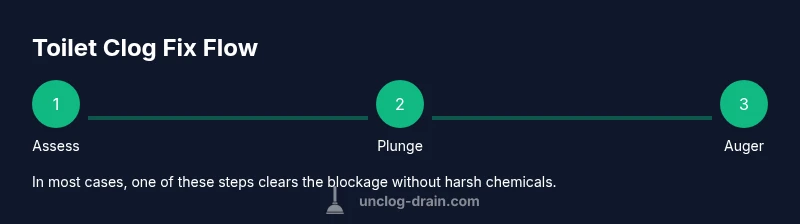
- 1
Assess the situation and prep
Clear the area, put on gloves, and gather tools. Turn off the water supply at the shut-off valve if you anticipate a spill. Lay towels to catch any overflow and position a bucket nearby for cleanup.
Tip: Preparation reduces mess and protects flooring. - 2
Try the plunger first
Use a flange plunger and form a tight seal over the toilet drain. Pump steadily and firmly, keeping the seal intact, then pause briefly to allow pressure to build. Repeat 6–12 slow pumps, then test by flushing.
Tip: A good seal is more important than sheer force. - 3
Move to the toilet auger if needed
Insert the auger into the drain and rotate the handle while pushing gently. When you feel resistance, stop and inch past it before continuing. Retract slowly and flush to confirm clearance.
Tip: Don’t force the cable; resistance indicates a potential deeper obstruction. - 4
Evaluate chemical options cautiously
If plunger and auger fail, consider a non-chemical approach first. If using chemicals, follow label directions, ensure ventilation, and never mix cleaners with bleach or ammonia. Use sparingly and as a last resort.
Tip: Chemicals can damage pipes or septic systems if misused. - 5
Test, sanitize, and finish
Flush multiple times to confirm proper flow. Clean and disinfect the bowl and surrounding area, then wash hands and sanitize tools before storing.
Tip: Verify the blockage is gone with a final flush before calling it done.
Common Questions
What is the safest first step to unclog a toilet?
Begin with a flange plunger and ensure a tight seal. If the blockage persists, proceed to the auger. Safety and patience reduce risk of overflows.
Start with a flange plunger, ensure a tight seal, then move to the auger if needed.
Can chemical drain cleaners be used in toilets?
Chemical cleaners can damage toilets and septic systems. Use them only as a last resort and follow all label instructions. Prefer mechanical methods first.
Chemicals are risky for toilets and septic systems; use them sparingly if at all.
How long should I wait after using a plunger?
Give the plunger several minutes of steady effort, then test by flushing. If not cleared, try the auger or call a pro.
Wait a few minutes after plunging, then test the flush; if it’s still clogged, move to the auger.
When should I call a plumber?
Call a plumber if backups continue after plunger and auger attempts, if water backs into other drains, or if you suspect a main sewer issue.
Call a plumber if backups persist after both plunging and using an auger.
Is a toilet auger safe for modern toilets?
Yes, when used correctly. Insert gently and rotate; don’t force the cable. If you feel resistance, stop and reassess.
Yes, but use carefully and don’t force it.
What signs indicate a blockage deeper in the system?
If multiple fixtures are slow or backing up, or if water rises in the toilet when flushing, the blockage may be deeper.
Backups in other fixtures often mean a deeper clog.
Watch Video
Key Points
- Start with the plunger before trying other tools.
- Use a toilet auger only if plunging fails.
- Avoid mixing chemicals with bleach or ammonia.
- Sanitize after clearing and prevent future clogs with simple routines.