Severely Clogged Toilet: Quick Fixes and Safe Troubleshooting
Urgent guide to diagnose and unclog a severely clogged toilet safely. Learn mechanical methods, when to escalate, and prevention tips for reliable drainage.


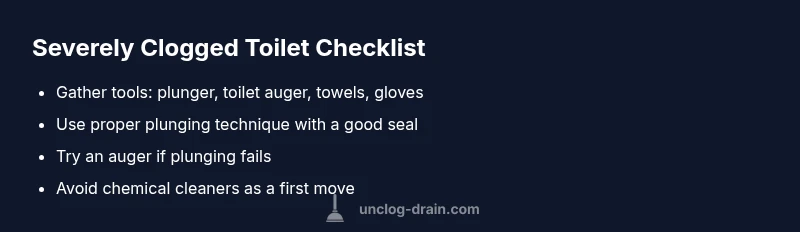
Begin with a strong, proper-plug plunge to break the clog, maintaining a tight seal and steady pressure. If water rises and won’t drain, switch to a toilet auger or a wet/dry vac for mechanical removal. Avoid chemical cleaners as a first move. This steps-based approach targets the most common causes of a severely clogged toilet and gets water moving safely again.
What makes a toilet severely clogged
According to Unclog Drain, a severely clogged toilet typically results when waste, paper, and debris overwhelm the trap and create a stubborn blockage that resists normal flushing. In many homes, a combination of excessive toilet paper, wipes, and non-flushable items can accumulate over time, creating a dense head of material that stops water from moving. The result is slow drainage, frequent backups, and the risk of overflows during a flush. Understanding the signs—water rising toward the rim, gurgling sounds, and a bowl that won't drain—helps you choose the right next steps and avoids risky improvisations that could damage your plumbing. Keep in mind that a truly severe clog often involves the main waste line, not just the toilet itself, which is why you may need progressive, mechanical methods rather than quick chemical solutions.
Safety and immediate checks
Before you reach for tools, protect yourself and your home. Put on rubber gloves and eye protection, and lay towels or a bucket around the base to catch splashes. If your toilet is near overflow, turn off the water supply at the valve behind the toilet and flush once to empty the tank; this reduces the risk of a messy overflow. Do not mix cleaning products; avoid chemical drain cleaners in a toilet, especially when the water level is high. Ventilate the bathroom and keep children and pets away. If you notice sewage odors or multiple fixtures backing up, stop and call a plumber—those are strong signs the problem goes beyond a single fixture.
Mechanical unclogging first: plunger technique
To begin, use a flange plunger for a better seal, and ensure there is enough water to cover the plunger bell. Place the plunger directly over the drain, push firmly to create a seal, and perform 15-20 forceful, consistent pushes without lifting the seal. Pause, then repeat until you see improved drainage or a break in the clog. If the water remains still, try resetting by pumping air with short, sharp strokes. If you see water rising, do not flush again; move to the next method to avoid an overflow. This mechanical approach addresses the most common causes of a severely clogged toilet and reduces the need for harsher measures.
Going beyond: toilet auger and professional tools
After a thorough plunge, a toilet auger can reach into the trap and dislodge or retrieve material that a plunger cannot touch. Insert the auger, rotate slowly, and feed the cable straight in to minimize damage. If you feel resistance, pull back gently and reinsert at a slightly different angle. Continue until the clog clears or you reach the limit of the cable. For stubborn blockages, do not force the auger; overstressing the toilet can crack porcelain or damage the wax ring. In those cases, professional tools or a plumber's snake may be required.
When chemical cleaners seem tempting — why to avoid
Chemical drain cleaners may seem convenient, but they are rarely a long-term solution for a severely clogged toilet and can damage porcelain, seals, and pipes. These cleaners create heat and fumes that can irritate your eyes and skin, especially in tight bathrooms. They can also bubble back up and create a more hazardous situation if the clog shifts. If you choose to consider a chemical option, consult a plumber first, and never mix products with bleach or ammonia. Mechanical methods are safer and more effective for toilets.
Diagnostic flow: symptom-to-diagnosis-to-solution
Start with the symptom: the toilet is clogged and water rises during a flush. Diagnosis: may involve a simple local blockage or a blockage in the main line. The solution path depends on the diagnosis: local clog — try plunging or a toilet auger; main line — escalate to professional service. If the toilet is connected to other fixtures with slow drainage, suspect a venting or sewer issue. Always test after each step and avoid forcing the system beyond its failure point. Use a systematic flow to prevent unnecessary risks and to preserve plumbing integrity.
Step-by-step fixes for the most common cause
- Confirm water level and seal; 2) Plunge with steady, full strokes; 3) If no success, insert auger and rotate; 4) Clean up and sanitize; 5) Check for leaks around the base; 6) Restore water supply and test flush. Each step should be taken with care to avoid overflow or damage. This approach targets the most common cause—blockage in the toilet trap or drain line—and minimizes the need for expensive interventions.
Prevention and maintenance after clearing
After clearing a severely clogged toilet, practice preventive habits: only flush toilet paper and human waste; avoid wipes and other items; inspect the wax ring for leaks; keep a small plunger accessible; schedule periodic checks for venting issues; consider a drain check list to minimize future clogs. Regularly monitoring toilet paper usage and minor upgrades to a higher-flow toilet can help prevent future clogs and backups.
When to call a plumber
Even with careful DIY, some clogs require professional equipment and expertise. If you cannot clear the toilet after multiple attempts, you notice recurring clogs, or you detect sewage backup in the basement or main line, contact a licensed plumber promptly. Early intervention can prevent worse damage and costly sewer problems. The plumber can assess ventilation, main line status, and wax ring integrity to restore reliable drainage.
Steps
Estimated time: 45-60 minutes
- 1
Prepare and Safety Check
Before touching the toilet, gather your tools (plunger, toilet auger, towels, gloves) and put on eye protection. Shut off the water supply if there's any risk of overflow and place towels around the base.
Tip: Protective gear and a dry work area prevent accidents. - 2
Assess Water and Seal
Ensure there is enough water to cover the plunger bell for an effective seal. If the tank is full, avoid flushing again to prevent overflow.
Tip: A good seal is more important than forceful plunging. - 3
Plunge with Purpose
Position the flange plunger over the drain and push with controlled, steady pressure for 15-20 cycles. Pause and reassess drainage after several sets.
Tip: Keep the plunger fully submerged for best suction. - 4
Try the Auger
If plunging fails, insert the toilet auger, twist while feeding the cable, and pull back slightly when you hit resistance. Repeat gradually.
Tip: Do not force the auger; slow, deliberate movements are safer. - 5
Evaluate the Result
Remove the auger and flush gently to test flow. If water still backs up, don’t continue forcing. Move to professional help if needed.
Tip: A single clearing attempt can save you a lot of hassle. - 6
Clean and Sanitize
Wash hands and surfaces, sanitize tools, and dry the area to prevent slip hazards and odors.
Tip: Disinfect after every clog-handling session.
Diagnosis: Toilet won't flush cleanly and water backs up or rises toward the rim during a flush.
Possible Causes
- highLocal blockage in the toilet trap from paper, wipes, or debris
- mediumPartial blockage in the waste line or main sewer due to higher-volume discharge
- lowVentilation issues causing slow drainage
Fixes
- easyStart with a flange plunger and use steady, full strokes to create a strong seal.
- easyIf plunging fails, insert a toilet auger and rotate gently to break the clog.
- hardIf the auger cannot clear the clog, stop and call a plumber to avoid damaging the toilet or pipes.
Common Questions
What should I do first when a toilet is clogged?
Turn off the water supply if there is a risk of overflow, then try a flange plunger with a firm seal before moving to a toilet auger.
First, shut off water, then attempt a flange plunge before using an auger.
Is it safe to use chemical drain cleaners on a toilet?
Chemical cleaners are not a reliable or safe first option for toilets and can damage the bowl, seals, and pipes.
No—chemical cleaners can damage the toilet and pipes; mechanical methods are safer first.
When should I call a plumber for a severely clogged toilet?
If plunging and augering fail after several attempts, or if you notice recurring clogs or sewage backups, contact a licensed plumber.
Call a plumber if the clog persists after trying plunging and an auger.
Can a blocked vent cause toilet clogs?
Yes, a blocked vent can slow drainage and contribute to backups; addressing venting may be necessary in some cases.
A clogged vent can worsen drainage issues—worth checking if other symptoms appear.
What tools help unblock a toilet safely at home?
A flange plunger, a toilet auger, towels, and gloves are the core tools; avoid making DIY repairs more complex than needed.
The main tools are a flange plunger and a toilet auger, plus protective gear.
Key Points
- Start with mechanical fixes before chemicals.
- Use a proper plunger seal and controlled technique.
- Escalate to a plumber if DIY fixes fail.
- Wear PPE and keep the area clean to prevent mess and injuries.
- Prevent future clogs with mindful flushing and routine maintenance.