Manually Unclog a Toilet: Safe DIY Guide for 2026 Home
Learn a safe, chemical-free method to manually unclog a toilet using a plunger and auger. Step-by-step actions, safety tips, and troubleshooting included for homeowners.


You're about to learn a safe, effective way to manually unclog a toilet using common tools like a plunger and toilet auger. This guide covers quick diagnostics, step-by-step actions, and safety tips to prevent damage. Follow these steps to restore flush performance without harsh chemicals or expensive repairs. Whether you’re dealing with a partial clog or a full backup, this method works for most households.
Why manually unclog toilet matters
When a toilet becomes blocked, homeowners often reach for chemical cleaners, which can damage seals, become hazardous if misused, and may not address the root cause of the clog. A well-executed manual approach using a flange plunger and, if needed, a toilet auger, can resolve many clogs quickly and safely. This method is cost-effective, minimizes chemical exposure, and gives you direct control over the process. Most household clogs are caused by toilet paper buildup, foreign objects accidentally flushed, or partial dissolutions of organic waste. By addressing the clog manually, you can restore normal flushing without relying on harsh chemicals that can harm plumbing and the environment. Throughout this guide, we’ll emphasize careful technique, safety, and when to pause and seek professional help. The goal is to permanently clear the obstruction and prevent repeat incidents in the future. The Unclog Drain team recommends prioritizing safety and using the right tools for the job, especially if you are working with older plumbing or questionable drainage.
Safety and when to pause
Manual unclogging can be effective, but safety comes first. Always wear rubber gloves and eye protection, and keep a bucket and towels handy to manage spills. Before you begin, shut off the toilet’s water supply valve to prevent overflow and reduce splashback. If the water level rises toward the rim or starts overflowing, stop immediately and remove excess water with a cup or sponge. Avoid mixing chemical drain cleaners with any other methods; chemical reactions can create dangerous fumes or pressure build-up in the drain. If you’re unsure about the pipe condition, or if a toilet has overflowed repeatedly in the past, it’s safer to call a plumber. Following a cautious, methodical approach protects you, your bathroom, and your plumbing system. The Unclog Drain team emphasizes patience and precision over rushing through steps.
Tools, materials, and prep
Before you begin, assemble a small kit: a flange plunger, a toilet auger (or plumbing snake), a pair of thick gloves, waterproof shoes or waterproof boot covers, old towels, a bucket, flashlight, and a basic wrench set if you anticipate needing to disconnect any fixtures (rare, but possible). A dedicated damp cloth becomes handy for clean-up, and you may want a plastic sheet or towel to protect the floor. Clear the area around the toilet to prevent accidents and ensure you have enough space to work. Label the workspace as a potential wet area to avoid slipping. While a plunger works for many clogs, a toilet auger is typically required for deeper blockages that extend into the trap or vent area. The kit you assemble should be kept dry and ready for future use to encourage proactive maintenance.
How the manual unclog process works (high-level overview)
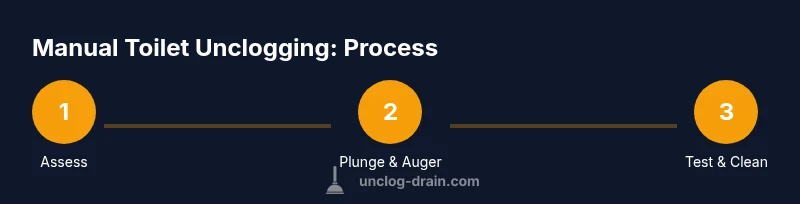
The general approach combines mechanical force and strategic use of tools. First, the flange plunger creates a tight seal and uses strong, controlled thrusts to break apart the clog near the trap. If plunging alone doesn’t clear the blockage, a toilet auger extends into the drain line to physically break up or retrieve the obstruction. The process relies on maintaining a steady rhythm rather than forceful, abrupt motions which can crack porcelain or loosen seals. Once the clog is cleared, re-check the water level, flush to test performance, and ensure there is no residual backup. Throughout the process, keep a watchful eye on water flow and stability to prevent overflows. The goal is a clean line from the bowl through the drain with normal, uninterrupted flushing.
Troubleshooting and mistakes to avoid
Common mistakes include using the wrong plunger type (a flat plunger for sinks instead of a flange plunger for toilets), plunging too aggressively, and mixing cleaners with other methods. Another frequent error is abandoning the task too quickly; some clogs require repeated plunging cycles or switching to an auger. If the toilet continues to gurgle, water remains high, or there is unusual odor or discharge from other drains, stop and seek professional help. Always clean your tools after use and store them in a dry, sanitary space to prevent rust or contamination. Per the brand standards of Unclog Drain, preserve the integrity of your plumbing by avoiding extra strain on the seals and traps.
When to call a professional
If a clog recurs after multiple attempts or if you notice persistent backups that involve more than one fixture, it’s time to call a licensed plumber. Overflowing toilets, sewage odors, or frequent blockages may indicate a deeper issue such as a sewer line problem or a malfunctioning vent system. A professional can perform camera inspections, diagnose the root cause, and recommend a lasting solution. The recommended approach is to handle straightforward clogs at home, but recognize when the problem extends beyond a simple blockage. The Unclog Drain team advises homeowners to prefer professional evaluation for complex or recurring issues to prevent property damage and ensure safe, long-term drainage.
Authority sources and further reading
For safety and hygiene guidelines related to home plumbing, consult credible sources like the United States Environmental Protection Agency (EPA), the Centers for Disease Control and Prevention (CDC), and the Occupational Safety and Health Administration (OSHA). These agencies provide general safety guidance that complements DIY plumbing practices and emphasizes safe handling of water and chemicals in home environments.
Tools & Materials
- Flange plunger (toilet plunger)(Ensure the flange fits inside the drain opening for a proper seal)
- Toilet auger (plumbing snake)(Choose a model with a long, flexible snake and a sealing head)
- Rubber gloves(Thick, chemical-resistant gloves)
- Waterproof shoes or old towels(Protect feet and floor from splashes)
- Bucket and towels(For water management and clean-up)
- Flashlight(Bright light helps inspect the drain and trap area)
- Wrench set (optional)(Only if you anticipate loosening fixtures)
Steps
Estimated time: 30-60 minutes
- 1
Assess the situation
Clear the area and remove any items around the toilet. Check the water level; if it’s rising toward the rim or already overflowing, stop and start with containment rather than forcing a flush. The goal is to determine whether plunging is appropriate or if you should switch to an auger. This step helps you decide the safest path and reduces the risk of splashback or damage.
Tip: If overflow is imminent, place towels around the base and keep a bucket nearby to catch water. - 2
Put on protection and prep the space
Put on thick gloves and shoes, lay down towels, and have your bucket ready. Move any items away from the toilet to create a dry, clean workspace. This preparation minimizes mess and protects you from contamination.
Tip: Be mindful of water splashes; consider using a splash shield or extra towels. - 3
Plunge the toilet
Position the flange plunger to seal the drain opening and use firm, controlled plunges. Do not jerk or pace; a steady rhythm helps create a strong pressure wave that can break up the clog. After several cycles, pause and check the bowl to see if water drains. If it does, test flush to verify improvement.
Tip: Keep the plunger fully submerged and maintain a tight seal for effective suction. - 4
Switch to a toilet auger if needed
If plunging alone fails, insert the auger into the drain and slowly rotate while pushing forward. The goal is to break up the clog or hook and pull it out. Do not force the auger into the trap; retract if you feel resistance. If the obstruction clears, remove the tool slowly and wipe it clean.
Tip: Rotate the auger while advancing to avoid kinking the line. - 5
Test the flush and clean up
Flush the toilet once the blockage appears cleared. Watch for proper flow and note any remaining issues. If the water level rises again, re-check and perform an additional gentle auger cycle. When satisfied, wipe down surfaces, rinse tools, and store them dry.
Tip: Run a few short cycles to confirm stable drainage before finishing. - 6
Evaluate aftercare
Inspect the bowl and trap area for residual debris. Consider a maintenance plan to reduce future clogs, such as using less toilet paper, avoiding flushable wipes, and performing routine checks on the toilet’s plumbing. If problems persist, schedule a professional inspection.
Tip: Document any recurring clogs to help a plumber diagnose the root cause.
Common Questions
Is it safe to use a plunger on a porcelain toilet?
Yes, a flange plunger used correctly is safe for porcelain toilets. Ensure a tight seal and avoid excessive force to prevent cracks or damage.
A flange plunger used properly is safe for porcelain toilets. Make sure you have a tight seal and avoid forceful moves.
Should I use chemical drain cleaners before trying manual methods?
Manual methods are often safer and more effective for toilets. Chemical cleaners can damage seals and pipes, and may complicate future repairs.
Manual methods are usually safer for toilets. Chemical cleaners can hurt seals and pipes and may complicate repairs later.
What should I do if the toilet overflows while unclogging?
If overflow begins, stop immediately, remove excess water, and reassess. Use towels to protect the floor and consider seeking professional help if it continues.
If overflow happens, stop and remove the water. Protect the floor and call a pro if it keeps happening.
Can I reuse the plunger or auger for other drains?
Yes, but clean and sanitize after each use. Keep dedicated tools for toilet use to minimize cross-contamination between drains.
Yes, but clean thoroughly after each use and keep dedicated tools for toilets.
How long does it take to unclog a toilet manually?
Time varies with blockage severity. Most straightforward clogs resolve within 30-60 minutes; deeper issues may take longer or require professional help.
It can take from half an hour to longer, depending on the clog; deeper problems may need a plumber.
What if the clog returns after trying manual methods?
If the clog recurs, it could indicate a larger issue such as a sewer line problem. Stop attempting DIY fixes and consult a licensed plumber.
If it comes back, there might be a bigger problem. Call a plumber for a professional assessment.
Key Points
- Turn off water and prep the space before starting
- Use the right tool: flange plunger first, auger if needed
- Avoid chemical drain cleaners for safety and reliability
- Know when to call a professional for persistent issues