How to Use Clog Remover: Safe, Effective Home Drain Fix
Learn how to safely choose and apply clog remover to clear drains and toilets, avoid hazards, and restore flow with practical, step-by-step guidance from Unclog Drain.


Learn how to choose and use clog remover safely to clear drains and toilets, understand dwell times, and avoid common hazards. This guide covers preparation, product selection, application steps, and when to seek professional help for stubborn clogs.
What clog remover is and how it works
Clog remover is a chemical product designed to break down organic material that restricts water flow in drains. Most household clog removers work by delivering targeted chemicals that soften or dissolve hair, soap scum, grease, and food particles. When you use clog remover, read the label to confirm compatibility with your pipes and the type of clog you’re facing. According to Unclog Drain, the best results come from choosing a remover that matches the clog’s origin and your plumbing material. If you’re unsure, start with an enzymatic formula which is gentler on pipes and septic systems. Enzymatic products use bacteria or enzymes to digest organic matter over time, while caustic or gel-based removers attack the clog more aggressively but require careful handling. Always ventilate the area and keep children and pets away during treatment. The key is to avoid mixing products and to follow the dwell times indicated on the label.
When to use clog remover safely
Clog remover is typically appropriate for minor to moderate blockages where water still drains slowly but does not back up immediately. Do not use chemical cleaners as a first resort for severely backed up toilets or persistent blockages after several attempts. Before applying, ensure you know the type of drain (PVC, copper, cast iron) and check that the product is labeled for that drain type. If you have a septic system, enzymatic cleaners are generally gentler, while caustic products may harm beneficial bacteria if used frequently. Always wear eye protection and gloves, turn off the bathroom fan for ventilation, and keep accessible a water source to rinse after the dwell time. If you own a water heater near the drain, consider turning it off briefly to minimize heat risk. Note that if you notice fumes, dizziness, or a chemical burn sensation, stop and seek help.
Types of clog removers
There are several broad categories you can choose from:
-
Enzymatic cleaners: These products use bacteria or enzymes to digest organic matter over time. They are slower but gentler on pipes and septic systems, making them a good option for regular maintenance and prevention.
-
Gel-based caustic cleaners: These stay put in the drain longer, maximizing contact with the clog. They work well on greasy buildups but require careful handling and proper PPE.
-
Caustic or acid-based cleaners: Strong, fast-acting formulations designed for stubborn organic clogs. They can damage PVC and rubber seals if misused and should be used with extreme caution or avoided on older pipes.
-
Mechanical alternatives: While not technically a chemical remover, plunger, plumbings snakes, or a hand-held auger can complement chemical products and reduce dwell times for tough clogs.
Choosing the right remover depends on the clog location (sink vs toilet), pipe material, and whether you have a septic system. Read the label to confirm recommended uses and dwell times, and never mix different cleaners.
How to choose the right remover for toilets vs sinks
Toilets versus sinks require different approaches. Most toilet clogs respond best to products labeled for toilet use, which are formulated to pass through bends and porcelian fixtures without risking damage to seals. For sinks, particularly metal or flexible PVC traps, ensure the remover is safe for plastic and metal. If your drain is lined with hair and soap scum, a gel-based remover that clings to the U-bend may perform better. Septic systems favor enzymatic formulas, while households with metal pipes may tolerate limited use of certain caustic gels—still follow label warnings. Do not combine products with other cleaners and do not use a chemical remover in a drain that has just had a plunging attempt, as combo products can create dangerous fumes.
Safe application steps: preparation and application
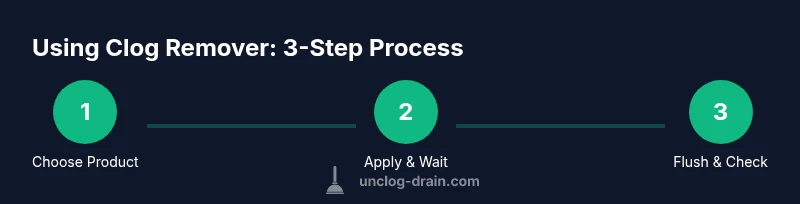
Preparation begins with understanding the clog and choosing a remover compatible with your plumbing. Always put on PPE before handling cleaners and ensure the area is well-ventilated. Read the label to confirm dwell times and pouring instructions. Pour the remover slowly along the drain, keeping the bottle upright and away from skin contact. Do not mix with other cleaners or hot water unless the label specifies compatibility. Allow the product to dwell for the recommended time, usually 5–30 minutes for enzymatic formulas and longer for gels. If the drain begins to loosen, flush gently with hot water after the dwell period.
- PPE setup and ventilation
- Reading dilution or dwell-time instructions
- Pouring technique and cleanup
Common mistakes and safety precautions
Avoid mixing different chemical cleaners, as this can produce toxic fumes. Do not use a chemical remover in a drain that has been recently treated with a bleach-based cleaner. Keep cleaners away from children and pets, and work in a well-ventilated area. If you experience burning sensation, dizziness, or coughing, stop immediately and seek help. Do not rely on a chemical remover for severely backed-up clogs; a plumber’s assessment may be required to prevent pipe damage.
How to prevent future clogs after using a remover
After clearing a clog, take steps to reduce future blockages. For example, install a mesh drain cover to catch hair, run hot water regularly to wash away oils and grease, and avoid pouring cooking fats down the drain. Regular maintenance with enzymatic cleaners can help keep septic systems healthy and slow-growing clogs at bay. Finally, if your entire household consistently experiences clogs, consider a professional evaluation to assess pipe conditions and water flow.
Tools & Materials
- Nitrile or latex gloves(Protect hands from chemicals; choose thick gloves for caustic formulas)
- Safety goggles(Eye protection in case of splashes)
- Clog remover product (enzymatic or caustic)(Select based on clog type and pipe material; read label for compatibility)
- Measuring cup or small opaque pouring cup(For accurate pouring and to avoid spills)
- Old towels or paper towels(Cleanup in case of drips or spills)
- Plunger (optional)(Can be used after dwell time if the clog loosens)
- Bucket or large tray(Catch any residual liquid during pouring)
Steps
Estimated time: 30-60 minutes
- 1
Read label and prep area
Inspect the drain remover’s label for compatibility with your pipes and the type of clog. Clear the area around the drain and lay down towels to catch drips. This step minimizes mistakes and ensures you have the right product on hand.
Tip: Always check the recommended dwell time and avoid mixing products. - 2
Put on PPE and vent
Wear gloves and safety goggles to protect skin and eyes. Open a nearby window or turn on a vent to disperse fumes. PPE reduces risk if splashes occur and improves comfort during the process.
Tip: Ventilation matters for chemical cleaners; don’t skip this step. - 3
Clear area and remove standing water
If the drain has standing water, remove as much as possible with a cup or towel to expose the outlet. This helps the cleaner reach the clog and reduces spill risk during pouring.
Tip: Removing water makes the product more effective in contact time. - 4
Pour remover into the drain
Pour the product slowly along the center of the drain. Avoid splashing onto skin or surfaces. Use the measuring cup for accuracy and keep bottles upright to minimize spills.
Tip: Pour slowly and keep a safe distance from your face. - 5
Wait the recommended dwell time
Let the remover sit for the label’s specified duration, which varies by product. Do not rush with hot water or additional cleaners unless the label permits.
Tip: Patience is key; dwell times are designed for safe and effective action. - 6
Flush and inspect
After the dwell time, flush with hot water (not boiling) and observe if the water flows freely. If the clog remains, you may repeat once or use a mechanical method before seeking professional help.
Tip: If the drain remains slow, avoid repeated chemical use in quick succession.
Common Questions
Can I use clog remover in a toilet?
Yes, many clog removers are labeled for toilets, but always verify the product is approved for toilet use and compatible with your plumbing. Do not mix with plungers or other cleaners unless the label allows it.
Most clog removers can be used in toilets if the label says so; always check compatibility and avoid mixing with other cleaners.
Should I flush immediately after applying?
No. Let the product dwell for the recommended time. Then flush with hot water and observe the flow. If it remains blocked, consider mechanical methods or seeking a plumber.
Let it sit as directed, then flush and recheck the drain.
Can I reuse the same bottle for multiple uses?
Keep the bottle sealed between uses and store it upright. Check the product’s shelf life and discard if there are changes in color or odor. Do not mix with other products later.
Keep it sealed and follow the shelf life on the label.
What if the clog remains after use?
If the drain is still clogged after the recommended dwell time, you can try one more application only if the label permits. Otherwise, use a mechanical method like a snake or call a plumber.
If it’s still clogged after following the label, consider mechanical help or a pro.
Are enzymatic cleaners safer for septic systems?
Yes, enzymatic cleaners are generally gentler on septic systems. They work slowly but minimize disruption to beneficial bacteria. For ongoing maintenance, enzymatic products are a good option.
Enzymatic cleaners are typically better for septic systems and ongoing maintenance.
Watch Video
Key Points
- Identify the right remover for your clog type
- Follow label instructions and safety precautions
- Allow dwell time before flushing
- Use mechanical help if chemical alone fails
- Prevent future clogs with simple maintenance