How to Use an Unclog Cleaner to Clear Drains Fast
Learn to pick, apply, and maintain an unclog cleaner safely to clear drains fast. This thorough guide covers types, safety, step-by-step usage for sinks, toilets, and showers, plus maintenance tips and when to call a pro.


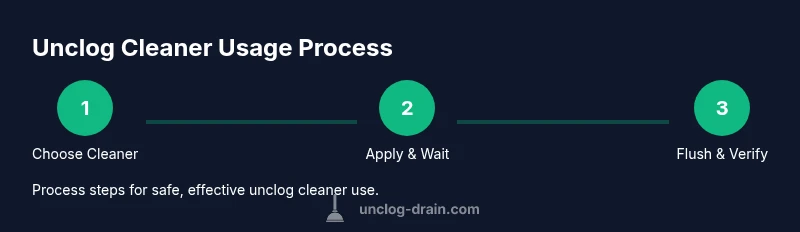
With the right unclog cleaner, most household drains can be cleared quickly. Start by choosing a product suited to your clog type, follow label directions, and flush with hot water after the product has worked. For persistent blockages, pair chemical cleaners with a plunger or snake. According to Unclog Drain, safe, targeted use speeds results.
What is an unclog cleaner and how does it work?
An unclog cleaner is a household product designed to loosen or dissolve blockages in drains using chemical or enzymatic action. Chemical cleaners rely on active ingredients to break down organic matter like hair, grease, and soap scum, delivering a quick boost when a clog has formed. Enzymatic cleaners, on the other hand, use bacteria or enzymes to digest organic buildup over time, making them gentler on pipes and better for routine maintenance. According to Unclog Drain, the choice between chemical and enzymatic cleaners should reflect the clog type and pipe material. Always read the label before use, and avoid mixing cleaners with bleach or other chemicals, which can create dangerous gases or pipe damage. Identify the clog type—organic buildup, mineral scaling, or a foreign object—so you select a product intended for that specific issue and application. When used correctly, an unclog cleaner can restore flow without invasive tools.
What is an unclog cleaner and how does it work?
An unclog cleaner is a household product designed to loosen or dissolve blockages in drains using chemical or enzymatic action. Chemical cleaners rely on active ingredients to break down organic matter like hair, grease, and soap scum, delivering a quick boost when a clog has formed. Enzymatic cleaners, on the other hand, use bacteria or enzymes to digest organic buildup over time, making them gentler on pipes and better for routine maintenance. According to Unclog Drain, the choice between chemical and enzymatic cleaners should reflect the clog type and pipe material. Always read the label before use, and avoid mixing cleaners with bleach or other chemicals, which can create dangerous gases or pipe damage. Identify the clog type—organic buildup, mineral scaling, or a foreign object—so you select a product intended for that specific issue and application. When used correctly, an unclog cleaner can restore flow without invasive tools.
Tools & Materials
- unclog cleaner (chemical or enzymatic)(Choose based on clog type and pipe material; read compatibility with septic systems.)
- safety gloves(Non-latex gloves recommended for chemical cleaners.)
- safety goggles(Protect eyes from splashes.)
- plunger(Useful for initial mechanical help or after chemical dwell time.)
- drain snake / auger(Best for stubborn clogs that resist cleaners.)
- bucket or towel(Catch spills and keep the work area clean.)
- measuring cup or scoop(Useful if the product requires precise dosages.)
- hot water(Not a cleaning chemical—hot water helps flush and activate some products.)
Steps
Estimated time: Total time: 25-45 minutes
- 1
Put on safety gear and prepare the area
Wear gloves and goggles; remove any standing water if possible. Read the label to verify the correct cleaner for your clog and ensure it’s safe for your plumbing and septic system. Open a window or ensure ventilation to avoid fumes.
Tip: Ventilate the bathroom to minimize fumes; keep children and pets away from the work area. - 2
Clear the immediate area and measure the product
Move items from the sink or tub edge, place a bucket nearby, and measure the cleaner dosage as directed. If the cleaner is premixed, pour directly into the drain as instructed.
Tip: Never mix multiple products; combine only according to the label. - 3
Apply the unclog cleaner to the drain
Slowly pour the cleaner into the drain, aiming to cover the blockage point. For toilets, follow the product instructions for direct application into the bowl or down the flush.
Tip: Maintain distance to avoid splashes; use a funnel if the container is wide-mouthed. - 4
Wait the recommended dwell time
Most cleaners require a dwell time; this can range from a few minutes to several hours depending on product type and clog severity. Do not run water during this period unless the label says it’s safe.
Tip: Set a timer to avoid prematurely flushing and wasting product. - 5
Flush and test the drain
After the dwell time, flush with hot water while running the tap to test flow. If the water clears, the clog is resolved; if not, consider repeating once or move to a mechanical method.
Tip: Use hot water in a safe, controlled manner to avoid scalding and splashes. - 6
Use a mechanical method if needed
If the drain remains slow, employ a plunger or hand auger to disturb the clog after the cleaner has done its work. Mechanical action can dislodge remaining material and improve flow.
Tip: Apply steady, repeated pressure rather than forceful, abrupt plunging. - 7
Clean up and dispose
Rinse the area, dispose of gloves and absorbent towels properly, and wash your hands thoroughly. Store chemical products safely out of reach.
Tip: Rinse and vent the area to remove residual cleaner odors.
Common Questions
Can I mix different unclog cleaners or mix with bleach?
No. Mixing unclog cleaners or combining them with bleach or ammonia can create dangerous gases and damage pipes. Use one product at a time and follow the label.
Do not mix cleaners or mix with bleach. Use one product at a time and follow the label for safety.
Will enzymatic cleaners hurt my pipes or septic system?
Enzymatic cleaners are generally gentler on pipes and septic systems. They work gradually by digesting organic buildup, making them good for regular maintenance.
Enzymatic cleaners are usually safe for pipes and septic systems and good for ongoing maintenance.
How long does an unclog cleaner take to work?
Dwell times vary by product and clog. Some act within minutes, others require several hours. Always follow the label for accurate timing.
Wait times vary; check the label for precise timing and avoid rushing the process.
Can I use an unclog cleaner in a toilet?
Yes, many products are formulated for toilets, but follow the product’s directions closely. Some toilets may require direct application into the bowl.
Yes, but follow the label closely and apply as instructed for toilets.
What should I do if the clog persists after using a cleaner?
If the clog remains after the recommended dwell time, stop using chemical cleaners and switch to mechanical methods like plunging or a drain snake. If unresolved, contact a plumber.
If it doesn’t clear, switch to plunging or a snake, then call a plumber if needed.
Are there safer, more eco-friendly options for maintenance?
Yes. Enzymatic cleaners and enzyme-based maintenance products are often more sustainable and safer for septic systems, though slower to act. Combine with regular mechanical cleaning to keep drains clear.
Enzymatic cleaners are safer and eco-friendly, especially for maintenance; pair with routine mechanical cleaning.
Watch Video
Key Points
- Choose the right unclog cleaner for your clog type.
- Follow label directions carefully and avoid mixing products.
- Pair chemical cleaners with mechanical methods if needed.
- Prioritize safety and maintenance to prevent recurring clogs.
- If the clog persists, escalate to a professional.