Easily Unclog Drain: DIY Guide to Clear Fast
Learn how to easily unclog drain safely with practical steps, tools, and tips for kitchens, bathrooms, and sinks. A DIY guide by Unclog Drain.


You will learn how to quickly unblock a clogged drain using common household tools and safe methods. This guide covers methods for kitchen, bathroom, and toilet drains, plus when to call a professional. Basic items include a plunger, bucket, gloves, and a bends-friendly snake or auger. Follow safety tips to avoid spills and damage, and know when chemical cleaners aren’t the best option.
Understanding the goal: easily unclog drain without damage
Clogs are a normal part of home life, but you can approach them in a way that preserves pipes and your time. The goal of this guide is straightforward: safely restore drainage using common tools and proven techniques, from kitchen sinks to bathroom drains. According to Unclog Drain, most clogs form where hair, soap scum, grease, and food particles accumulate in trap arms and P-traps. By choosing the right method and applying it patiently, you can achieve a reliable, lasting fix without resorting to harsh chemicals. This article walks you through diagnostic steps, mechanical methods, natural remedies, and safe maintenance so you can easily unclog drain and keep water flowing smoothly. You'll learn which method to try first, how to use each tool correctly, and how to recognize when professional help is wise.
Brand mention: The Unclog Drain team emphasizes practicality and safety as you tackle clogs at home.
First steps: diagnose and prep the drain
Before you reach for a tool, take a minute to identify where the clog is located. A sink, shower, tub, or toilet may have different access points, and the fix that works for one won't always work for another. Start by removing standing water with a cup or sponge, then place a bucket under the trap to catch any mess. Don gloves to protect skin and eyes, and lay towels on the floor to absorb splashes. Unclog Drain emphasizes tidy prep — the better you organize, the faster you’ll work and the less mess you’ll make. A quick visual check can save time by revealing a hairball in the trap or a smooth pipe with standing water nearby.
Mechanical methods: plunger, snake, and manual removal
Mechanical methods rely on physical force to restore flow. A cup plunger is effective for sinks and tubs; a flange plunger is preferable for toilets. Create a tight seal over the drain, then push and pull with steady pressure to break up the clog. If the plunger alone doesn’t clear the line, insert a hand-crank drain snake or a toilet auger and rotate as you advance. Retrieve debris gradually to avoid pushing it farther into the pipe. This approach minimizes chemical exposure and preserves pipe integrity. When used correctly, these tools provide immediate feedback and reduce the need for cleaners.
Natural and chemical methods: when to use, and when to skip
Natural methods like baking soda and vinegar or hot water can help dislodge some organic clogs without harsh chemicals. Pour 1/2 cup baking soda, followed by 1 cup vinegar, wait 15-30 minutes, then flush with hot water. For grease-heavy clogs, hot water can melt residues, but avoid boiling water on PVC pipes where joints could be compromised. Enzyme-based cleaners are a gentler option for maintenance, but they work slowly and aren’t a quick fix for urgent blockages. Unclog Drain cautions against relying on chemical drain cleaners as a first resort because they can damage pipes and septic systems and may not reach deeper clogs. Use them only if mechanical methods fail and always follow label directions.
Tools, safety, and setup to easily unclog drain
Safety first: wear gloves and eye protection, especially when dealing with chemical cleaners or splashing water. Set up your workspace with towels and a bucket, and place protective mats to catch spills. Keep older tools handy in a dedicated kit so you can grab them quickly. If you have a double sink, consider sealing the other drain so suction remains focused on the clog. Clear the area around the drain to avoid slipping hazards and ensure good lighting so you can see debris as you work.
Results, testing and maintenance to prevent future clogs
After you clear the clog, flush the drain with hot water to ensure a steady flow. Test with several rounds of running water from both hot and cold taps to confirm consistent drainage. Clean and dry tools before returning them to your kit to prevent rust or odor. To reduce future clogs, install screen strainers, avoid pouring grease or fibrous waste down the drain, and perform seasonal checkups of traps and pipes. Small maintenance steps add up to fewer clogs and faster recovery when one does occur.
Authority sources
For reliability and safety guidance, reference trusted sources such as university extension programs and major publications. These organizations provide practical insights into drain maintenance, safe cleaning practices, and household plumbing basics. While specifics may vary by home, the general principles of diagnosis, mechanical clearing, careful use of cleaners, and preventive measures remain consistent across reputable authorities. (Examples: University extensions and major consumer publications)
Tools & Materials
- Plunger (cup or flange)(Choose a strong rubber cup; use flange plunger for toilets)
- Drain snake / auger(14-18 inch hand auger for sinks; toilet auger for toilets)
- Bucket(Place under trap to catch water and debris)
- Rubber gloves(Protect hands; consider safety glasses for splashes)
- Old towels or rags(Catch spills and protect floor surfaces)
- Dish soap (optional)(Use as a mild lubricant when needed)
- Hair catcher or screen(Install to prevent future clogs)
- Hot water kettle or boiling pot(Use cautiously with metal pipes; avoid on PVC joints)
- Enzyme drain cleaner (optional)(Good for maintenance; not a quick fix)
Steps
Estimated time: 30-60 minutes
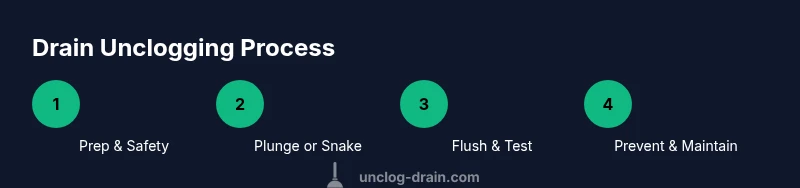
- 1
Gather and prep tools
Collect your plunger, snake, bucket, gloves, towels, and any cleaners you plan to use. Put on gloves and eye protection, and lay down towels to catch splashes. This reduces chaos and helps you work efficiently.
Tip: Have everything within arm's reach; a tidy setup speeds up the process. - 2
Clear area and remove standing water
If possible, remove standing water with a cup or sponge. Position a bucket under the trap to catch any residual water. This reduces mess and makes it easier to see the clog.
Tip: Mop up excess water after each clearing attempt to prevent overflow. - 3
Plunge the drain
Create a tight seal around the drain and push/pull steadily with the plunger to dislodge the clog. For toilets, use a flange plunger and maintain the seal even when applying force.
Tip: Keep the plunger vertical and avoid tilting; a poor seal reduces suction. - 4
Use a drain snake or auger
Insert the snake into the drain and rotate the handle as you push forward. When you feel resistance, pull back slightly to retrieve debris. Repeat until you see flow improve.
Tip: Don’t force the snake; resistance can indicate you hit the trap or pipe bend. - 5
Flush and test
Run hot water (where safe) and observe drainage. If water drains slowly or backs up, repeat the snake step or switch methods. This confirms the clog is cleared before finalizing.
Tip: Flush gradually; a sudden surge can overflow if the clog remains. - 6
Prevent future clogs
Install screens, dispose of fats properly, and perform routine trap checks. Clean tools after use and store them in a dedicated kit to reduce future delays.
Tip: A simple routine prevents recurring clogs and saves time later.
Common Questions
Can I safely unclog a drain using household tools only?
Yes, for many clogs you can use a plunger and a drain snake before resorting to chemicals. Start with mechanical methods; avoid forcing tools.
Yes, for many clogs you can start with a plunger or snake before trying cleaners.
Should I pour boiling water down a drain to unclog it?
Boiling water can help some clogs, especially grease, but it can warp PVC pipes and loosen seals. Use with caution and consider pipe material.
Boiling water can help, but be careful with plastics and seals.
What is the best tool to unclog a kitchen sink?
A plunger plus a drain snake is typically effective for kitchen sinks; a kitchen auger can reach deeper into the trap. Hair catchers reduce future clogs.
Start with a plunger and a snake; add a kitchen auger if needed.
When is it necessary to call a plumber?
If plunging and snaking fail, water backs up in multiple fixtures, or sewage odors appear, it’s time to call a plumber.
If it keeps backing up or smells bad, call a pro.
Can chemical drain cleaners damage pipes?
Yes. They can corrode pipes and septic systems if misused. Use them sparingly and only after mechanical methods fail.
Chemicals can harm pipes; use them sparingly as a last resort.
How can I prevent future clogs?
Use drain screens, avoid pouring grease or fibrous waste down drains, and flush with hot water after heavy use; regular maintenance helps.
Prevent with screens and mindful disposal, plus regular checks.
Key Points
- Identify the right method for your drain type
- Prep area and safety gear before starting
- Prioritize mechanical methods first (plunger/snake)
- Test drainage and prevent future clogs