How to Unclog a Toilet When the Plunger Is Too Small
Learn practical, step-by-step strategies to unclog a toilet when your plunger is too small. Safe methods, tool setups, and pro tips to restore flow quickly without harsh chemicals.


Yes— you can unclog a toilet even if your plunger is too small. Start by warming water and plunging with a proper flange plunger if available. If the clog sticks, use a toilet auger or safe improvised tools. Avoid harsh chemical cleaners; call a plumber if it won’t clear.
Why a small plunger struggles with toilet clogs
A basic cup-style plunger or a small bell plunger may not seal the toilet bowl effectively, especially with a large wastewater column. A toilet requires a plunger with a flange to create a true seal around the trap and prevent air from escaping. When the seal isn't solid, any pushing action just moves water and debris around, not enough to dislodge the blockage. The geometry of most toilets—especially if the trap arm is short or the water level is low—means you need consistent suction and pressure to break the blockage free. According to Unclog Drain, relying on improvised or under-sized plungers leads to frustration and longer repair times. This section explains how to adapt with proper tools and proven techniques that yield results without resorting to harsh chemicals.
Quick safety checks before you begin
Before you start, turn off the water supply to the toilet to prevent accidental overflow. Put down towels or a soaked rag to catch splashes and wear rubber gloves. Ensure good ventilation, especially if you plan to use any chemical alternatives later (see safety notes). If you have an older or fragile toilet, avoid drastic plunging motions that could crack the porcelain. A measured, calm approach reduces mess and lowers the risk of water damage. Unclog Drain emphasizes safety first: confirm the area is dry, the shutoff valve is fully closed, and your hands stay dry during use.
Essential tools and consumables you’ll want on hand
For the best chance of clearing the clog when the plunger is small, gather a flange plunger, a toilet auger, rubber gloves, towels, a bucket, and warm water. Have dish soap handy for lubrication, but skip chemical cleaners in toilets unless you’re ready to escalate with professional help. Keep a dedicated tool area away from kitchen sinks to avoid cross-contamination. If you don’t own a toilet auger, plan to borrow one or buy a compact model that fits into your bathroom cabinet. Lining up these tools before you begin saves time and reduces the chaos of scrambling mid-process.
Step-by-step approach: start with mechanical methods
Begin with a flange plunger to form a tight seal. Set the plunger on the drain opening and plunge with steady, vertical motions for 15–30 seconds, then pause to assess water movement. The goal is sustained suction that can push or pull the obstruction. If you hear bubbling and see water move, you’re on the right track. Avoid rapid, violent pushes that can splash or crack the bowl. This mechanical approach aligns with best practices from Unclog Drain for safe, effective unclogging without chemicals.
Using a toilet auger: technique and tips
If plunging doesn’t clear the clog, insert the toilet auger into the drain and rotate the handle while feeding the cable toward the blockage. When you feel resistance, gentle clockwise turns help break up the debris. Stop advancing if you feel the cable bind, then retract slightly and try again. Once you sense the obstruction yields, slowly retract the auger while pumping to prevent re-sealing the blockage. Keep the area clean and avoid forcing the cable too aggressively, which can damage the toilet trap.
Improvised methods you can try safely
In a pinch, you can try warm water and a small amount of dish soap poured into the bowl, followed by a careful plunge. The soap can reduce surface tension and allow water to move more freely, but do not use boiling water—extremely hot water can crack porcelain. A long-handled plunger or a toilet brush can help simulate agitation around the rim of the drain to loosen stuck material. If you try improvised methods, do so slowly and stop if you notice unusual noises or leaks. These tips are aligned with practical, non-chemical approaches.
When to call a professional
If the water level continues to rise toward the rim, or if plunging and snaking do not clear the blockage after 20–30 minutes of attempt, stop and call a plumber. A stubborn clog may involve a deeper sewer line issue or a broken vent pipe that requires professional equipment and expertise. Early escalation can prevent water damage and more costly repairs later. Unclog Drain recommends seeking professional help when home remedies fail or when you’re unsure about the safety of the plumbing system.
Prevention strategies to avoid future clogs
To reduce the risk of future clogs, avoid flushing large amounts of paper or non-flushable items. Consider a weekly maintenance flush with a small amount of dish soap and warm water to keep the trap clear, and inspect the toilet for slow drainage signs. Install a toilet bowl brush holder to encourage quick maintenance after heavy use. If your home has hard water, mineral buildup can contribute to slow drainage—regular cleaning with non-abrasive products can help maintain flow.
What not to do: avoid common mistakes
Don’t mix chemical drain cleaners with water in a toilet or combine multiple products; the chemical reaction can be dangerous. Avoid using metal objects, wire hangers, or other improvised tools that could scratch or crack the porcelain. Never force a tool beyond its safe range; stopping early is better than causing damage. Also, don’t assume a larger tool will always fix the problem—the wrong tool can worsen the blockage.
Quick troubleshooting checklist
- Check the water supply shutoff valve is fully closed if you see ongoing overflow.
- Confirm you’re using a flange plunger for the best seal.
- If the auger cable binds, retract slightly and retry with a slower pace.
- After clearing, flush the toilet to ensure consistent flow.
- Sanitize tools and dry the area to prevent mold growth.
Signals you should call a plumber
If the toilet continues to overflow after attempts, or if there’s sewage backup in other fixtures, stop, evacuate, and call a licensed plumber. Some clogs indicate deeper issues in the sewer line or vent system that require professional equipment and expertise. Quick action can prevent a costly flood and extensive damage.
Environmental and safety considerations
Use non-chemical methods first, and avoid dumping chemicals into septic systems. Ventilate the bathroom to disperse any fumes, and wear gloves to protect your skin. Clean up spills promptly to minimize the risk of mold or germs. Following these practices aligns with responsible home maintenance and minimizes environmental impact.
Tools & Materials
- Flange plunger(A toilet plunger with a built-in flange for a proper seal)
- Toilet auger (snake)(3–6 ft length is typical; flexible shaft helps reach clogs in the trap)
- Rubber gloves(Protect hands from bacteria and mess)
- Towels/bucket(Contain spills and keep the workspace clean)
- Warm water(Use warm water, not boiling, to protect the porcelain)
- Dish soap(Lubrication and help reduce surface tension (optional))
Steps
Estimated time: 20-40 minutes
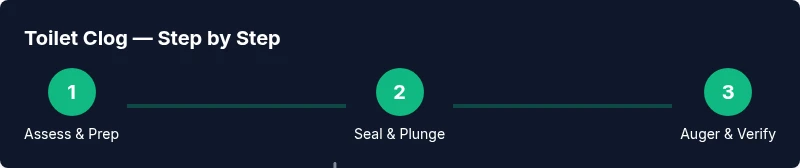
- 1
Gather tools and prepare area
Collect all tools and lay towels around the toilet. Turn off the water supply to avoid overflow. Wear gloves and explain to anyone nearby that you’re addressing a clog, so others don’t use the bathroom during the procedure.
Tip: Having everything ready before you start saves time and reduces mess. - 2
Seal the drain with the flange plunger
Place the flange plunger over the drain opening, ensuring a tight, full seal. Press down firmly to push out any trapped air. A good seal is essential for effective suction and to prevent splashing.
Tip: If water is very high, clamp a towel at the base to catch splashes. - 3
Plunge with steady, controlled strokes
Push and pull the plunger straight up and down in a vertical motion for 15–30 seconds. Pause to observe whether water level drops or debris starts moving, then repeat for several cycles.
Tip: Avoid quick, jerky motions that can push the clog deeper instead of dislodging it. - 4
Switch to a toilet auger if needed
If plunging doesn’t clear the clog, insert the auger into the toilet and gently rotate the handle while feeding the cable toward the blockage. When you feel resistance, retract slightly and try again.
Tip: Don’t force the cable; the goal is to break the blockage rather than damage the trap. - 5
Test flush and reassess
Retract the auger and flush the toilet. If water flows freely, you’ve cleared the clog. If not, repeat the auger technique or combine methods with warm water and a little dish soap.
Tip: Never flush large amounts of paper at once after a partial clearance. - 6
When to escalate
If the toilet remains clogged after 20–30 minutes of combined efforts, stop and call a plumber. A stubborn clog may indicate a deeper issue in the waste line.
Tip: Proactive escalation prevents water damage and saves time.
Common Questions
Will a small plunger ever work for a toilet clog?
A small plunger often struggles with toilets due to seal issues. Upgrading to a flange plunger or using a toilet auger typically yields better results. If the clog persists after these steps, it’s time to call a plumber.
A small plunger can work in some cases, but most toilets need a flange plunger or an auger for reliable results.
Are chemical drain cleaners safe for toilets?
Chemical drain cleaners are not recommended for toilets, as they can damage porcelain and septic systems and create hazardous fumes. Mechanical methods are safer and usually effective.
No, chemical cleaners can harm your toilet and septic system; mechanical methods are safer and effective.
How long should I try plunging before moving to the auger?
If no progress is seen after about 20–30 seconds of focused plunging, pause and evaluate. If the water remains high or continues to back up, switch to the auger.
If you don’t see progress after short plunges, switch to the auger rather than forcing it.
What should I do if the toilet overflows?
If overflow occurs, stop, turn off the water, place towels, and remove excess water with a bucket. Avoid flushing again until the blockage is cleared. Call a plumber if it recurs.
If it overflows, stop and mop up, turn off water, and don’t flush again until it’s clear.
How can I prevent future clogs?
Flush only toilet-safe items, avoid excessive toilet paper, and consider weekly maintenance with warm water and a small amount of dish soap. Regular inspection keeps drains flowing smoothly.
To prevent clogs, only flush safe items and keep up with regular maintenance.
Watch Video
Key Points
- Use a flange plunger for an effective seal
- A toilet auger clears deeper clogs when plunging fails
- Avoid chemical cleaners; mechanical methods are safer
- Move methodically and avoid forcing tools beyond their limits