Free Toilet Unclogging: Safe At-Home Fixes
Learn practical, chemical-free steps for free toilet unclogging at home. This guide covers plungers, hot water, dish soap, augers, and when to call a pro.


This quick guide shows how to free toilet unclogging using common household methods without spending money. You’ll learn proven steps to dislodge a blockage with a plunger, hot water, dish soap, and safe tools, plus timing, safety tips, and signs that you should stop and call a plumber. By the end you’ll feel confident handling most clogs at home.
Understanding the problem and the goal of free toilet unclogging
A clogged toilet can disrupt daily life, but you can often restore flow without hiring a pro. In this guide, we focus on safe, cost-free approaches that use common household items and simple tools. You’ll learn the sequence that works for most average clogs, including the right way to use a plunger, how hot water and dish soap can help loosen material, and when to switch to a plumbing snake. Throughout, the emphasis is on prevention and safe practice. According to Unclog Drain, confidence with basic techniques reduces unnecessary calls and saves time when a quick fix is possible. Expect practical, actionable steps you can implement today, with clear safety guidelines and warning signs to stop if things worsen.
Common causes of toilet clogs
To unclog effectively, you should know what typically causes blockages. Common culprits include excessive toilet paper, flushable wipes (not truly flushable items), feminine hygiene products, and foreign objects accidentally dropped into the bowl. In many homes, a partial blockage forms over time, rather than a sudden, complete jam. The Unclog Drain analysis notes that understanding the blockage source helps tailor your approach and reduces the risk of damaging the pipes. Regular maintenance and mindful flushing habits are essential to prevent future incidents.
Quick at-home methods you can use for free
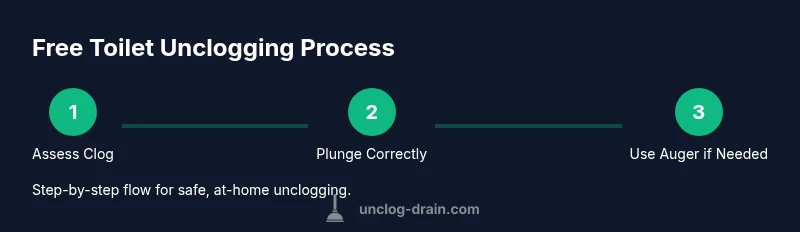
The simplest, no-cost methods focus on mechanical means first. Start with a flange plunger to seal against the toilet bowl and apply steady, even pressure—push down slowly, then pull up with force, keeping the seal intact. If the water level rises, pause and let it subside before continuing. A second option is to add a few squirts of dish soap and then flush with hot water (not boiling) to lubricate and loosen the clog. For stubborn blockages, a toilet auger (drain snake) can reach farther than a plunger. These techniques are widely recommended for safe, chemical-free unclogging.
Safety and proper tool use
Always wear gloves and keep towels or a bucket nearby to catch splashes. Do not mix chemical cleaners with other products; never pour hot liquids directly into a toilet if it’s cracked or aged. Check that the toilet seat and lid are in place to minimize splashes. When using a toilet auger, insert gently and rotate slowly to avoid damaging the bowl rim or pipes. If you smell sewage or see persistent backups after attempts, take a break and reassess; continuing could worsen the clog or overflow.
When to stop and call a professional
If you’ve tried plunging, hot water, and a toilet auger without success, stop and seek professional help. Persistent backups, frequent clogs, or sewage odors signal a more serious issue like blocked main lines or vent problems. The Unclog Drain team recommends weighing the cost of another at-home attempt against potential damage from forcing a blockage. A licensed plumber can diagnose hidden clogs, provide a safe solution, and prevent further complications.
Maintenance to prevent future clogs
Develop a simple prevention routine: flush only waste and toilet paper, avoid flushing wipes or feminine products, and consider a monthly light flush with hot water to clear minor buildup. Regularly inspect the toilet’s trap and seal for leaks, and keep a basic plumber’s snake or auger on hand for quick access. By staying proactive, you’ll reduce the likelihood of major clogs and keep your bathroom functioning smoothly.
What not to flush: a practical rule set
Never flush non-flushable items such as wipes, paper towels, dental floss, sanitary products, or toys. These materials can quickly accumulate and create a stubborn blockage that resists plungers and augers. If you’re unsure whether something is flushable, err on the side of caution and dispose of it in the trash. Following this guidance helps maintain the integrity of your plumbing system and reduces the need for costly professional interventions.
Tools & Materials
- Plunger with flange(Essential for creating a seal to push the blockage free)
- Rubber gloves(Protect hands from splashes and contamination)
- Bucket(Catch overflow and keep the area clean)
- Dish soap(Lubricates the clog and helps water flow)
- Hot water(Heat near-boiling water (not boiling) to avoid cracking)
- Toilet auger (drain snake)(Use if plunging fails to reach deeper blockage)
- Towels or old rags(Protect surfaces and soak up spills)
- Flashlight(Good for inspecting inside the bowl and trap)
Steps
Estimated time: 40-60 minutes
- 1
Stop and assess
If the toilet is actively overflowing, do not flush again. Turn off the water supply valve behind the toilet and use a container to bail out excess water if needed. This prevents a bigger overflow while you work.
Tip: Keep the lid closed to minimize splashes and odors. - 2
Gather your tools
Collect the plunger, gloves, bucket, dish soap, and a few towels. Having everything within reach reduces mess and interruptions during the unclogging process.
Tip: Use a flange plunger designed for toilets for a better seal. - 3
Prep the area
Place towels around the toilet, lay down a protective cover, and ensure the area is well lit. Fill the bucket with warm water if needed for rinsing and test clothing after contact.
Tip: Clear nearby floor space to avoid knocking items into the bowl. - 4
Plunge with technique
Position the plunger to seal the drain and push straight down with steady pressure, then pull up with equal force. Repeat 15–20 times or until you see water level drop and flow improves.
Tip: Maintain the seal and avoid breaking contact with the bowl to maximize suction. - 5
Add hot water and soap
If plunging stalls, add a few squirts of dish soap, then slowly pour near-boiling water into the bowl from a height of a few inches. Let it sit for 5–10 minutes, then attempt to flush gently.
Tip: Do not use boiling water if the porcelain feels brittle or if the toilet might crack. - 6
Try a toilet auger if needed
If the blockage remains, insert the auger into the drain and rotate the handle while gently pushing forward. Retract and remove debris as you progress until the flow returns.
Tip: Avoid forcing the auger; resistance may indicate a deeper obstruction. - 7
Test and clean up
Flush the toilet and observe the drainage. If water clears, perform a final wipe-down and disinfect surfaces. If still clogged, stop and call a plumber.
Tip: Dispose of any debris in the trash, not down the drain.
Common Questions
Can I unclog a toilet for free at home?
Yes. Many clogs respond to at-home steps like plunging, hot water, and dish soap without spending money. If these methods fail, you may need a plumber.
Yes—most clogs can be fixed at home with basic tools. If it doesn’t clear after a few attempts, consider calling a professional.
Are chemical drain cleaners safe for toilets?
Chemical cleaners can damage toilet seals and pipes and are not recommended for toilets. They can also cause hazardous fumes and may not reach the blockage.
Chemical cleaners are not advised for toilets; they can harm seals and pipes and may be dangerous.
What should I do if the toilet overflows?
Turn off the water supply, remove excess water with a container, and use towels or a mop. Do not flush again until the issue is resolved.
If it overflows, shut off the water, mop up, and wait for resolution before trying again.
When should I call a plumber?
If clogs persist after attempting plunging and augering, or if you notice sewage backup, it's time to call a licensed plumber.
If the clog persists after home attempts or you see sewage, call a plumber.
Can a toilet auger be used safely by a beginner?
Yes, with care. Follow the tool's instructions, apply gentle pressure, and stop if you feel resistance to avoid damage.
Yes, you can use an auger safely if you follow the instructions and stop if it resists.
How can I prevent future clogs?
Flush only toilet paper and waste, avoid wipes and non-flushables, and perform occasional maintenance checks.
Flush only toilet paper and waste, and avoid flushing non-flushables to prevent future clogs.
Watch Video
Key Points
- Try simple plunger techniques first.
- Avoid flushing non-flushables to prevent future clogs.
- Call a pro if the clog persists after safe at-home methods.
- Maintain plumbing by practicing mindful flushing habits.
- Safety and cleanliness are essential throughout.