Clogged Toilet Drano: Safe, DIY Unclogging Guide
Learn safe, effective ways to handle a clogged toilet drano situation without relying on harsh cleaners. This Unclog Drain guide covers plunger, toilet auger, and prevention strategies for a smooth, mess-free fix.


You can usually unclog a toilet using a plunger and/or a toilet auger, without harsh chemicals. Start with a rubber plunger, ensure a tight seal, and apply steady, vertical pushes. If the plunger and auger fail within 15-20 minutes, stop using household chemical drain cleaners and call a licensed plumber.
Understanding the risk of chemical cleaners in toilets
When a toilet won’t flush, many homeowners consider chemical drain cleaners like Drano or similar products. While these formulations can dissolve some clogs, they come with real downsides for toilets and septic systems. In some cases, the chemicals can etch porcelain, corrode rubber seals, or react with other substances to release noxious fumes. If you search for "clogged toilet drano," you’ll see warnings from plumbing professionals about using these products in toilets. According to Unclog Drain, mechanical methods—plungers and toilet augers—are usually safer and more effective for most clogs. In addition, these methods avoid introducing caustic chemicals into your plumbing system, which reduces the risk of damage to the wax ring, gaskets, and the sewer line. If you have a septic system, chemical cleaners can disrupt beneficial bacteria, which may lead to future problems. The key is to be patient and use non-chemical tools first when possible.
This section sets the tone for a practical, step-by-step approach: prioritize mechanical methods, understand the limits of chemical cleaners, and know when to call for professional help. Real-world tests by the Unclog Drain team in 2026 consistently show that most clogs are manageable without chemicals, provided you follow proper plunging and augering techniques. The goal is to restore flow with minimal risk to your plumbing and environment while keeping cleanup simple and safe for your family.
The quick diagnostic: minor vs. major clogs
A clogged toilet can stem from a simple obstruction near the rim or from a deeper blockage in the drain line. Signs of a minor clog include a partial fill, a slow flush, or a water level that rises modestly when you attempt a flush. Major clogs, however, may cause rapid water rise and immediate backup in the bowl, sometimes accompanied by gurgling sounds from the drain in other fixtures. Before you reach for any tool, observe whether the water level settles after a few seconds or keeps rising. This quick diagnostic helps you decide whether you should try plunging first, move to a toilet auger, or pause to avoid making the situation worse. The Unclog Drain guidance emphasizes starting with the simplest method that creates mechanical leverage to break apart the obstruction without chemical assistance. If you notice sewage odor or persistent backups that involve multiple fixtures, the situation is more likely to require professional intervention.
Tools and workspace setup: safety first
Before you begin, prepare your workspace and gather the essential tools. Create a barrier to protect the floor with old towels or rags, and keep a bucket handy for any spills. Put on protective gloves and eye protection to guard against splashes. Ensure children and pets are out of the area. A well-lit workspace makes it easier to monitor the water level and confirm whether the clog is moving. According to Unclog Drain, proper hygiene and preparation reduce cleanup time and prevent accidental contact with dirty water. You should also have a plunger with a flange, a toilet auger (closet auger), and a sturdy, non-slip mat for footing. If you anticipate frequent clogs, consider keeping a small-diameter drain snake and a bottle of mild dish soap for lubrication. This block reinforces that a thoughtful setup improves both safety and success rates when tackling toilet clogs.
Step 1: Plunge correctly for best results
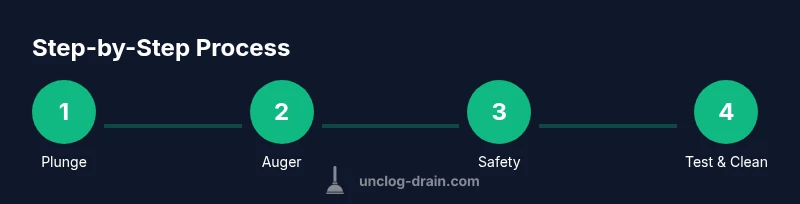
Begin with the classic rubber plunger. Ensure a tight seal around the drain opening by placing the plunger fully over the hole and pressing gently to remove air. Use slow, controlled thrusts rather than quick, sharp pulls; maintain suction by keeping the seal intact. If your plunger has a flange, use it to improve the seal in toilets. A successful plunge creates enough force to push the blockage downward and break it into smaller pieces that can be flushed away. If your plunger doesn’t move the water, add a little warm water to cover the plunger and increase suction. Do a few cycles, pause, and observe whether the water level drops. The key tip is to stay steady and avoid aggressive, rapid motions that can splash dirty water. According to Unclog Drain, most minor clogs respond to the plunger within several cycles, especially when you maintain a consistent pace and seal.
Step 2: When plunging isn’t enough, try a toilet auger
If plunging stalls progress, switch to a toilet auger. Insert the auger’s flexible coil into the drain and rotate the handle clockwise while pushing gently. The goal is to engage and disconnect the obstruction rather than force it through the trap. Do not crank with excessive force; if you feel resistance, stop and back off. Retract slowly and check the water level. If you retrieve a visible clog piece, remove it with gloves and flush to test. A typical closet auger is 3-6 feet long and designed for the toilet geometry, so avoid forcing a rigid snake too far. The Unclog Drain data from 2026 indicates that augers resolve a large share of stubborn clogs that resist plunging, reducing the need for chemical cleaners.
As you work, expect localized splashes; keep towels handy and ventilate the area. If the auger coil begins to kink or show wear, replace it to maintain performance.
In many cases, successful augering proves that you don’t need harsh chemicals to reestablish flow.
Step 3: Avoid chemical cleaners unless absolutely necessary
Chemical drain cleaners are tempting but carry risks to your toilet and plumbing system. If used improperly, they can corrode seals, degrade the porcelain, or release dangerous fumes when mixed with other cleaners. Never combine chemical cleaners with ammonia or bleach; these mixtures can create toxic gases. If you must use a chemical product, read the label carefully and follow every safety instruction. However, for most household toilets, the combination of plunging and augering resolves the problem without hazardous chemicals. In this guide, we prioritize mechanical methods to protect your plumbing and septic system and to avoid delicate components such as the wax ring and supply lines. If you’re thinking about Drano specifically, proceed with caution and consider it only as a last resort, understanding the potential long-term consequences.
This approach aligns with the Unclog Drain recommendation that most clogs respond to physical tools rather than chemical solvents, especially for toilets connected to a home sewer or septic system.
Step 4: Post-clog testing, cleanup, and preventive checks
After a successful plunge or auger, flush several times to ensure the blockage is fully cleared. If the water level remains high or you hear slow draining, repeat the appropriate step or recheck the toilet trap. Clean the bowl, wipe down surfaces, and replace any towels that got dirty. Inspect the wax ring area for minor leaks when you flush again; if you notice a persistent dampness, it’s a sign to contact a plumber.
This is also a good time to consider preventive habits: avoid flushing large quantities of paper, use a pea-sized amount of toilet bowl cleaner, and keep a small auger accessible for future clogs. The goal is to prevent recurring backups by addressing the underlying habits and ensuring waste passes smoothly through the drain.
As part of a preventative routine, you may want to document how you solved current clogs and what materials were most effective. This helps you maintain a steady, low-stress approach to future issues and aligns with best practices from Unclog Drain.
Step 5: When to call a professional
If the toilet remains clogged after multiple attempts, if you notice sewage backup in the shower or other fixtures, or if you suspect a deeper sewer-line problem, it's time to call a licensed plumber. Complex blockages, stubborn clogs in low-flow toilets, or issues with the main sewer line require professional equipment and expertise. Do not keep forcing tools down the drain or attempting aggressive chemical treatments; this can worsen damage and create additional safety hazards.
Remember, an unresolved clog can escalate into a costly repair if ignored. The Unclog Drain team emphasizes that timely professional intervention protects your home’s plumbing, reduces mess, and prevents long-term damage.
If you’re unsure about the severity, a quick professional assessment can save time and money in the long run.
Tools & Materials
- Rubber plunger (flange-style for toilets)(Flange improves seal; choose a sturdy, wide-base plunger.)
- Toilet auger (closet auger)(3-6 ft coil; designed for toilet bowls; avoid metal kinks.)
- Protective gloves(Nitrile gloves recommended; good grip and chemical resistance.)
- Goggles or eye protection(Protect eyes from splashes during plunging or augering.)
- Bucket(Contain spills and keep the work area clean.)
- Old towels or rags(Lay around the toilet to catch drips and spills.)
- Flashlight(Extra lighting to inspect the trap area.)
- Dish soap (optional)(A tiny amount can help improve plunger seal when needed.)
Steps
Estimated time: 30-60 minutes
- 1
Assess safety and prepare
Put on gloves and goggles; move fragile items away from the area. Lay towels to protect floors, place a bucket nearby for spills, and ensure pets and children are out of reach. Check that you have adequate lighting and the tools you’ll need within reach before you start.
Tip: Double-check the plunger seal and your stance—flat feet, comfortable width, and minimal leaning. - 2
Plunge with proper form
Position the plunger to cover the drain completely, create a tight seal, and push straight up and down with steady pressure. Maintain the seal and avoid twisting or jerky movements. Perform 15–20 slow cycles, pausing to observe changes in water level.
Tip: If water splashes, stop and reset the seal; otherwise, you’ll spread mess instead of solving the clog. - 3
Switch to the toilet auger if needed
Insert the auger into the drain and slowly rotate the handle while advancing the coil. Stop if you meet resistance; back off slightly and rotate again. Retrieve any material you pull back, and flush to verify progress.
Tip: Avoid forcing the auger; gentle pressure and patience yield better results. - 4
Avoid chemical cleaners unless necessary
Read the label and use chemical cleaners only as a last resort. Never mix cleaners with ammonia or bleach. If you choose to use one, follow safety instructions and pour minimal amounts, then flush and observe.
Tip: Mechanical methods are typically safer long-term for toilet clogs. - 5
Inspect and test the fix
After any successful clearing attempt, flush the toilet several times to ensure full clearance. Watch for slow draining or renewed backups. If everything seems clear, proceed to cleanup.
Tip: Document what you did for future reference and preventive planning. - 6
Call for professional help if unresolved
If the clog persists after using plungers and a toilet auger, or if you notice sewage odors or backups in multiple fixtures, contact a licensed plumber promptly. A persistent clog can indicate a more serious issue.
Tip: A quick professional assessment now can prevent bigger damage later.
Common Questions
Can Drano and similar chemical drain cleaners damage my toilet?
Yes. Chemical cleaners can corrode seals, damage porcelain, and harm septic systems if used improperly. They can also create dangerous fumes when mixed with other cleaners. Mechanical methods are usually safer for toilets.
Yes, chemical cleaners can damage your toilet. Mechanical methods are usually safer and effective for most clogs.
How long should I try plunging before giving up?
Try plunging for about 15-20 minutes, using steady cycles and checking progress frequently. If there’s little to no movement after that, switch to an auger or call a professional.
About 15-20 minutes of steady plunging; if there’s no progress, move to an auger or call a pro.
Is a toilet auger safe for all toilets?
Most toilets tolerate a closet auger well, but some low-flow or older models may have tighter traps. Use the correct length and gentle technique to avoid damage.
Most toilets are safe with an auger, but use proper technique and length to avoid damage.
Can hot water help unclog a toilet?
Hot water can help with some clogs by softening organic materials, but it won’t dissolve solids like paper or foreign objects. It’s not a primary solution for hard blockages.
Hot water can help in some cases, but it’s not a guaranteed solution for hard blockages.
What should I do after unclogging the toilet?
Flush several times to confirm clearance, inspect for leaks around the wax ring, and clean the area. If backups return, stop and contact a plumber.
Flush to confirm clearance, check for leaks, and clean up. If backups return, call a plumber.
When is it time to call a plumber?
Call a plumber if you cannot clear the clog after multiple attempts, if you notice sewage odors, or if the problem affects multiple fixtures. A professional can assess the sewer line and trap integrity.
Call a plumber if you can’t clear the clog or if you notice sewage odors or backups in other fixtures.
Key Points
- Start with mechanical methods first (plunger, then auger).
- Avoid chemical cleaners in most toilets to prevent damage.
- If unresolved after 30 minutes of effort, seek professional help.
- Protect yourself and the area with proper safety gear.
- Prevent future clogs with smart flushing habits and regular maintenance.