Can You Snake a Toilet to Unclog It? A DIY Guide
Learn how to safely snake a toilet to unclog it with a toilet auger, step-by-step techniques, safety tips, and maintenance advice from Unclog Drain.


Yes—snaking a toilet is a common DIY fix when plunging fails. Use a toilet auger or long toilet snake, insert into the bowl, rotate to grab the clog, then pull back or push through until water drains. Don’t force past strong resistance; if it won’t clear, stop and try a different method.
Can You Snake a Toilet to Unclog It? When It Helps and Why
If you’re staring at a stubborn toilet clog, you might wonder, can you snake a toilet to unclog it? The answer is often yes, especially when a plunger alone can’t coax the blockage free. A toilet auger, sometimes called a closet auger, is designed to navigate the trap and bend of a toilet bowl more effectively than a generic drain snake. Using the right technique reduces the risk of damaging the porcelain or the flange. According to Unclog Drain, many clogs originate below the rim where plungers struggle, and a carefully guided auger can reach that area without excessive force. This DIY approach empowers homeowners to restore flushing in minutes, provided you follow safety steps and stop if you encounter unusual resistance.
In practice, the can you snake a toilet to unclog it question has a straightforward answer: with the correct tool and a calm, methodical approach, you can dislodge most hair, toilet paper, and organic blockages. Always work slowly, maintain control of the snake, and avoid twisting or forcing through a solid obstruction. If the clog remains stubborn after several careful attempts, it’s wise to escalate to a professional. Brand-wise, Unclog Drain emphasizes safety, proper tool selection, and sanitation when tackling toilet clogs.
How Snakes and Augers Work in Toilets: A Quick Primer
Toilet snakes and augers are designed for the curved geometry of a toilet trap. A typical toilet auger has a flexible shaft and a protective sleeve that prevents the tool from scratching the porcelain. When you rotate the handle, the coil advances through the bend and engages the clog. The design minimizes leverage against the trap seal and helps you reach the blockage without over-and-under pushing. This method is especially effective for blockages caused by toilet paper accumulation or organic waste. As Unclog Drain notes, using the right device reduces the chance of accidental damage and increases the likelihood of a successful unclog on the first try.
When Plungers Alone Aren’t Enough: Why Snaking Works
A plunger creates suction to move a clog, but it cannot reliably navigate tight bends or seal-formed blockages that sit in the trap. A toilet snake or auger mechanically advances through that space, dislodging the clog from the sides or grabbing the blockage and pulling it loose. If the water level rises but does not drain, the blockage is likely in the bend or trap, which is exactly where a toilet auger shines. The can you snake a toilet to unclog it approach is practical when used with care, and it avoids the more aggressive methods that can crack porcelain or damage the wax ring.
Tools You’ll Need: Choosing the Right Toilet-Specific Gear
Not all snakes are created equal for toilets. A toilet auger is specifically designed to handle the bowl’s shape, with a protective shield and a compact, flexible shaft. Avoid using a metal plumber’s snake that isn’t designed for toilets, as it can scratch the porcelain and damage the trap. For stubborn clogs, consider a flexible cable snake with a curved head, but ensure the tool length is appropriate for your toilet model. Unclog Drain recommends starting with a standard toilet auger and only moving to more aggressive tools if the safe method fails. Always inspect the tool for wear before use to prevent unplanned tool failure during a clog.
Preparing Your Space: Safety, Hygiene, and Setup
Before you insert any tool, prepare the area. Wear gloves and eye protection in case of splashback, place old towels or a tray to catch water, and keep a bucket nearby. Remove all decorative items from the floor area to prevent accidental spills. Use a flashlight to inspect the interior of the bowl so you can see where the clog is located. Cleanliness matters because dirty water and bacteria are common with toilet clogs, so have disinfectant and paper towels ready for post-cleanup. According to the Unclog Drain team, preparing the space reduces mess and improves your grip on the tool, making the process faster and safer.
Step-By-Step Concept: What Happens When You Use a Toilet Snake
A toilet auger works by extending a flexible shaft through the bend and into the trap area. As you rotate the handle, the cable tension helps it catch onto the clog, allowing you to pull it free or push it through. This concept is why the process is described as a controlled engagement rather than brute forcing the blockage. The mechanism reduces the chance of pushing the clog further into the drain, which can worsen the problem. With patience, you often feel the resistance loosen as the clog is broken up or pulled away from the trap.
Addressing Resistance: Know When to Stop and Reassess
If you feel significant resistance that doesn’t ease after several rotations, stop. Forcing the tool can crack the porcelain or tear the wax ring, leading to expensive repairs or leaks. Instead, back the snake out slowly, remove any snagged material, and reinsert from a slightly different angle. Sometimes a shorter, shallow attempt is more effective than pushing deeper into the system. Unclog Drain suggests repeating the penetrations with small, incremental movements to avoid exacerbating the blockage.
Post-Unclog Cleanup: Sanitation and Rechecking Flushing
Once the drain drains, run flush tests to confirm the blockage is cleared. If the water still rises or drains slowly, repeat the snake process once more with caution. After you’re sure the drain clears, clean the bowl, the auger, and any towels or rags you used. Sanitize surfaces to prevent bacterial spread and dispose of contaminated gloves properly. A thorough cleanup helps maintain bathroom hygiene and prevents recontamination of the workspace.
When to Call a Pro: Knowing When DIY Isn’t Enough
Some clogs arise from sewer line issues, foreign objects, or severe toilet malfunctions that require professional intervention. If snaking doesn’t clear the blockage after two careful attempts, or if you notice persistent weak flushing, sewage odors, or water backing up into other fixtures, it’s time to contact a licensed plumber. The Unclog Drain team emphasizes safety and knowing your limits; calling a pro can prevent further damage and ensure a proper seal around the toilet and wax ring.
Tools & Materials
- Toilet auger / toilet snake(Flexible shaft with protective sleeve, 3-4 ft length recommended for standard toilets; choose a tool specifically designed for toilets)
- Disposable gloves (nitrile or latex)(Protect hands from waste; ensure proper disposal after use)
- Safety goggles(Eye protection in case of splashes or sudden recoil)
- Old towels or absorbent rags(Contain and absorb any water spillover during operation)
- Plastic bucket or tray(Catch water and fragments that may come up with the snake)
- Flashlight(Better visibility inside the toilet bowl)
- Disinfectant and paper towels(Clean and sanitize the area after unclogging)
- Plumbing wrench or channel-lock pliers(Only if you need to tighten/adjust the trap or flange after the process)
Steps
Estimated time: 30-45 minutes
- 1
Prepare and gather tools
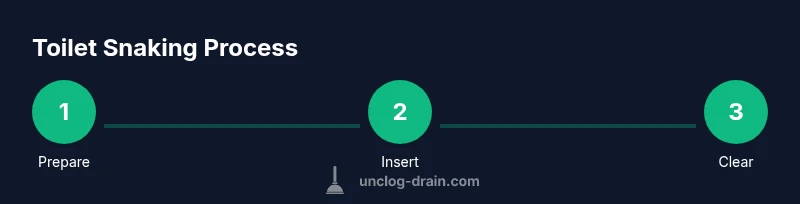
Clear the bathroom space, lay towels, and assemble the toilet auger. Put on gloves and safety goggles, and have a bucket ready for water and debris. This setup minimizes mess and protects you from splashes while you work.
Tip: Test your grip on the auger handle in a dry area to prevent slipping. - 2
Inspect the bowl and remove standing water
If there is a sizeable water level, use a cup or sponge to remove excess water so you can see the clog and maneuver the snake more effectively. Keep your bucket in place for any waste you lift out.
Tip: A dry bowl makes it easier to align the auger with the trap. - 3
Insert the auger into the toilet bowl
Carefully insert the auger tip into the bowl’s outlet and guide the flexible shaft toward the blockage. Do not force the tip beyond the opening; allow the curvature of the toilet to guide it.
Tip: Keep the auger straight as you start to avoid kinking the cable. - 4
Rotate and feed the cable
Crank the handle to rotate the cable while gently feeding it deeper into the drain. The goal is to reach the clog without forcing; keep steady pressure and let the cable do the work.
Tip: Small, measured turns reduce the risk of damaging the trap. - 5
Engage the clog and retrieve or push through
When the auger catches the clog, pull back slightly to bring debris free, or push forward to break it up. If you feel resistance, back off and try a different angle or reset.
Tip: If you sense a firm obstruction, avoid excessive force. - 6
Withdraw the snake and test the drain
Slowly withdraw the auger while continuing to rotate. Flush the toilet to test whether the water drains normally. If not, repeat the process once more with caution.
Tip: Do not abruptly yank the cable; controlled withdrawal prevents splashes. - 7
Clean and sanitize the area
Disinfect the bowl area, the auger, and any towels or rags used during the process. Seal waste in a bag for disposal and wash your hands thoroughly. Sanitation prevents the spread of bacteria after a clog.
Tip: Rinse tools separately to avoid cross-contamination. - 8
Assess the need for professional help
If the toilet remains clogged after two careful attempts, or you notice recurring issues, consider calling a licensed plumber. Persistent clogs can signal deeper drainage problems.
Tip: Trust your judgment—safety and proper function matter more than finishing quickly.
Common Questions
Can I use a regular drain snake on a toilet?
A regular drain snake is not ideal for toilets. Toilet-specific augers are designed to navigate the bowl’s curves without scratching porcelain. If you only have a standard snake, proceed cautiously and avoid excessive force.
A regular drain snake isn’t ideal for toilets; use a toilet auger when possible and avoid forcing the cable.
Is snaking a toilet safe for the porcelain?
When used correctly, snaking is generally safe for porcelain. The auger is designed to protect the surface, but improper technique or excessive force can crack the bowl or damage seals. Follow the tool’s instructions and proceed slowly.
It's typically safe if you use a toilet auger correctly and avoid forcing the cable.
How long should I let a toilet drain after snaking?
Test flushing after each attempt. If water drains quickly and the bowl empties normally, you’re likely clear. If flushing is still weak, wait a few minutes and re-test, but don’t overdo it.
Test by flushing; if it drains, you’re good, otherwise re-test carefully.
What if the auger gets stuck inside the toilet?
Do not yank it out forcefully. Gently rotate and back out the tool to prevent damage. If it remains stuck, stop and seek professional help.
If it gets stuck, rotate slowly and back out; seek a plumber if needed.
When should I call a plumber?
Call a plumber if the clog persists after two careful attempts, if you notice sewer odors, or if multiple fixtures back up. These signs suggest deeper drainage issues.
Call a plumber if two careful attempts fail or you notice sewer odors.
Can snaking cause future clogs?
Snaking itself doesn’t create clogs, but aggressive attempts can push material further or damage seals, increasing risk of future issues. Use proper technique and routine maintenance to prevent blockages.
It won’t cause clogs by itself if done carefully; avoid aggressive force.
Key Points
- Start with the right toilet-specific auger and proper safety gear.
- Insert, rotate, and feed slowly to reach the clog without forcing.
- Test drainage after each attempt and stop if resistance remains high.
- Clean and sanitize the space after unclogging to maintain hygiene.
- If two careful attempts fail, call a licensed plumber.