Camper Toilet Clogged? Quick Troubleshooting Guide
Tackle camper toilet clogs fast with a safe, step-by-step guide from Unclog Drain. Learn common RV clog causes, quick checks, and a reliable fix to keep your RV bathroom flowing.


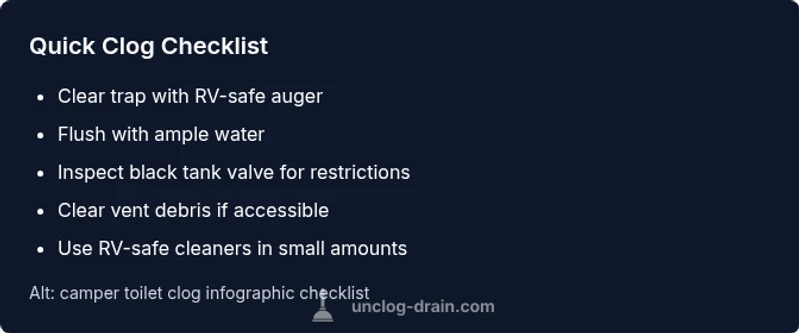
The most likely cause of a camper toilet clog is a partial obstruction in the toilet trap or vent line, often from toilet paper, wipes, or waste buildup. The quickest fix is to use an RV-safe toilet auger or plunger to clear the trap, then flush with water and a mild RV-safe cleaner. If the blockage persists, inspect the black tank valve and vent for restrictions.
Why camper toilets clog and what homeowners notice
According to Unclog Drain, the compact plumbing network inside campers makes toilets particularly susceptible to partial blockages. The most common symptoms are slow flushing, a backflow into the bowl, or a lingering odor even after flushing. These signs often point to a subtle buildup rather than a full-blown collapse of the system. Homeowners typically notice that small amounts of toilet paper, wipes labeled as RV-safe, or organic waste accumulate over days or trips, reducing flow and increasing pressure in the trap. The Unclog Drain team has seen countless cases where a simple, patient approach resolves the issue without requiring a full system service. The key is to differentiate a true clog from a venting problem or a valve restriction, because the remedy changes with the root cause.
In many cases, the root cause is not a single hard blockage but a combination of minor impediments that gradually slow the system. Routine use, travel jostling, and the way waste is introduced into the system can influence how quickly a small clog develops. For RV owners, recognizing the difference between an inlet-side issue (near the toilet) and an outlet-side issue (the black tank) helps you target the right fix. This understanding is central to effective troubleshooting and avoiding costly missteps.
For safety and reliability, always approach clogs with patience and a plan. Working with the right tools and RV-safe products minimizes risk to seals, tanks, and the, the black tank valves. The Unclog Drain guidance prioritizes safety and practical steps over aggressive chemicals, especially in mobile living environments where space is limited and fumes can accumulate quickly.
Common causes in RV sanitation systems
RV sanitation systems blend toilets, hoses, black tanks, and vents in a compact layout. The most frequent culprits behind a camper toilet clog include paper buildup (especially low-biodegradable brands), residual wipes not designed for RV use, and partial solids that settle in the toilet trap. In some cases, the clog forms beyond the trap in the drain line, or at the entrance to the black tank where valve assemblies can snag debris. Clogging can also result from restricted venting, which reduces atmospheric pressure and slows drainage. Chemical cleaners often do more harm than good by leaving residues that turn into stubborn deposits when mixed with RV toilet chemicals. Regular maintenance reduces these risks and keeps the system flowing.
Another common factor is improper tank maintenance. If the black tank valve is left partially closed or the vent is blocked, pressure can back up and push waste toward the toilet. Travel vibrations can further compact waste against the trap. Understanding these dynamics helps you diagnose whether the issue is local to the toilet or part of the broader waste system.
To prevent recurring clogs, use RV-specific toilet paper in measured amounts, avoid flushable wipes not rated for RV use, and keep the vent clear of leaves or debris. Safe cleaners designed for caravans should be used sparingly and never mixed with other cleaners that could produce harmful gases.
Quick checks you can do immediately
If you’re facing a slow flush or partial blockage, start with these fast checks before reaching for tools. They are designed to be safe, repeatable, and RV-friendly. First, visually inspect the toilet bowl for obvious solids and confirm the toilet paper amount isn’t excessive. Next, perform a gentle flush with a pint or more of water to gauge whether the flow improves. If the fill doesn’t help, move to the auger or plunger. Check that the black tank valve is fully open when flushing, ensuring a straight path for waste. Finally, inspect the vent line (if accessible) for blockages like leaves or wasp nests that can impede airflow and drainage. If you have a portable waste tank, make sure its inlet hose is clean and clear of obstructions.
Safety note: always wear gloves and eye protection when handling wastewater, and avoid mixing chemical cleaners with anything other than RV-safe products. If you notice a strong chemical smell or a leak at any joint, stop and seek professional guidance. These quick checks help you decide whether you can proceed safely with tools or need professional assistance.
Diagnostic flow: symptom → diagnosis → solutions overview
In this section we outline a streamlined diagnostic flow that helps you move from symptom to solution with confidence. Start with the most common issues and proceed to less likely causes. If one fix doesn’t resolve the problem, move to the next item in the flow. This approach minimizes unnecessary disassembly and keeps your RV plumbing intact.
Symptom: Slow drain, partial flush, or backflow into bowl. Diagnosis path:
- Cause: Partial trap clog from paper or solids (high likelihood)
- Cause: Blockage in drain line near the black tank inlet (medium likelihood)
- Cause: Venting restrictions or blocked vent (low likelihood)
Solutions:
- Fix: Clear the trap with an RV-safe auger and flush with water (easy)
- Fix: Inspect the inlet and drain lines for buildup; flush and re-test (easy)
- Fix: Check and clear venting obstruction if accessible (medium)
If the clog persists after trying these steps, consider professional help to inspect seals, hoses, and tank components more deeply.
Step-by-step fix for the most common cause: partial toilet trap clog
This section provides a practical, action-oriented fix for the most common camper toilet clog: a partial trap clog caused by paper or solids. Follow these steps in order to maximize success while protecting RV components.
- Gather tools: RV-safe toilet auger, disposable gloves, a damp cloth for cleanup, and a bottle of RV-safe cleaner.
- Put on gloves and ensure the area is well-ventilated. Seat the auger tip into the toilet trap and rotate gently to avoid damaging the ceramic surface.
- Advance the auger slowly until you feel resistance; rotate counterclockwise to break through the clog. Retract and repeat several times as needed.
- Flush with a generous amount of water to clear loosened material. Repeat until the flow is steady and the bowl empties normally.
- Rinse tools and sanitize near the seal area; run a final flush with clean water and a small amount of RV-safe cleaner to leave the trap clean. Tip: avoid forcing the auger beyond resistance to prevent damage. If resistance remains, stop and move to the next diagnostic step.
Prevention and aftercare: keeping camper toilets clog-free
Prevention is the most reliable strategy for camper toilets. After resolving a clog, establish a simple maintenance routine to keep the system flowing smoothly. Use RV-safe toilet paper in moderate quantities, and avoid expanding wipes or non-rv-safe products. Regularly inspect the vent line for debris, and ensure the black tank valve remains clean and fully operable. When traveling, avoid rapid tank filling and easing system pressure can help prevent backflow. Periodically rinse hoses and the trap using clean water, especially after long trips. The goal is a predictable, simple maintenance routine rather than reactive fixes every weekend.
Steps
Estimated time: 30-40 minutes
- 1
Safety prep and tool gathering
Before starting, put on gloves and safety glasses. Gather an RV-safe auger, plunger, disposable wipes, and clean water. Clear the area and ensure you have good lighting and a stable surface.
Tip: Wear eye protection; wastewater can splash during repairs. - 2
Clear the trap with an auger
Insert the auger into the toilet trap and rotate gently to break the clog. Advance and retract several times, avoiding excessive force. Stop when you feel the obstruction loosen.
Tip: Use slow, steady motions rather than forceful pushes. - 3
Flush to verify flow
Flush with a generous amount of clean water to test whether the clog is cleared. Repeat as needed until the water drains freely and no backflow occurs.
Tip: A second or third flush helps confirm the trap is clear. - 4
Check inlet and vent if needed
If flow remains slow, inspect the black tank inlet hose and valve for buildup and rinse. If accessible, check the roof vent for debris and clear cautiously.
Tip: Do not disassemble sealed vent systems without guidance. - 5
Final sanitize and test
Run a final flush with water and a small amount of RV-safe cleaner. Inspect seals around the toilet and drainage hoses for leaks before closing up.
Tip: Dispose of waste safely following local regulations.
Diagnosis: Toilet won't drain or backflow into bowl in a camper
Possible Causes
- highPartial clog in the toilet trap from toilet paper or solids
- mediumBlockage in the RV black tank inlet or drain line
- lowVent pile blocked or incomplete venting
Fixes
- easyUse an RV-safe toilet auger to clear trap; avoid aggressive chemical cleaners
- easyInspect inlet hose and valve; flush with water and safe cleaner
- mediumCheck vent stack or roof vent for obstruction; clear debris if accessible
Common Questions
What is the most common cause of camper toilet clogs?
Most clogs come from partial toilet trap blockages due to excess toilet paper or solids. A buildup in the trap can slow drainage and lead to backflow if not addressed. Regular, controlled flushing helps prevent this.
Most clogs come from partial blockages in the toilet trap due to excess paper or solids.
Can I use ordinary household toilet paper in a camper toilet?
Use RV-safe toilet paper designed to break down easily in septic systems. Regular household paper may not disintegrate quickly enough in mobile waste systems and can contribute to clogs.
Use RV-safe toilet paper that breaks down easily.
Are chemical drain cleaners safe for campers?
Avoid chemical drain cleaners in RVs. They can damage seals and tanks and may react with RV chemicals. Stick to RV-safe products and mechanical clearing tools.
Avoid chemical drain cleaners in RVs.
What if the auger won’t clear the clog?
Don’t force the auger deeper. Stop and reassess the setup. Try a second approach such as flushing with water and inspecting the inlet, or consult a professional if the clog persists.
If the auger won’t clear, stop and try another method or seek professional help.
When should I call a professional RV technician?
If you notice leaks, persistent backflow after multiple attempts, unusual odors, or damage to hoses or seals, consult a pro. They can assess seals, fittings, and tank components beyond basic clogs.
Call a pro if you have persistent leaks or if seals or tanks show damage.
How can I prevent camper toilet clogs in the future?
Use RV-safe toilet paper in moderate amounts, avoid flushable wipes not rated for RVs, and perform regular rinses of the trap and hoses. A simple maintenance routine reduces frequency of clogs.
Prevent clogs by using RV-safe paper and regular clean rinses.
Watch Video
Key Points
- Clear the trap with an RV-safe auger first.
- Flush thoroughly to confirm clearance
- Inspect venting if clog persists
- Use RV-safe products and limit toilet paper