Bathroom Blockage Cleaner: Safe, Effective Drain Unclogging Guide
Learn how to choose and use a bathroom blockage cleaner safely. This expert guide covers product types, safety, step-by-step usage, and practical tips from Unclog Drain to restore bathroom drains quickly and without damage.


You will learn how to choose and use a bathroom blockage cleaner to safely clear common bathroom clogs. This guide covers product types (enzymatic, caustic, and acid-based cleaners), safety considerations, and a practical, step-by-step workflow you can follow today to restore drains without damaging pipes or septic systems.
What is a bathroom blockage cleaner?
A bathroom blockage cleaner is a product designed to dissolve or dislodge clogs in household drains, toilets, and bathroom fixtures. When used correctly, these cleaners can provide a fast, approachable way to restore flow without professional service. The keyword "bathroom blockage cleaner" should be understood as a range of formulations, from enzyme-based cleaners to caustic solutions, each with its own mode of action and safety profile. According to Unclog Drain, many clogs in bathrooms originate from hair and soap scum building up around pipe elbows and traps, especially in older homes. Selecting the right product begins with identifying the type of blockage and the material of your piping. Enzymatic cleaners work gradually on organic matter, while chemical cleaners rely on chemistry to dissolve mineral deposits or hair blocks. This article will guide you through choosing a product, applying it correctly, and avoiding common mistakes that can damage pipes or void warranties. By understanding these basics, you can prevent recurring clogs and extend the life of your bathroom plumbing.
Our approach to safety and effectiveness
The goal of using a bathroom blockage cleaner is to restore normal drainage without creating new problems. We emphasize a balanced approach: mechanical methods for the initial clearance, enzyme-based cleaners for maintenance, and cautious use of stronger chemicals only when necessary. The Unclog Drain team emphasizes thinking about your plumbing—materials, age, and pipe layout—before selecting a cleaner. This reduces the chance of damage and helps you choose products that are compatible with septic systems and metal or plastic pipes. Remember that products vary in strength and dwell time, so always start with the least aggressive option that can plausibly clear the blockage. Consistency in practice, not brute force, leads to long-term success.
Brand context and practical expectations
Unclog Drain’s guidance is grounded in real-world experiences from homeowners and DIY enthusiasts. The team notes that most bathroom clogs respond best to a combination of mechanical action (plunging or snaking) and a carefully chosen cleaner. Enzymatic cleaners are popular for routine maintenance because they work over time to break down hair and natural buildup without harsh fumes. When faced with stubborn blockages, a more robust cleaner might be necessary, but it should be used strictly according to label directions. The overall message is simple: understand the clog, pick the right cleaner, and apply it with patience.
Quick start checklist for a bathroom blockage cleaner
- Identify the blockage type (hair, soap scum, mineral buildup).
- Choose a product compatible with your pipes and septic system.
- Gather PPE and basic tools (gloves, goggles, plunger, toilet auger).
- Start with mechanical clearance, then enzymatic cleaner for maintenance.
- If needed, use a chemical cleaner with strict caution and proper ventilation.
Expert caution and best practices
Always read and follow the product label. Never mix cleaners, especially enzymatic and caustic/acidic formulas, as dangerous fumes can form. Ventilate the bathroom well during treatment and keep children and pets away. If you experience strong chemical odors, dizziness, or throat irritation, stop using the product immediately and rinse the area.
Summary of what to expect
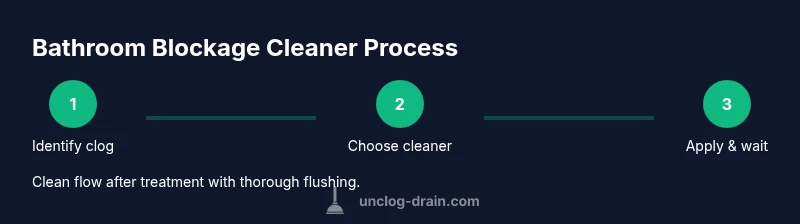
Most bathroom blockages respond to a measured approach: mechanical action first, then a suitable cleaner, followed by thorough flushing. Expect the dwell time recommended on the product label to vary from several minutes to several hours. Persistent clogs may indicate issues beyond a simple blockage, such as a broken pipe or a tree root intrusion, which require professional attention. In the meantime, maintain proactive prevention habits to minimize future clogs.
Tools & Materials
- Rubber gloves(Protect hands from splashes; choose a snug fit)
- Safety goggles(Eye protection against splashes and fumes)
- Plunger (cup or flange)(Use an appropriate plunger for sink or toilet)
- Toilet auger / snake(Length suitable for the fixture being cleared)
- Enzymatic bathroom blockage cleaner(Follow label; gentler option for regular use)
- Chemical (caustic) drain cleaner(Use with extreme caution; never mix with other cleaners)
- Dish soap or degreaser(Can help loosen grease before cleaners take effect)
- Old towels or rags(For soaking spills and cleaning tools)
- Flashlight(Better visibility around pipe openings)
- Bucket(Catch water and clean up spills)
Steps
Estimated time: 60-90 minutes
- 1
Identify blockage type
Inspect the affected fixture to determine whether the clog is primarily hair, soap scum, or mineral buildup. A quick test, like running water in a nearby sink, can help differentiate between a dry trap issue and a true blockage. This step informs your choice of cleaner and whether to start with mechanical methods.
Tip: Understanding the blockage early saves time and reduces unnecessary chemical use. - 2
Gather tools and prep area
Put on rubber gloves and safety goggles. Clear the area around the fixture, place towels to catch splashes, and have your plunger and auger at hand. Ventilate the room if you’re using cleaners with strong fumes and keep children and pets away.
Tip: Lay down towels to minimize clean-up later and keep a bucket handy for rinsing. - 3
Try mechanical clearance first
Firmly seal the plunger over the drain and perform several strong, steady plunges to create suction. For toilets, use a flange plunger; for sinks, use a cup plunger. If water starts to drain, repeat until flow improves.
Tip: Avoid using excessive force to prevent pipe damage; consistency matters more than brute force. - 4
Apply enzymatic cleaner if appropriate
If plunging doesn’t clear the clog, apply the enzymatic cleaner per label instructions. These cleaners work over time to break down organic material such as hair and soap scum. Do not mix with another cleaner during this phase.
Tip: Pour slowly to cover the affected area and avoid splashes. - 5
Wait the recommended dwell time
Let the cleaner sit for the time specified on the product label. This dwell period allows enzymes or other active ingredients to act on the blockage. Avoid flushing during this window to maintain cleaning effectiveness.
Tip: Set a timer to ensure you don’t rush the process. - 6
Flush and re-test drainage
After the dwell time, flush the drain with hot water and test by running water or attempting to flush a toilet. If flow remains slow, repeat the enzymatic cleaner step or move to a secondary method.
Tip: Hot water can help loosen residues, but avoid boiling water on PVC pipes as a precaution. - 7
Escalate if unresolved
If the blockage persists after trying enzymatic cleaners and mechanical methods, consider a second cleaning cycle with a different approach or consult a plumber. Some blockages require professional equipment or pipe inspection.
Tip: Document steps taken so the plumber knows what’s been attempted. - 8
Clean up and store supplies
Rinse tools with water, dry surfaces, and store cleaners in a cool, dry place away from children. Wipe down the area and wash your gloves before reusing. Record outcomes to refine future maintenance.
Tip: Keep a small note with dates and outcomes to guide future use.
Common Questions
Can I mix enzymatic cleaners with caustic cleaners?
No. Mixing cleaners can release hazardous fumes or cause dangerous reactions. Always use one product at a time and follow the label directions closely.
Don’t mix cleaners. Use only one product at a time and follow the label for safety.
Will enzymatic cleaners work on hair clogs in a toilet?
Enzymatic cleaners can help with hair buildup and organic matter, but stubborn clogs in toilets often require mechanical methods or professional assistance.
Enzymatic cleaners can help with hair, but toilets may need plungers or an auger.
Are enzymatic cleaners safe for septic systems?
Yes, enzymatic cleaners are generally gentler on septic systems than harsh chemical cleaners when used as directed. Always verify the product label for septic compatibility.
Enzymatic cleaners are usually septic-friendly if you follow the label.
How long should I wait after applying a cleaner?
Wait times vary by product; check the label. Most dwell times range from several minutes to a few hours depending on the clog and product strength.
Check the label for the recommended waiting time; don’t rush the process.
Can I use a bathroom blockage cleaner on a toilet?
Yes, but use a toilet-appropriate product and follow the label. If the toilet remains blocked after using a cleaner, pause and switch methods or call a plumber.
Toilets can be treated with the right cleaner, but persistent blocks may need a plumber.
When should I call a plumber?
If clogs persist after trying mechanical methods and approved cleaners, or if you notice multiple fixtures draining slowly, professional help is advised to assess piping and potential breaks.
Call a plumber if the clog won’t clear after trying safe methods.
Watch Video
Key Points
- Choose the cleaning method based on blockage type.
- Mechanical methods first reduce chemical exposure.
- Follow label instructions and avoid mixing cleaners.
- Enzymatic cleaners are useful for maintenance and hair-related clogs.
- Know when to call a professional for persistent issues.