Bathtub Won t Drain Standing Water: Quick Troubleshooting Guide
A practical, urgent guide to diagnose and fix a bathtub that won't drain standing water. Step-by-step checks, common causes, tools, and when to call a plumber.


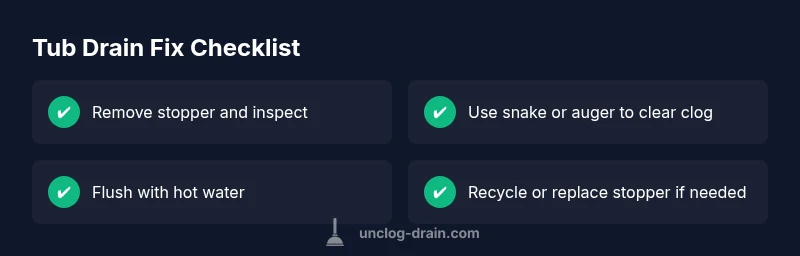
Most bathtub drainage issues start with hair and soap scum that clog the stopper or P-trap. For a quick fix, remove the tub stopper and clear visible debris, then use a drain snake or auger to clear the trap, followed by flushing with hot water. If water still pools, check venting and consider calling a plumber.
Why bathtub won t drain standing water happens
When a tub won t drain and water sits, the likely culprits are clogs, stopper issues, or ventilation problems. The phrase bathtub won t drain standing water describes a persistent clog that blocks flow after the drain, usually caused by hair, soap scum, or mineral buildup. In most homes, a simple sequence of checks can confirm the cause without invasive procedures. Start by inspecting the stopper assembly and removing visible debris before moving on to the pipes themselves. By understanding the typical failure points, you can decide whether to DIY or call a professional. This section lays the groundwork for a calm, methodical approach to restore your tub’s drainage quickly, without panicking when water pools during a bath.
Quick checks you can do before tools
Before pulling out tools, run through a few quick, low effort checks that resolve many tub drainage issues. First, inspect the stopper type and seating. Lift-and-turn and toe-touch stoppers are common culprits if they don’t seal properly. Next, remove any visible hair or gunk around the drain cover and stopper with gloves and a flashlight. Test the drain path by running hot water for 15–20 seconds; if the water drains slowly, the clog is likely downstream. Finally, check if other fixtures in the bathroom drain slowly too; a shared vent or main line problem will show up across fixtures. If none of these steps help, it’s time to move to deeper cleaning with tools.
Common causes of bathtub drainage problems
Hair and soap scum are the notorious duo that forms stubborn clogs in tub drains. Soap residue can bind with minerals to create a solid film inside the pipe, reducing flow. A misaligned or damaged stopper can trap debris and block flow even when pipes are clear. A clogged P-trap often sits just under the tub and will pool water above it. Venting issues can also slow drainage, causing standing water as air can’t escape. Finally, a hidden main sewer line problem will affect multiple fixtures. Understanding these causes helps you pick the right fix and avoid unnecessary work.
How to inspect the drain safely and remove a clog
Safety first: wear gloves and safety glasses, and turn off any water supply if you will disassemble components. Start by removing the stopper assembly and cleaning any hair from the strainer. Use a flashlight to inspect the drain opening for visible debris. If clear, use a plastic bathroom snake or auger to probe the drain about 2–3 feet; pull back debris as you work. If you encounter a stubborn clog, consider removing the P-trap beneath the tub (place a bucket to catch water) and clean it thoroughly. Flush with hot water and reassemble, then test the drainage again. Enzymatic cleaners can help digest organic buildup if mechanical methods leave residue, but avoid chemical mixtures that can corrode pipes.
When to move beyond DIY: professional help and safety
If the tub still pools after you have cleared obvious hair and debris, you may be facing a deeper blockage or vent issue. Do not force a snake into main sewer lines or use aggressive chemicals; these can damage pipes and create hazardous fumes. If multiple fixtures drain slowly or you hear gurgling from the lines, contact a licensed plumber. A pro can assess venting, main line integrity, and pipe condition with camera inspection, providing a safe resolution. Remember that persistent clogs often require professional tools and expertise.
Prevention tips to avoid future clogs
Adopt a simple maintenance routine to keep tub drains clear. Use a drain screen to catch hair and debris, and clean it weekly. Run hot water after showers or baths to dilate the pipe and help push soap scum through the trap. Avoid pouring grease or large food particles down any drain, even in the bathroom, and schedule periodic drain cleanings if you live in hard water areas. A quick quarterly check of the stopper and trap can prevent most standing water problems from turning into a full clog.
Steps
Estimated time: 60-90 minutes
- 1
Gather tools and safety gear
Collect rubber gloves, safety glasses, a flashlight, a drain snake or auger, a bucket, and towels. Clear the area around the tub to prevent slips. This preparation reduces mess and prevents injury.
Tip: Always wear eye protection when disassembling the drain. - 2
Remove the stopper
Identify the stopper type and carefully detach it. Clean any hair or gunk visible around the stopper stem and inside the drain opening. Take pictures during disassembly to aid reassembly.
Tip: Keep small parts organized to avoid losing them. - 3
Inspect and clean the trap area
Look for debris in the overflow path and near the trap. Clear debris with a gloved hand or tongs. If you see a curved bend, it is likely the P-trap and will need cleaning.
Tip: Place a bucket under the trap before removing it. - 4
Snake the drain
Insert the drain snake into the tub drain and rotate while pushing forward. Work the snake in and out to break up the clog and pull loose hair. Retrieve any material from the line as you go.
Tip: Do not force the snake; gently advance to avoid pipe damage. - 5
Flush and reassemble
Run hot water for several minutes to wash out debris. Reassemble the stopper and ensure it seats properly. Run the tub and observe drainage; repeat steps if needed.
Tip: Check the stopper seating after reassembly to prevent future clogs. - 6
Consider enzymatic cleaners or professional help
If the clog persists, use an enzymatic cleaner designed for bathroom drains to digest organic buildup. If water still pools, stop DIY attempts and call a licensed plumber to avoid damages.
Tip: Enzymatic cleaners are gentler and safer for plastic pipes.
Diagnosis: Water stands in tub after draining attempts
Possible Causes
- highHair and soap buildup in the trap or drain
- highClogged tub P-trap with debris
- mediumDrain stopper misalignment or failure
- lowVenting issue causing slow drainage
- mediumMain sewer line clog or root intrusion
Fixes
- easyRemove and clean the tub stopper to clear surface debris
- easyDisassemble and clean the P-trap, then snake the drain to remove blockages
- mediumUse a plumber's snake or auger beyond the trap to clear deeper clogs
- mediumAvoid chemical cleaners on PVC pipes; contact a professional if main line suspected
- hardCall a licensed plumber for main line or vent issues
Common Questions
Why won t my bathtub drain water at all?
Most often it’s a hair or soap scum clog near the stopper or P-trap. If the clog is deeper or venting is blocked, water will pool. Start with stopper removal and then use a drain snake to clear the path.
Hair and soap scum are usually the culprits. Start by removing the stopper, then use a snake to clear the drain.
Are chemical drain cleaners safe for tub drains?
Chemical cleaners can damage PVC pipes and create hazardous fumes. They should be avoided for frequent use and never used with other cleaners. Enzymatic cleaners are a safer option for ongoing maintenance.
Chemical cleaners can harm pipes and release fumes. Use enzymes for maintenance and only as a last resort.
Should I remove the stopper to clear a clog?
Yes. Removing the stopper often exposes the clog and makes it easier to clear with a snake or by hand. Reassemble carefully after cleaning.
Yes, take out the stopper to access the clog and clean thoroughly.
Can a slow draining tub be caused by vent problems?
Yes. If venting is blocked, air can’t escape and drainage slows. A plumber can diagnose venting with a camera and determine the right fix.
Venting problems can slow drainage; a pro can check vents and fix them.
When should I call a plumber for a bathtub clog?
Call a plumber if multiple fixtures drain slowly, if the clog is deep beyond the trap, or if you suspect a main sewer line issue. A professional can safely diagnose and repair without causing damage.
If several fixtures drain slowly or the clog is deep, call a plumber.
What’s the best way to prevent bathtub clogs?
Install a fine mesh drain screen, avoid pouring grease or solids down bathroom drains, and perform periodic maintenance with enzyme cleaners or routine flushing with hot water.
Use a drain screen and run hot water regularly to prevent build-up.
Watch Video
Key Points
- Start with the stopper and visible debris
- Use a snake or auger before resorting to chemicals
- Avoid mixing cleaners and call a pro for main line issues
- Prevent clogs with screens and routine maintenance