Bathtub Won't Drain: Quick Troubleshooting Guide
Urgent, practical DIY guide to fix a bathtub full of water won t drain. Learn quick checks, step-by-step fixes, safety tips, and when to call a pro.


Most bathtub drains clog from hair, soap scum, or mineral buildup. Start by removing the drain cover, clearing visible hair, and using a plunger to loosen the blockage. If drainage remains slow, advance to a drain snake for deeper debris and inspect the vent for blockages. These steps cover the most common causes of a bathtub full of water won t drain. If these fixes fail, seek professional help.
Why bathtub full of water won t drain happens
Experiencing a bathtub full of water won t drain is a common home maintenance headache. Most cases start with a simple clog formed by hair, soap scum, and mineral buildup that traps waste in the drain line or the P-trap beneath the tub. According to Unclog Drain, these clogs are often preventable with regular maintenance, and most backups originate in the trap or the narrow pipe just beyond the drain opening. Quick fixes involve clearing visible hair, loosening debris with a plunger, and then probing deeper with a snake if needed. If you catch the problem early, you can often restore drainage in under an hour without calling a plumber. The goal is to remove the obstruction and test the flow, not to force water through a fully blocked system. Be mindful of safety: never use power tools near water, and avoid chemical drain cleaners as a first attempt.
Common culprits that block bathtub drains
Hair is the leading culprit in most tub clogs, especially if you have long or curly hair. Soap scum and mineral buildup from hard water form a dense residue that traps hair and small particles. Other contributors include conditioner residue, personal hygiene wipes, jewelry or small objects accidentally dropped into the drain, and a partially blocked P-trap. Each of these can reduce flow and leave standing water in the tub. Regular maintenance, such as cleaning the strainer and trap, dramatically reduces the risk. As the Unclog Drain team notes, addressing the trap area first yields the best results for a tub drain that won t drain.
Safe, simple checks you can perform now
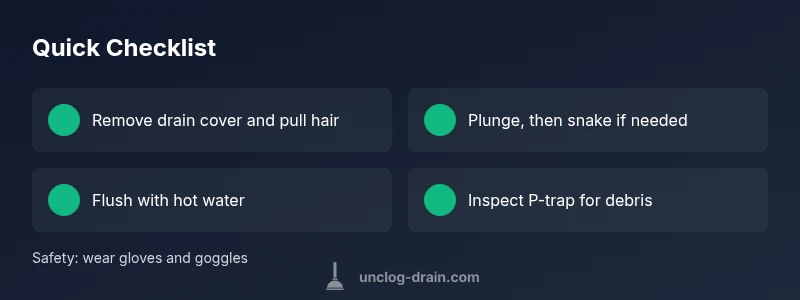
- Put on gloves and use a flashlight to inspect the drain opening. Remove the cover and pull out any hair you can reach.
- Use a plunger with a cap that fits the drain to create a good seal and test for movement. If the water moves even slightly, you’re on the right track.
- If you have a hand auger or drain snake, insert it gently and rotate to grab or cut through debris. Avoid forcing it past a hard obstruction.
- Check the visible portion of the P-trap access (under the tub) if accessible. Clear debris with pliers or a cloth and flush with hot water.
- Test the drain after each step by filling and draining a small amount of water. If drainage improves but is still slow, proceed to deeper clearing.
Diagnostic-flow you can follow (overview)
After performing basic checks, move to a deeper cleaning cycle if needed. Hair and soap scum can form a tight plug near the trap, while mineral buildup may reside further down the line. If the vent stack is blocked or the main sewer line is backing up, the tub drain will behave differently than a simple clog. In these cases, professional equipment or services are recommended to avoid property damage. Throughout the process, keep the work area dry and watch for signs of gas or sewer smell, which require immediate attention and professional help. Unclog Drain emphasizes that safety and methodical progression are key to avoiding unnecessary damage.
Step-by-step fix for the most common cause (hair and soap clog)
This section expands on the most frequent scenario: a hair and soap clog in the tub drain path. Follow the steps in order to maximize success without pricey tools.
Prevention and when to call a pro
Prevent future clogs by using a fine-mesh stopper or hair catcher, brushing hair into the trash before rinsing, and cleaning the drain cover weekly. If multiple fixtures are backing up, or you notice a rotten egg smell or sewage backup, stop DIY work and call a licensed plumber. The Unclog Drain team notes that persistent backups often indicate venting issues or main line problems that require professional assessment.
Steps
Estimated time: 45-60 minutes
- 1
Safety and prep
Wear protective gloves and eye protection. Clear the area, remove any soaked towels, and lay down towels to catch drips. Gather a drain cover tool, plunger, a snake/auger, and a bucket for debris.
Tip: Double-check electrical outlets are dry and away from standing water. - 2
Remove the drain cover
Use a suitable screwdriver to lift the cover. Set it aside carefully and look for obvious hair or debris lodged at the opening.
Tip: Keep track of small parts—hair and debris can slip back into the drain. - 3
Clear visible hair and debris
Pull out hair coils and accumulated gunk with gloved hands or needle-nose pliers. Rinse the area with warm water to see if the flow improves.
Tip: Work from the outside in; clearing the rim first often reduces resistance. - 4
Plunge the drain
Seal the drain with a plunger and plunge firmly several times to loosen the clog. If you feel resistance, rotate the plunger handle to help dislodge the obstruction.
Tip: Use quick, controlled pulses rather than brute force to prevent damage. - 5
Use a drain snake for deeper clearing
Insert the snake into the drain and twist while pushing forward to grab the clog. Once you feel resistance break free, pull back slowly and remove the debris.
Tip: Be patient—snakes often take multiple passes to grab hair and soap buildup. - 6
Flush and test
Run hot water for several seconds to flush the line. Reinstall the drain cover and check drainage by filling the tub briefly and letting it drain.
Tip: If the drain still gurgles or drains slowly, repeat the snake step or move to deeper sections.
Diagnosis: Bathtub full of water won't drain after basic plunging
Possible Causes
- highHair clog in drain or P-trap
- mediumSoap scum or mineral buildup
- lowVent blockage or sewer line issue
- lowCracked or improperly installed trap
Fixes
- easyRemove drain cover and clear hair; try a plunger
- easyUse a drain snake/auger to clear deeper debris
- mediumInspect and clear P-trap; flush with warm water
- hardCheck venting and main sewer line; contact a pro if persists
Common Questions
Why is my bathtub full of water but won’t drain?
A common cause is a hair and soap clog in the drain path or a blocked P-trap. Start with the drain cover, remove hair, and use a plunger or snake to clear debris. If water remains, inspect the trap and consider vent or main line issues.
Hair and soap buildup is usually the culprit. Start with clearing the hair and using a plunger, then a snake if needed.
Can a plunger fix a bathtub drain?
Yes, for minor clogs a plunger can generate enough suction to move debris. If this doesn’t clear the drain, move to a drain snake or remove the trap for a deeper clean.
A plunger often helps with simple blockages; if it fails, try a snake.
When should I call a plumber?
If you suspect venting issues, a sewer backup, or multiple fixtures backing up, it’s time to contact a plumber. These problems may require camera inspection or professional vent clearing.
If you have backup in other drains or a sewer smell, call a plumber.
Is chemical drain cleaner safe for a bathtub?
Most chemical cleaners can damage tub materials and plumbing if used improperly. Mechanical methods (plunger and snake) are safer and often more effective for tub drains.
Chemical cleaners aren’t usually the best first option; use mechanical methods instead.
How long does it typically take to fix a tub drain?
Simple clogs can clear in 30-60 minutes with the right tools. More complex clogs or difficult traps may take longer and sometimes require professional help.
Most fixes take under an hour, but deeper clogs can take longer.
Watch Video
Key Points
- Act safely; start with the easiest fix
- Hair and soap are the top tub clog culprits
- If water won t drain after basic steps, use a snake
- Call a pro for vent or main line issues