Tub is Not Draining: A DIY Troubleshooting Guide
Learn fast, practical steps to diagnose and fix a tub that won't drain. Hair, soap, and vent problems are common—this guide walks homeowners through safe checks, fixes, and when to call a pro.


Most often, the tub is not draining because hair, soap scum, or a clogged stopper block the drain. Quick fix: remove the stopper and clear visible debris, then pump the drain with a plunger or use a drain snake to break up the clog. If the water still won't drain, inspect the vent or call a professional.
What does tub is not draining really mean?
When a tub won’t drain, it usually signals a blockage somewhere along the drain path or a drainage dynamic problem. You might notice standing water even after several minutes of running, or water backing up into the tub after a shower. In many homes, tub drainage problems trace back to simple clogs—hair, soap scum, and mineral deposits trapped in the strainer or trap. A slow drain often indicates a buildup that gradually narrows the passage. In older homes, pipe slope or venting issues can create partial clogs or slow drainage that seems to stall every time. The key is to approach systematically: start with the easiest, most common causes and work toward the more complex possibilities. According to Unclog Drain, most tub drainage issues begin with easily-remedied clogs rather than major pipe failures, but you should never ignore persistent slow draining. Remember: tub drainage is a system, and small friction points add up quickly when water rushes through the trap. Tub is not draining is a solvable problem with the right steps.
Hair and soap scum: the usual suspects
Hair, soap, and mineral buildup are the leading culprits behind a tub that isn't draining properly. Hair binds with soap scum and mineral deposits to form a stubborn clog at the strainer, stopper, or P-trap. Over weeks and months, this gunk accumulates until water can only trickle through or stops altogether. Cleaning the visible clog is essential, but the problem often extends further into the drain line. Regular maintenance—pulling the stopper, removing hair, and flushing with hot water—prevents this buildup. If hair is stubbornly packed in the trap, use a gloved hand or a thin tool to coax it out. Unclog Drain recommends routine hair management in bathrooms to extend drain life and prevent recurring clogs.
Hidden culprits: venting, traps, and main lines
If the drain is blocked only when water is added rapidly, venting issues can be a hidden culprit. A blocked vent can create negative pressure, slowly pulling water down or causing gurgling sounds as air attempts to escape. A clogged P-trap or drain line also adds friction, especially if the trap has a heavy buildup of soap scum. In some cases, the main sewer line serving the house is partially clogged, which will affect tub drains more dramatically after heavy usage. Diagnosing venting requires careful observation and sometimes a professional camera inspection. In most homes, the fastest path to a fix begins with the trap and the immediate drain assembly before escalating to vent checks or main-line evaluation.
Quick checks you can do right now
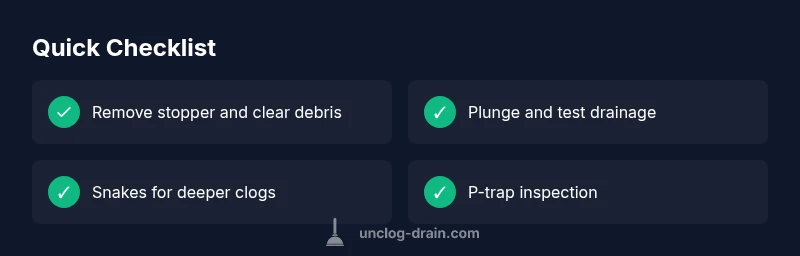
Start with the simplest checks: remove the stopper and clear visible debris, then rinse with hot water and a mild dish soap solution. Use a plunger to push and pull on the drain to loosen the clog, ensuring a tight seal. If plunging doesn’t clear the clog, try a hand-held drain snake to break up hair clumps further down the pipe. After each step, run water to test draining efficiency. If water remains slow, move to the next check: inspect the P-trap for buildup and clear it gently using a brush. Do not use force; you can crack pipes if you twist too hard. For stubborn clogs, a professional-grade snake or hydro-jet may be required. Always wear gloves and eye protection when dealing with dirty water and chemicals.
Safety first: what you should check before you dive in
Before putting tools into service, turn off the water supply to the tub and keep a bucket or towels handy to catch spills. If you’re using chemical cleaners, read the label and avoid mixing products, which can create hazardous fumes. Never pour bleach or other caustic cleaners into a drain that’s already backed up with standing water. If you’ve recently installed new fixtures, ensure no new fittings are restricting flow. If at any point you encounter a foul odor, sewage backup, or persistent slow draining after standard fixes, stop and call a professional. Unclog Drain emphasizes safety as the top priority when tub drainage issues arise.
When to call a professional for tub drainage issues
If you’ve tried the basic steps and the tub remains slow or stopped, it’s time to call a professional. Complex issues like vent blockages, hidden main-line clogs, or collapsed pipes require specialized equipment and expertise. A plumber can inspect the vent stack, evaluate the sewer line, and perform a pressurized flush or hydro-jet if needed. In cases where the clog recurs quickly after cleaning, remodeling or pipe replacement may be warranted. The goal is to restore full drainage without causing damage or creating new leaks. Unclog Drain recommends a staged approach: handle the obvious clogs first, escalate to vent and main-line checks only if the problem persists, and bring in a professional when necessary.
Maintenance habits to prevent future clogs
To keep tubs draining smoothly over time, adopt daily and weekly habits that reduce buildup. Use a hair catcher on every shower and tub drain, clean the stopper monthly, and flush the system with hot water and a mild cleaner weekly. Limit the use of thick or oily products that leave residue, and periodically remove and rinse the P-trap to prevent buildup. If you have hard water, consider a mineral-softening routine to reduce mineral deposits. Regular maintenance reduces the frequency of emergencies and saves money over the long run. Unclog Drain emphasizes proactive care as the best defense against future clogs.
Case study: common scenarios and fixes
In many homes, tub drainage problems unfold in predictable ways. Case A might involve hair buildup in the trap resolved by stopper removal and hair extraction, followed by a quick snake flush. Case B could feature a partially blocked vent, requiring a vent inspection and a cleanout. Case C may present with a stuck stopper that obstructs flow; removing and cleaning the stopper typically solves it. While outcomes vary, the common thread is a methodical approach: identify, reset, and test. Each scenario reinforces the value of a staged plan and proper tools.
Steps
Estimated time: 60-90 minutes
- 1
Assemble tools and safety gear
Gather gloves, a bucket, a flashlight, pliers, slip-joint pliers, a plumber’s snake, and a stiff brush. Put on gloves and eye protection. Clear the area and place towels around the tub to catch any spills.
Tip: Having everything ready reduces the chance of introducing more water damage. - 2
Remove and inspect the stopper
Take out the stopper from the tub drain. Clean off hair and soap scum with a brush. If the stopper is removable, inspect the stem and seal for wear. Reinsert only after clearing.
Tip: A clogged stopper is often the main blocker—start here. - 3
Plunge the drain
Seal the drain with a plunger and apply firm, consistent pressure up and down. Repeat several times to loosen the clog. Remove the plunger and run hot water to test flow.
Tip: Keep water level high enough to cover the plunger for best suction. - 4
Use a drain snake if needed
Insert the snake into the drain and rotate to catch or break the clog. Extend to the trap area if possible, then pull back debris and flush with hot water.
Tip: Avoid forcing the snake; stop if you meet resistance to prevent pipe damage. - 5
Inspect the P-trap
Place a bucket under the P-trap and loosen the nuts to remove the trap section. Clean any buildup with a brush, then reassemble tightly.
Tip: Run water to confirm drain flow after reassembly. - 6
Test venting and drainage
Test a nearby vent by running another fixture (toilet or sink) and listen for air movement. If gurgling or slow, vent cleaning may be needed.
Tip: Vent cleaning can often be done from roof access or crawlspace. - 7
Decide on professional help
If slow draining persists after these steps, schedule a pro visit. A plumber can assess main-line health and perform advanced cleaning or replacement as needed.
Tip: Document what you tried and the symptoms to speed diagnosis. - 8
Cleanup and verify
Wipe surfaces dry, run full water flow, and confirm the tub drains completely. Note any recurring issues for future maintenance.
Tip: Regular maintenance reduces the chance of sudden clogs.
Diagnosis: Tub drain is slow or not draining at all
Possible Causes
- highHair and soap scum buildup in stopper, strainer, or trap
- highClogged stopper blocking flow
- mediumVenting issue causing slow drainage or gurgling
- mediumPartial clog further down the drain line or P-trap
- lowMain sewer line clog affecting multiple fixtures
Fixes
- easyRemove and clean the stopper, then clear visible debris from the strainer
- easyUse a plunger to dislodge the clog and flush with hot water
- easyInsert a drain snake or zip-it tool to break up hair and debris in the trap/pipe
- easyInspect and clear the P-trap, then reassemble and test drainage
- mediumCheck venting by running another fixture and listening for air movement; clear vent if accessible or call a pro
- hardIf all else fails, schedule professional evaluation for possible main-line or pipe damage
Common Questions
What is the first step when a tub isn't draining?
Start by removing the stopper and clearing visible debris from the strainer. If the drain remains slow, proceed with plunging or a snake. Always test the drain after each step.
First, take out the stopper and remove visible debris, then try plunging or snaking. Test the drain after each step to gauge progress.
Can baking soda and vinegar fix a tub clog?
Baking soda and vinegar can help with minor organic clogs, but they may not clear hair or mineral buildup deep in the line. Use them as a supplementary step before mechanical methods.
Baking soda and vinegar can help a little, but they often won't clear hair clogs. Use them as a supplementary step before snaking.
When should I use a drain snake vs a plunger?
Use a plunger for initial forceful attempts on surface clogs and a snake for deeper reach past the trap. If the clog remains after both, you may need professional tools.
Start with a plunger, then try a drain snake to reach deeper. If it’s still clogged, call a pro.
Why is venting important for tub drainage?
Venting allows air to escape as water drains; a blocked vent can slow drainage and cause gurgling. Inspect or clean the vent if accessible, or have a pro check it.
Venting lets air escape as water drains. If you hear gurgling or slow drainage, the vent might be blocked.
Are chemical drain cleaners safe for tubs?
Chemical cleaners can damage pipes and fixtures if misused. They should be a last resort and never used with standing water or other cleaners.
Chemicals can harm pipes if misused. Use them cautiously and only after mechanical methods fail.
When is it best to call a plumber?
Call a plumber if you cannot clear the clog after multiple attempts, if you notice sewage backups, or if you suspect vent or main-line problems. They can diagnose and repair safely.
If you can’t clear the clog after several tries or you see backups, call a plumber.
Watch Video
Key Points
- Identify the quickest fix first (stopper removal, debris clear).
- Hair and soap scum are the most common tub clog culprits.
- Venting and main-line issues require professional assessment.
- Maintain with routine cleaning to prevent future clogs.