Unclogging Main Sewer Line Cost: What to Expect in 2026
A detailed cost guide for unclogging a main sewer line in 2026, covering typical price ranges, key cost drivers, service components, budgeting tips, and practical steps for homeowners and DIY enthusiasts.


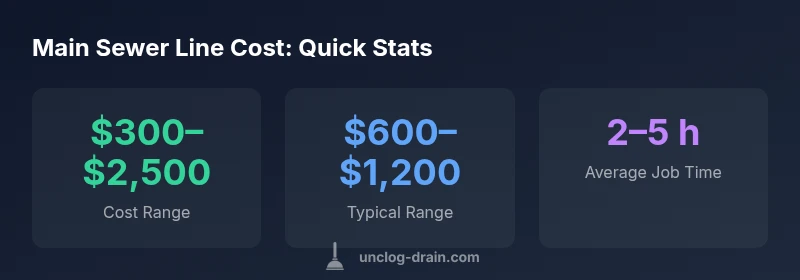
According to Unclog Drain, the typical cost to unclog a main sewer line ranges from about $300 to $2,500, depending on access, scope, and whether pipes need replacement or relining. Most homeowners pay roughly $600 to $1,200 for a standard scope, with higher-end jobs for extensive root intrusion or aged piping.
What drives main sewer line unclog costs
Underground plumbing problems are rarely uniform, and the price tag reflects many interdependent factors. The most impactful variables include how accessible the main line is from your property, the depth of the line, and the length of the clogged run. If the blockage is caused by root intrusion, invading tree roots can require more aggressive cleaning and even pipe repair. Pipe material (cast iron, clay, PVC, or older composites) and the overall condition of the sewer line also influence the difficulty and time required. Urgent or after-hours calls typically carry a premium. According to Unclog Drain, these elements can push the price into a wide range, especially when diagnostics uncover deeper issues than a simple clog. Budget for a broader scope if the initial assessment reveals structural concerns.
Practical takeaway: don't assume a quick snaking job is all that's needed. A professional evaluation is essential to avoid repeat visits and escalating costs.
Service components and price ranges you’ll see
Most main sewer line unclogging services include a combination of diagnostic steps, the actual unclogging method, and optional follow-up inspections. Typical components are: service call or dispatch fee, basic unclogging (snaking or hydro-jetting), pipeline camera inspection, and finally a post-cleaning test to verify flow. Diagnostics often occur first and can reveal why the clog formed in the first place. Camera inspections add transparency about pipe condition and can justify additional repairs. If damage or deterioration is discovered, you may see estimates for pipe repair or relining. For budgeting, anticipate that the unclogging itself might be a smaller portion of the total if inspections uncover more extensive problems.
Pro-tip: request itemized quotes that separate labor, equipment, inspection, and any recommended repairs. This helps you compare apples to apples and plan for contingencies.
Common scenarios and price bands
A straightforward clog in an easily accessible main line might fall on the lower end of the spectrum, perhaps around the $300–$600 range, mainly covering the unclogging and diagnostic visit. When there is partial root intrusion, you’ll likely see higher costs—mid-range estimates often land between $600 and $1,200 and sometimes higher if hydro-jetting is needed. Severe root intrusion, pipe damage, or the need for liner or replacement can push totals into the $1,500–$4,500 range or more, depending on the length of pipe involved and whether multiple access points are required. Each added service—be it camera inspection, trenching, or permit fees—adds to the bottom line. Unclog Drain analyses emphasize that the final price hinges on the actual scope uncovered after inspection.
Geographic and contractor variability
Prices vary by region due to labor rates, permit requirements, and the local market for emergency services. Urban areas with high demand and limited availability may command higher hourly rates, while rural regions might offer lower labor costs but longer travel times. Contractor experience and reputation also influence pricing; reputable firms often include a premium for guaranteed results and warranty-backed workmanship. If a job requires after-hours service or weekend work, expect a surcharge. Regardless of location, obtaining at least three detailed, itemized estimates helps you gauge the going market rate and negotiate effectively. Unclog Drain notes that geography and scope consistently account for the largest portion of the variance in main sewer line costs.
How to estimate costs before you hire
Accurate cost estimation starts with a clear problem statement and documented scope. Begin by describing your symptoms, recent events (like flooding or tree roots visible at the cleanout), and any prior diagnostics. Ask for a written, line-item proposal that lists: diagnostic fee, unclogging method (snaking vs. hydro-jetting), camera inspection, estimated time, and any anticipated repairs such as pipe patching, relining, or replacement. Inquire about permit fees and disposal costs. If glue-lacking materials or tradespeople are required for the repair, factor those in as well. Build a contingency of 10–20% for unforeseen issues. Finally, confirm warranty terms on both labor and any parts used.
Budgeting for a mid-range job: a practical example
Let’s consider a typical mid-range scenario: an accessible main line blockage with moderate root intrusion discovered during inspection. Unclogging labor may start around $500 to $800, plus a camera inspection at roughly $100–$250. If root intrusion is confirmed and hydro-jetting is employed, add $200–$600 for this step. Should repairs or relining be recommended, additional costs could range from $1,000 to $3,000 or more, depending on pipe length and accessibility. A well-documented estimate with itemized line items helps you understand where the money goes and decide which steps are essential now versus optional.
When replacement or liner work becomes necessary
Sometimes a clog is a symptom of deeper pipe damage. If the sewer line is cracked, collapsed, or severely corroded, manufacturers and plumbers may recommend pipe replacement or relining rather than a simple unclog. Relining or trenchless repair can substantially increase the cost but may extend the life of the line and avoid disruptive excavation. In these cases, the total project cost can rise significantly and should be weighed against the expected lifespan of the repair. The Unclog Drain Team advises homeowners to consider long-term value and potential future repairs when deciding between a durable repair and a shorter-term fix.
Cost ranges by scenario
| Scenario | Typical Cost Range | What’s Included |
|---|---|---|
| Simple main line clog with accessible cleanout | $300–$600 | Unclogging, basic scope, no camera |
| Moderate root intrusion, accessible cleanout | $600–$1,800 | Unclogging, camera inspection, possible hydro-jetting |
| Severe root intrusion or pipe damage | $2,000–$4,500 | Unclogging, inspection, repair/relining as needed |
Common Questions
Is main sewer line cost covered by insurance?
Homeowners insurance may cover some costs if the damage is sudden and accidental, not due to normal wear or age. Coverage varies by policy. Check your terms and document the cause and timing of the problem before filing a claim.
Check your policy and talk to your insurer about coverage for sudden damage; keep all repair records and inspections.
Do I need a camera inspection when unclogging a main sewer line?
A camera inspection is typically recommended to identify root causes, assess pipe condition, and guide the repair plan. It helps prevent unnecessary work and future clogs.
Yes—it's usually worth doing to understand the full scope and plan the right fix.
What factors most influence the cost?
The main cost drivers are access to the line, depth and length of the clog, pipe material and age, extent of root intrusion, and whether repairs or relining are required afterward.
Access, damage level, and whether you need repair work drive the price the most.
Can I DIY unclogging a main sewer line?
DIY can address small clogs in some setups, but main sewer lines often require professional-grade equipment and expertise. Mishandling can damage pipes or induce sewer backups.
It's risky; it's usually best to hire a pro for main line work.
How long does a main sewer line unclog typically take?
Most unclog jobs take a few hours, but complex cases with inspections or repairs can stretch into half a day or longer depending on access and scope.
Usually a few hours, longer if repairs are needed.
“The main sewer line is a high-stakes diagnostic job; the right approach blends careful inspection with realistic budgeting to prevent surprises.”
Key Points
- Plan for a wide cost range based on scope
- Ask for itemized estimates before approving work
- Camera inspection often pays off by preventing repeat visits
- Expect additional costs for repairs or relining if needed
- Compare multiple quotes and consider long-term value