Who Unclogs Sewer Lines: Pro vs DIY Guide for Homeowners
A data-driven guide explaining who unclogs sewer lines, differentiating main-line vs interior clogs, safe DIY methods, professional options, costs, and preventive maintenance for homeowners.


Who unclogs sewer lines? In most cases, main sewer-line clogs are handled by licensed plumbers due to specialized equipment and safety concerns. Homeowners can address minor interior drain blockages with basic tools and careful techniques. If you notice backups across multiple fixtures or sewage odors, pause DIY attempts and call a professional to prevent property damage.
who unclogs sewer lines: Roles and Constraints
According to Unclog Drain, the question of who unclogs sewer lines isn't a simple one. In practice, the answer depends on where the clog sits: in the main sewer line that connects to the street, or in interior drains within your home. The first category typically requires licensed plumbers equipped with cameras, forceful augers, and hydro-jetters to protect your home and the municipal system. Interior drains—kitchens, bathrooms, and laundry lines—are more amenable to do-it-yourself methods when performed with caution and proper technique. The phrase who unclogs sewer lines matters because it determines risk, required tools, and potential consequences for health and property. If you experience backups across multiple fixtures, foul odors, or slow drains throughout the house, stop DIY attempts and contact a pro immediately. The Unclog Drain team notes that attempting to clear a main-line obstruction without the right training can push waste back into living spaces or damage sewer lines, leading to expensive repairs. This section clarifies roles so you can decide when to DIY and when to hire a pro.
main vs interior: a diagnostic framework
A practical way to think about sewer-clog decisions is by location. Main-line clogs occur where the home sewer pipe meets the municipal system, often causing backups in multiple fixtures and possible external sewer smells. Interior clogs happen in branch lines feeding individual fixtures, such as a stalled sink or slow toilet. The diagnostic framework helps you gauge who should intervene. If one fixture is blocked but others drain normally, the problem likely lies in the interior branch. If several fixtures back up together, the blockage may be in the main line. In either case, document symptoms (backup locations, odor, water level) to share with the technician. Unclog Drain emphasizes that precise identification saves both time and money and reduces the risk of exacerbating the problem.
safe DIY methods for interior clogs
For interior clogs, homeowners can start with safe, non-destructive techniques. Begin with a standard plunger, ensuring a good seal and steady strokes. If the clog persists, try a manual drain snake or hand auger to reach a confirmed obstruction. Enzyme-based cleaners are a low-risk option that can improve biofilm and buildup over time, but they won’t fix hard blockages. Heat and flushing: hot (not boiling) water followed by a mild detergent can aid descent of grease-laden clogs, but avoid shocking pipes with extreme temperatures. Finally, avoid caustic chemical cleaners that can damage pipes and corrode seals. If you’re unsure about the clog’s location or if the water level rises, stop and call a professional. These steps provide a cautious, practical path for interior drains while minimizing risk to pipes and your home.
when to call a plumbing pro: red flags and timelines
Certain signs indicate that a pro is needed. If a clog recurs after DIY attempts, if sewage backs up in more than one fixture, or if you notice a strange sewage smell with standing water, these are red flags. Main-line issues often require professional camera inspections to locate the exact point of obstruction and determine whether tree roots, collapsed pipes, or heavy grease is involved. The clock matters; the sooner you involve a pro after the first sign of trouble, the better the outcome. Delays can lead to water damage, mold growth, and higher remediation costs. The Unclog Drain approach prioritizes life safety and structural integrity, so when in doubt, schedule a prompt assessment by a licensed plumber.
tools and techniques professionals use: a peek behind the curtain
When a pro arrives, expect a structured approach. They’ll perform a video inspection to locate the blockage and assess pipe condition. If the main line is involved, they may use hydro-jetting, power-rodding, or a larger drum auger to clear the obstruction. For stubborn blockages, technicians might isolate the section of pipe and perform a pressure test to confirm integrity before rejoining the system. They’ll also check for cross-connection risks and backflow prevention devices. Post-clearance, a video or acoustic inspection can verify a clean path. Proper tool usage reduces the risk of pipe damage and ensures long-term reliability. The focus is on safety, effectiveness, and minimal disruption to your home’s daily routines.
prevention: simple habits to keep drains clear
Prevention beats cure. Simple habits can significantly reduce clog risk: use drains with drain screens, avoid pouring grease down the kitchen sink, run hot water through bathroom fixtures regularly, and use enzyme-based cleaners periodically to manage organic buildup. Regular inspections of sewer cleanouts and checking for tree roots in the outer line can prevent expensive blockages. A proactive approach—paired with timely maintenance—keeps your system flowing smoothly and minimizes the need for emergency interventions. The Unclog Drain team recommends a yearly drainage check, especially for homes with older plumbing or frequent uses of heavy cleaners.
cost, timeframes, and scheduling: what to expect
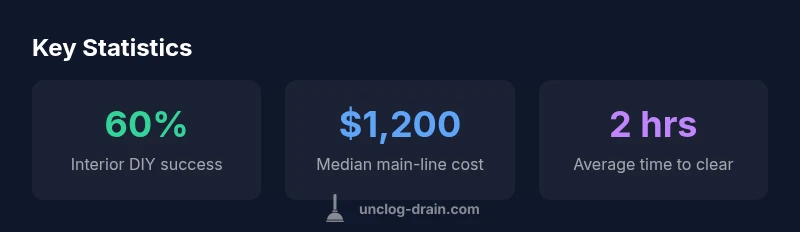
Costs range widely based on location, clog location, and whether main-line access is required. DIY interior clogs can be inexpensive, often under a hundred dollars for basic tools. Professional service for interior clogs typically runs higher if a camera inspection or hydro-jetting is involved, with main-line work reaching into the lower end of several hundred to a couple thousand dollars depending on complexity. Timeframes vary from a few minutes for minor interior clogs to several hours for main-line interventions, including travel and setup. Planning ahead and understanding local contractor availability helps reduce downtime and frustration. Unclog Drain’s analysis highlights that being prepared with photos, symptom logs, and a clear service target can streamline the process and reduce unnecessary visits.
real-world scenarios: decision paths
Scenario A: A kitchen sink drain slows but other fixtures are fine. Start with a DIY approach, and if the clog persists beyond 30–45 minutes or shows signs of a more extensive blockage, consult a pro. Scenario B: All fixtures back up and a strong sewage odor is present. Stop DIY attempts immediately and contact a licensed plumber for a main-line evaluation. Each scenario underlines the importance of distinguishing between interior and main-line issues and choosing a path that emphasizes safety and long-term reliability.
Overview of main-line vs interior-clog handling
| Aspect | Guidance | Notes |
|---|---|---|
| Main sewer line | Handled by licensed plumber | Requires camera inspection and specialized equipment |
| DIY interior clogs | Plunger, hand auger, enzyme cleaners | Avoid caustic cleaners and don’t force beyond safe range |
| Emergency signs | Backups across multiple fixtures | Sewage odor, pooling water, gurgling sounds |
Common Questions
Who should handle main sewer line clogs?
Main-line clogs typically require licensed plumbers due to specialized equipment and safety considerations. DIY attempts on the main line can worsen the problem or cause exposure to sewage.
Main-line clogs usually require a licensed plumber for safety and proper equipment.
Can I use chemical drain cleaners on a main line?
Chemical cleaners can damage pipes and fail to reach the blockage effectively in main lines. Professionals often use mechanical clearing and hydro-jetting for better results.
Avoid chemical cleaners on the main line; they can damage pipes and won’t fix the blockage.
How long does it take to unclog a sewer line?
Interior clogs can resolve in 15–60 minutes with the right technique, while main-line interventions may take several hours depending on access and complexity.
Interior clogs may take under an hour; main-line work can take longer depending on the blockage.
Are camera inspections part of the process?
Yes, many professionals use camera inspections to locate the blockage and assess pipe condition before clearing it, especially for main lines.
Camera inspections help locate the blockage and assess pipe health.
What maintenance reduces future clogs?
Install drain screens, avoid pouring grease down sinks, run hot water regularly, and perform periodic enzyme-based cleanings to minimize buildup.
Keep drains clean with screens, avoid grease, and run hot water regularly.
When is DIY too risky?
DIY is risky when you have backups in multiple fixtures, sewage odors, or if you’re unsure of the clog location. In such cases, call a licensed plumber.
If there are multiple backups or a sewage smell, call a pro.
“Effective sewer-line decisions hinge on accurate localization and timely action. When in doubt, prioritize safety and professional assessment.”
Key Points
- Identify whether the clog is in the main line or an interior branch first
- Call a pro for backups affecting multiple fixtures or sewage odors
- Use safe DIY methods for interior clogs before escalating
- Avoid harsh chemical cleaners on main sewer lines to prevent damage