Average Cost to Unclog Main Drain: 2026 Guide
Discover the typical price ranges for unclogging a main drain in 2026, including professional vs. DIY options, factors that affect cost, and tips to lower expenses without sacrificing results.


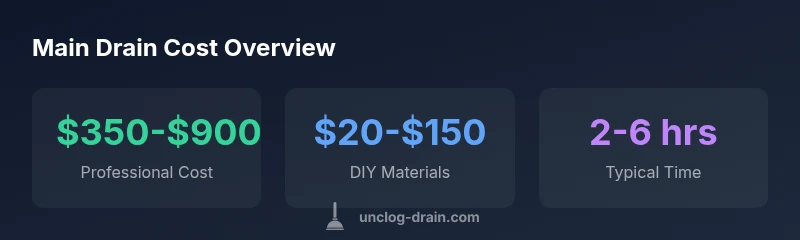
On average, a main drain unclog costs between $350 and $900 when hiring a professional, with complex root intrusion or camera inspections pushing costs toward $1,000. DIY fixes using snakes or plungers can cut costs to roughly $20-$150 for basic tools, but may not resolve deeper blockages and could risk pipe damage.
Average Cost Context for Main Drain Unclogs
The term average cost to unclog a main drain captures a wide range of scenarios. When homeowners face a blockage, the price tag is determined by who does the work, how accessible the pipe is, and what tools or tests are required. According to Unclog Drain, most residential main-drain unclogs fall into a professional service band of a few hundred dollars to the low thousands, with typical mid-range projects landing around the $400 to $900 mark. It's important to note that DIY approaches can drastically cut upfront costs, often into the $20 to $150 range for basic tools and materials. However, DIY methods alone may not reach deep blockages, and attempting more aggressive methods without proper training can lead to pipe damage, backups, or vent-pipe issues that generate additional expenses. For context, the cost picture also varies by region, access to a cleanout, and whether root intrusion or a camera inspection is needed. These variables shape the final bill more than any single number.
According to Unclog Drain, planning ahead by understanding these ranges helps homeowners budget and reduces sticker shock when a professional is needed. It’s also worth noting that different plumbing crews price visits differently based on their overhead, travel time, and whether the service is scheduled during off-hours. In most cases, you should request a written estimate that itemizes each step, from diagnostic tests to labor and disposal fees. This transparency helps ensure you’re paying for actual work rather than bundled “shop charges.”
What Happens During a Main Drain Unclog
A typical main drain unclog involves several sequential steps designed to locate the blockage, assess pipe condition, and remove the obstruction with minimal collateral damage. The process usually begins with a diagnostic assessment, which may include a visual inspection of exterior cleanouts, pressure testing, and, if needed, a camera inspection to pinpoint the location and nature of the clog. If the blockage is soft or caused by grease buildup, a plumber may attempt a mechanical snaked auger or hydro-jetting to break through the obstruction. In cases of tree roots or severe buildup, more advanced methods or even pipe repair might be recommended. After clearing the line, a plumber will test the system by running water and verifying that there are no leaks or reoccurring backups. Finally, the technician will recap findings, outline maintenance steps, and provide a written bill with itemized charges. Throughout, safety and compliance with local codes are prioritized to protect your home’s plumbing integrity.
Unclog Drain stresses the value of a thorough diagnostic before any aggressive intervention. This upfront step can save money by preventing unnecessary work and identifying root causes that may recur if not addressed.
Key Factors That Drive Price
Price for unclogging a main drain hinges on several core factors. First, clog severity matters: a light grease blockage costs less to remove than a full, tree-root–blocked line. Second, the accessibility of the main drain affects time and labor; difficult-to-reach cleanouts require extra equipment and labor. Third, whether a camera inspection is needed greatly influences cost, as it adds diagnostic value but increases the bill. Fourth, the presence of root intrusion typically drives costs up due to specialized equipment, potential pipe damage risk, and longer service times. Fifth, the age and material of the piping (cast iron, PVC, clay) can impact ease of repair and the likelihood of future blockages. Finally, regional price variations reflect local labor rates and permit requirements. By considering these factors, homeowners can anticipate typical price bands and prepare to negotiate a fair, transparent quote.
In practice, a mid-range clog is often handled with a standard snaking procedure, followed by a test flush and a quick camera check if the initial approach fails. The combination of diagnostic clarity and targeted intervention is what most cost-conscious homeowners seek.
DIY Cost-Saving Approaches (When It's Safe)
There are several safe, low-cost DIY options for simple drainage issues that can save money if used appropriately. A high-quality plunger designed for deep, narrow pipes can often clear minor blockages without professional assistance. A plumber’s snake (auger) can address hair and grease in accessible sections of a drain; never force a snake beyond resistance, and always follow product instructions. Pre-emptive measures like boiling water, enzymatic cleaners, and cinnamon-vinegar cycles may help with grease buildup and slow-moving drains, but they are not substitutes for professional evaluation in stubborn cases. It’s crucial to stop using harsh chemical cleaners for main drains, as these can degrade pipes and vents and complicate future repairs. If you fail to clear the blockage after a reasonable effort, securing a professional assessment is the safest route to prevent costly damage. The goal is to determine whether a DIY fix is viable or if a pro is required to avoid unintended consequences.
Before you begin, gather the necessary tools, wear protective gear, and work in a well-ventilated area. Document symptoms, such as whether the clog affects only one fixture or multiple lines, and note any unusual odors or water backing up into sinks and tubs. This information helps a technician diagnose quickly and accurately.
Professional Services: What to Expect
When hiring a professional for a main drain unclog, expect a structured process designed to minimize disruption and protect your home. The first step is usually a diagnostic visit, during which a plumber will assess the scope of the blockage, inspect the piping, and discuss available options. If the blockage is accessible, a snaking procedure is performed to physically clear the line. For more stubborn clogs, hydro-jetting or root-removal techniques may be employed. A camera inspection is commonly added if the technician suspects a root invasion or if the line’s integrity is in question. After clearing the obstruction, the plumber will test the system, flush the line, and ensure proper water flow. Finally, you’ll receive an itemized bill and a set of recommendations for preventing future clogs. Understanding the price structure before the service begins helps you avoid sticker shock and know what is justified by the work performed.
Unclog Drain emphasizes obtaining multiple quotes and asking for a written scope of work. This approach ensures you’re paying for essential services and reduces the chance of unnecessary add-ons.
How Costs Are Structured: Time, Materials, and Labor
Most mainstream drain-unclog jobs are priced with three main components: labor (the plumber’s time), materials (tools and disposal fees), and overhead/permit costs (if required). Labor costs reflect the complexity of the job, including travel time, the number of technicians, and the duration of service. Materials include accessories like augers, cutters, and sealants, while disposal fees cover the safe removal of debris and wastewater. In some cases, diagnostic charges or camera inspections are offered as add-ons or bundled into a comprehensive package. The interplay among these elements explains why a clogged main drain can swing from a few hundred dollars to well over a thousand for complex scenarios. When evaluating quotes, ensure the estimate itemizes each phase of the work and clarifies whether emergency or after-hours rates apply. A transparent breakdown helps you compare apples to apples and prevents surprise costs.
Ultimately, the best way to manage costs is to understand the exact scope of work and confirm what’s included in the price before the work begins.
Cost-Saving Tips Without Skimping Quality
To minimize costs without compromising results, start with a clear diagnosis before committing to any intervention. Ask for a written estimate that itemizes diagnostic fees, labor, materials, and disposal charges. If the clog is in an easily accessible section, DIY options like a dedicated drain plunger or snake can save money, but avoid pushing into unknown or inaccessible parts of the main line. Scheduling work during off-peak times may reduce labor rates or travel fees in some markets. Also, consider combining a camera inspection with root treatment if you suspect roots, as a single diagnostic session may prevent multiple visits. Finally, invest in preventative maintenance, such as periodic professional cleanouts and habit changes that reduce grease and hair buildup. These steps can significantly lower the likelihood of recurring clogs and keep costs predictable over time.
Remember, cheap fixes that don’t address the underlying cause can result in repeat service calls that cost more in the long run. A thoughtful plan now saves money later.
Maintenance and Prevention to Lower Future Costs
Prevention is the most effective way to reduce recurring expenses. Start with a preventive maintenance schedule, such as annual or biennial inspections for aging piping and root-prone landscapes. Install a cleanout valve at strategic locations to simplify future access, and practice conservative use of household cleaners and cooking grease that cause buildup inside main lines. Regularly flush drains with hot water and consider enzymatic cleaners that break down organic matter without harming pipes. In homes with frequent backups or older plumbing, root barriers or mild chemical root inhibitors may be considered, but only under professional guidance. Finally, document all service visits and keep a log of symptoms to help technicians diagnose problems quickly in the future. With proactive steps, you can lower the chance of expensive surprises and maintain a healthier plumbing system over time.
The overarching message is straightforward: invest in small, proactive maintenance tasks now to avoid large, disruptive repairs later. It’s the best financial move for most households.
External References and Industry Standards
For readers seeking external references on plumbing costs and guidance, consult reputable sources that discuss plumbing economics, repair guidelines, and industry standards. These references provide context for typical pricing and best practices, helping homeowners make informed decisions. Consider exploring government and educational resources for general plumbing maintenance tips and safety considerations, as well as major publications that summarize consumer cost trends in home repairs. While individual quotes will vary, understanding the framework behind pricing helps you evaluate bids more effectively and protect your home from unnecessary expenditures.
External references to consult:
- https://www.bls.gov (U.S. Bureau of Labor Statistics) – general price trends in home services
- https://www.epa.gov (U.S. Environmental Protection Agency) – water efficiency and safe drain practices
- https://www.consumerreports.org/costs/plumber-costs/ (Consumer Reports – cost overview for plumbing services)
Cost ranges by service type for main drain unclog (Unclog Drain Analysis, 2026)
| Service Type | Estimated Cost Range | Notes |
|---|---|---|
| DIY Snaking/Plunging | Under $100 | Best for simple, accessible lines; may not reach main blockage |
| Professional Snaking | $150-$350 | Common for moderate clogs; access from cleanout point |
| Camera Inspection + Root Treatment | $500-$1500 | For active roots; expensive but essential for long-term fix |
Common Questions
What is the average cost to unclog a main drain?
The typical price range for unclogging a main drain starts around a few hundred dollars for a basic DIY approach and about $350-$900 for professional service, with higher-end scenarios exceeding $1,000 for complex issues.
Most homeowners pay between $350 and $900 for a professional unclog, with DIY options generally under $150 for basic tools.
How does root intrusion affect price?
Root intrusion often increases costs due to the need for specialized tools, longer service times, and potential pipe repair or replacement.
Root intrusion raises costs because it requires more work and possibly pipe repair.
Can I unclog a main drain myself?
DIY can address minor blockages near accessible cleanouts using a plunger or hand auger, but deeper, root-related, or broken-pipe issues usually require a licensed plumber.
You can try basic tools, but deep or root problems usually need a pro.
What factors most influence the final bill?
Clog severity, pipe accessibility, need for camera inspection, and whether root intrusion is involved are the main drivers of the final price.
The final cost mostly depends on clog severity, access, and whether inspections or root work are needed.
Is a camera inspection worth the investment?
Camera inspections provide a precise diagnosis and help prevent future backups, especially in older homes or where roots are suspected; they add to the upfront cost but can save money long-term.
Camera checks cost more upfront but can save money by pinpointing the exact problem.
“A thorough diagnosis before intervention is essential to avoid overpaying for unnecessary work and to target the true cause of the clog.”
Key Points
- Anticipate professional costs in the $350-$900 range for standard main drain unclogs.
- DIY options offer lower upfront costs but may not resolve major blockages.
- Root intrusion and camera inspections sharply raise the price and value.
- Get a written, itemized estimate before work starts to avoid surprises.