Toilet Unclog Costs: A 2026 Pricing Guide
Discover realistic costs to unclog a toilet by a plumber in 2026, what factors influence price, and how to estimate before service for homeowners and DIY enthusiasts.


Toilet unclogging by a plumber typically costs between $100 and $350, with most homeowners paying around $200–$250. Costs vary by location, the clog’s severity, time of day, and the method used (snaking vs hydro-jet). A standard service call fee is usually required, and after-hours or emergency visits can raise the price.
What Determines the Cost to Unclog a Toilet
According to Unclog Drain, several variables drive the final price for toilet unclogging. The most obvious is the service call fee, which covers travel and initial assessment. Beyond that, the local labor rate and the complexity of the clog (is the blockage in the trap, the line, or a vent stack?) dictate how many minutes the plumber spends with your toilet. Also, the method chosen—manual snaking, running a camera, or hydro-jetting—affects both time and materials. Finally, any required parts or disposal fees can push the total higher. Homeowners should expect more variation if the job involves a toilet that’s old or hard to access.
Common scenarios include a simple, accessible clog that responds to snaking, a more stubborn blockage requiring longer labor or specialized tools, and an emergency call after hours that introduces a surcharge. Drainage systems vary by home; what might be a quick fix in one residence could require more invasive work in another. Understanding these factors helps set realistic expectations and reduces sticker shock when the bill arrives.
Common Pricing Scenarios for Residential Toilets
Pricing for toilet unclogs can look different from house to house. Here are typical residential scenarios, with broad ranges to help you prepare:
- Simple, accessible clog resolved with a standard snaking tool during regular hours: $100–$200. This covers diagnostic time, labor, and the basic unclog.
- Moderate clog requiring longer labor, possible camera inspection, or additional tools: $200–$300. Time and equipment increase the price but still remain reasonable for most homes.
- Severe clog or clogged toilet that needs hydro-jetting or vent-stack work: $300–$350+ depending on access and safety considerations. More invasive methods raise both time and material costs.
- After-hours or emergency service: add 20–40% to the base price. Emergencies are priced higher due to scheduling and overtime labor.
Each scenario assumes standard residential plumbing and a typical one-to-one toilet configuration. If multiple fixtures are involved or if a partial toilet replacement is considered, costs can rise further. The key is to obtain a written estimate before any work begins and to ask what each line item covers.
What a Plumber Typically Includes in the Fee
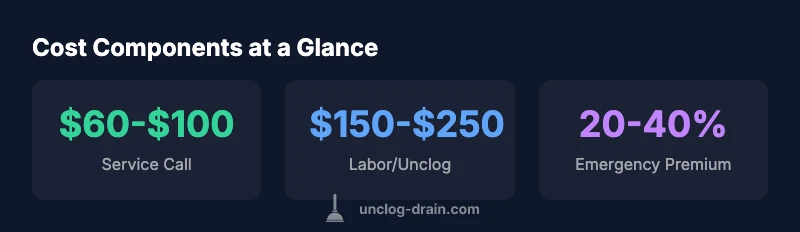
A plumber’s quote usually breaks down into several components. The service call fee covers travel and initial assessment. Labor is the primary driver of cost, accounting for the time spent actively clearing the clog and testing the system. Materials are typically modest, including snakes, augers, and occasional replacements to seals or washers. Equipment rentals or specialized tools (such as cameras or hydro-jet equipment) may add to the price. Finally, disposal fees or environmental charges, if applicable, can appear on the final invoice. If the job requires accessing hard-to-reach areas, extra labor time and potential demo work may elevate costs further. Transparent invoicing helps you see exactly where each dollar goes.
How to Estimate Your Cost Before You Call
Estimating a price before calling a plumber is smart money-management. Start with a rough range based on your location and the clog’s complexity. Gather a few details to share in the initial call:
- Is the toilet regularly used, or is the clog intermittent?
- Is access straightforward or obstructed (basement, crawlspace, tight cabinet)?
- Are there any signs of a bigger drainage issue, like multiple clogged fixtures?
- Do you have any information about past repairs or replacements on this toilet?
Ask for an itemized written estimate that lists the service call, labor hours, materials, and any potential after-hours surcharge. If it’s a multi-hour job, request a time-and-materials estimate with an upper cap. Confirm whether the price covers any follow-up visits if the clog recurs within a short window.
DIY Alternatives and When They Make Sense
For a mild, first-time clog, simple DIY steps can sometimes avoid a pro visit:
- Try a plunger with a proper seal and a few firm, controlled pumps.
- Use a toilet auger designed for toilets (not a drain snake) to clear a partial blockage.
- Avoid chemical drain cleaners, which can damage porcelain and pipes and may not solve hard clogs.
- Check the toilet’s trap and ensure the wax seal isn’t leaking, which could masquerade as a clog.
If you must escalate, do so with a clear plan. Do not attempt risky DIY methods that could damage the porcelain or plumbing. A professional ultimately ensures the clog is resolved without creating new problems.
Choosing the Right Service: Questions to Ask
Before you hire:
- Can you provide a written estimate with a clear scope of work?
- What is included in the service call fee and the hourly rate (if applicable)?
- Do you offer a warranty or guarantee on the unclog service?
- Will you test the entire system after clearing the clog?
- Are there any potential hidden charges for parts or disposal?
Clear answers help you compare quotes and avoid surprises. If a contractor hesitates to itemize, you may want to shop around. A good plumber will walk you through the process and explain the options and trade-offs.
Pro Tips to Prevent Future Clogs
Even after a successful unclog, preventive steps save time and money:
- Use a drain screen to catch hair and debris.
- Avoid flushing non-flushable items like wipes or food waste.
- Periodically flush toilets to keep the trap and vents clear.
- Consider a yearly professional drain inspection if your home has older pipes or known hard-water deposits.
- Maintain mild water pressure and avoid chemical cleaners that can corrode pipes over time.
Small habits and routine maintenance reduce the likelihood of recurring clogs, lowering long-term costs and downtime.
Breakdown of common cost components for toilet unclog services
| Cost Component | Typical Range | What It Covers |
|---|---|---|
| Service Call Fee | "$60-$100" | Initial inspection and dispatch |
| Labor/Unclog Charge | "$150-$250" | Plumber hours for clog removal |
| Emergency/After-hours Premium | "20%-40%" | Time outside normal hours |
| Materials/Parts | "$0-$50" | Minor parts or accessories |
Common Questions
What factors influence the cost to unclog a toilet?
Several factors determine pricing: service call fee, clog severity, complexity of the plumbing layout, and the method used (snaking, camera inspection, or hydro-jetting). Location and after-hours timing also impact total cost.
Cost is driven by the service call, the clog’s complexity, and whether emergency timing applies.
Is the price different for emergencies or after-hours service?
Yes, after-hours visits typically carry a surcharge due to overtime labor and scheduling. Get a written estimate before authorizing work to avoid surprises.
Emergency calls cost more; always ask for a written quote before you approve.
Do plumbers charge hourly or flat rates for unclogging a toilet?
Most plumbers use a base service fee plus labor, with some jobs billed by time if the work is atypical. Clarify pricing structure before work starts.
Prices are usually a base fee plus labor; confirm the format before work begins.
Can DIY methods replace professional unclogging?
For severe or recurring clogs, professional service is recommended. DIY methods can sometimes provide temporary relief but may not address the underlying issue.
DIY fixes can help temporarily, but a pro is best for stubborn clogs.
What should I ask for in a written estimate?
Ask for itemized costs, inclusions, and potential extra charges. Ensure the estimate covers diagnostic fees, labor, and any parts.
Get a clear, written estimate with line items.
“Cost clarity is as important as the clog-clearing itself; homeowners should insist on a line-item estimate and a brief explanation of what’s included.”
Key Points
- Ask for a written, itemized estimate before any work
- Costs vary by location, clog complexity, and timing
- Expect a standard service call plus labor; after-hours upgrades cost more
- Preventive maintenance can reduce future clog-related expenses