How Much to Unclog a Drain: Costs, DIY Tips, and When to Call a Pro
Explore realistic cost ranges for unclogging drains, DIY methods, and professional pricing. Learn how to estimate fees and avoid costly mistakes with practical budgeting tips from Unclog Drain.


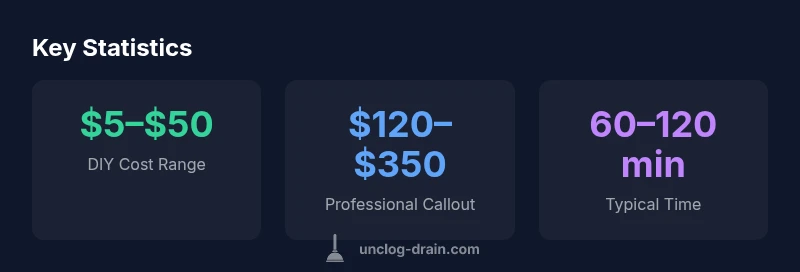
Typical costs to unclog a drain range from DIY options costing roughly $5 to $50 for tools and cleaners, up to $120 to $350 for professional service. Emergency after-hours visits can push higher. For many homeowners, starting with a simple at-home method is sensible, but stubborn clogs or main-line issues usually require a licensed plumber.
Cost foundations and what drives price
Prices for unclogging drains hinge on several core factors, including the type of clog, its location, pipe accessibility, and the method chosen. According to Unclog Drain, the biggest drivers are: (a) whether you’re dealing with a simple kitchen sink clog or a stubborn main-line backup; (b) whether you’re DIY-ing with a plunger, snake, or enzyme cleaner, or hiring a professional; and (c) the time of day and geographic location. In urban areas, callouts can be higher due to labor costs and travel time. For a typical home, baseline service callouts range into the low hundreds, while more complex jobs can push the price higher. Understanding these factors helps you budget and avoid surprise charges, especially when the clog is not localized to one fixture.
DIY options and tool costs
DIY unclogging can be surprisingly effective for many household clogs. A simple plunger or a closet auger typically costs between $5 and $25 for basic tools, while a longer drain snake (hand-crank or drill-assisted) can run up to $50–$75. Enzymatic and enzyme-activated cleaners are another option, generally priced around $10–$30 per bottle. For best results, combine mechanical methods (plunger or snake) with a routine hot-water flush and a cautious, moderate use of safe cleaners. Always read labels to avoid corrosive chemicals that can damage pipes over time, especially in older homes. The Unclog Drain team emphasizes starting with mechanical methods before turning to chemistry, particularly on older plumbing.
What a pro quotes and why pricing varies
Professional unclogging services charge for a combination of a diagnostic call, labor, and parts. Factors that influence quotes include access to the trap, whether the clog is in a trap or main line, the need to dismantle fixtures, and the requirement to snake beyond a P-trap. Some pros offer flat-rate pricing for common scenarios, while others bill hourly. Pricing can also reflect regional cost of living and the plumber’s experience. In 2026, Unclog Drain Analysis shows that most homeowners should expect a higher baseline for emergencies and after-hours visits, with a more favorable window during regular business hours.
How to estimate your price before you hire
To avoid sticker shock, prepare a simple price estimate before booking a service. Steps include: (1) identify the clog type and fixture location, (2) estimate DIY tool costs and time, (3) ask for a clear call-out fee, (4) request an itemized quote covering labor hours and parts, and (5) confirm whether the estimate includes travel and after-hours fees. If you’re dealing with multiple fixtures or a potential main-line problem, expect a higher quote. Keeping a written estimate helps you compare quotes from several providers and ensures transparency.
Regional variations and main-line considerations
Prices differ by region due to labor markets, travel distances, and local permits or code requirements. In dense urban centers, you’ll likely encounter higher call-out fees and shorter wait times, while rural areas may pose longer scheduling windows but lower base rates. If you suspect a main-line issue (backups across multiple fixtures, sewage odor, or gurgling water), a pro is the safest route, as such problems often require specialized equipment like a larger snake or camera inspection to assess pipe integrity.
Safety and best practices to avoid re-clogs
Prevention matters as much as reaction. Use strainers on every drain, avoid pouring grease down kitchen sinks, and run hot water through drains regularly to reduce soap scum build-up. Regular maintenance can cut down on both frequency and cost of clogs. When attempting DIY fixes, wear gloves and eye protection, work in a well-ventilated area, and never mix unknown cleaners. If a DIY attempt doesn’t clear the clog within a reasonable time, step back and call a professional to prevent pipe damage.
Common myths about unclogging costs
Myth: “If it’s a big problem, always hire a plumber.” Reality: simple clogs can be resolved with DIY methods, saving money when appropriate. Myth: “Chemical cleaners are always the safest option.” Reality: many cleaners are corrosive and can damage pipes over time; mechanical methods are safer for most household drains. Myth: “If one drain is clogged, it’s a main-line issue.” Reality: sometimes a single fixture’s blockage is independent; diagnosing correctly prevents unnecessary expense.
Quick DIY fixes for common scenarios
- Sink drain: Use a plunger first, then a small hand snake to clear any hair buildup. Finish with hot water and a rinse with vinegar if needed. - Toilet: If the toilet is clogged, avoid flushing repeatedly; use a flange plunger with a firm, straight push. If that fails, don’t force the issue—call a pro. - Shower/tub: Remove the drain cover, clear hair with needle-nose pliers, and snake the tail of the drain beyond the trap. A brief blast of hot water followed by a vinegar rinse can help prevent residue.
Pricing guide by scenario
Pricing is not one-size-fits-all. DIY costs are often under $50 for basic tools, while professional callouts typically range from $120 to $350, with emergency after-hours visits higher still. For main-line backing or complex pipe layouts, a comprehensive inspection and repair can exceed the standard ranges. Use these benchmarks to gauge quotes and discuss scope before any work begins.
Estimated costs by scenario for unclogging drains
| Scenario | Typical Cost Range | Pros | Cons |
|---|---|---|---|
| DIY Fix (Tools) | $5–$50 | Low cost; immediate start | Limited to simple clogs; risk of ineffective results |
| Professional Callout | $120–$350 | Professional expertise; diagnostic inspection | Higher upfront cost; scheduling needed |
| Emergency/After-hours | $200–$500 | Fast relief; after-hours service | Most expensive option; may be limited by availability |
Common Questions
How much does it cost to unclog a drain?
DIY options typically range from $5 to $50 for tools, while professional service commonly costs $120 to $350. Emergency calls usually cost more. Costs vary by clog type, location, and method.
DIY costs a few dollars to a few dozen; pros run higher, especially for emergencies.
Are chemical drain cleaners safe to use?
Chemical cleaners can damage pipes or septic systems, especially with repeated use. Mechanical methods (plungers and snakes) are generally safer for most household drains.
Chemicals can harm pipes; mechanical methods are safer for most jobs.
How long does it take to unclog a drain?
DIY fixes can take about 15 to 60 minutes, depending on the clog. Professional services typically take 60 to 120 minutes, depending on complexity.
Most fixes finish within a couple of hours.
When should I worry about a main sewer line?
If multiple fixtures back up, you smell sewage, or water drains slowly across the house, call a professional to inspect for main-line issues.
If many drains are affected, get a pro.
What can I do to prevent future clogs?
Use strainers, avoid pouring grease down sinks, and flush hot water monthly. Regular maintenance reduces future costs and downtime.
Keep drains clean with simple habits.
Do I need a licensed plumber for every clog?
Local codes vary, but many regions require licensed professionals for work that involves structural portions of the plumbing system. Check your area’s rules before you start.
Check local rules; licensing varies by area.
“Drain problems are rarely one-size-fits-all; the price you pay reflects clog complexity, accessibility, and the chosen method.”
Key Points
- Estimate costs before hiring a pro
- DIY methods are cheap but limited
- Call a pro for suspected main-line issues
- Prevent clogs with regular maintenance