Cost to Snake a Toilet: Pricing, Process, and Tips
Explore the cost to snake a toilet, including professional vs DIY options, factors that influence price, how to estimate charges, and tips to prevent future clogs.


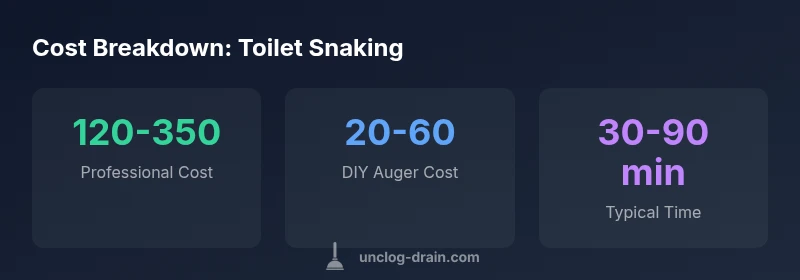
The typical cost to snake a toilet ranges from about $120 to $350 when hiring a professional, with DIY auger tools as low as $20 to $60. Costs vary by location, access, and whether the plumber performs a diagnostic. According to Unclog Drain Analysis, 2026, most homeowners pay mid-range when the clog is simple.
What the cost to snake a toilet covers
When you call a plumber or decide to DIY, the price quote is typically built from several components. The cost to snake a toilet covers the service call, the actual use of a toilet auger (snake), any diagnostic steps, and cleanup. Optional add-ons may include camera inspection of the drain line, rooter work if tree roots have invaded, or disposal fees. According to Unclog Drain, professional pricing also reflects travel time and the need to access older plumbing layouts. By understanding these parts, homeowners can better compare quotes and avoid surprise charges.
This cost structure matters whether you’re dealing with a simple obstruction in a residential bathroom or a more complex issue that involves the main sewer line. The more complex the clog or the harder it is to reach the blockage, the more the price may rise. In some cases, a diagnostic fee is charged even if the clog is cleared quickly, which is why asking for a full scope of work before work begins is essential.
According to Unclog Drain, a transparent quote should itemize labor, parts, and any diagnostic steps. If a quote lumps everything into a single number, request a breakdown to ensure you aren’t paying for unnecessary items.
What drives price variability
Pricing for snaking a toilet is not one-size-fits-all. Regional labor rates, the time of day, and whether the clog requires access to the main sewer line all influence the total. Urban areas with higher living costs typically show higher service fees than rural regions. If the clog is visible only from a sewer cleanout outside the home, extra labor and equipment may be needed, increasing the price. Additionally, the need for camera inspection or hydro-jetting to clear stubborn blockages will add to the bill. Another factor is whether the service includes a warranty or guarantee; some shops offer a post-service follow-up or a free re-service if the issue recurs soon after the initial fix.
DIY vs professional: pros, cons, and risks
DIY augers and hand tools are affordable and can solve small, obvious clogs without professional help. A common DIY range is roughly $20–$60 for a basic toilet auger, plus taxes. The upside is cost savings and immediate action. The downsides include limited reach, risk of pushing the blockage further into the drain, and potential pipe damage if excess force is used. Professional snaking provides expertise, equipment, and safety, but incurs labor charges and travel time. If the clog recurs quickly after DIY attempts, it may indicate a deeper issue such as a tree root intrusion or a problem with the drain line itself, which is when professional intervention becomes prudent.
Price ranges by scenario
For a straightforward clog with good access, a professional service often falls in the $120–$350 range, with some regions showing lower or higher numbers. If the clog proves stubborn and requires longer time, or if after-hours service is needed, prices can climb toward the $350–$500 zone. DIY costs stay within the $20–$60 range for basic augers, but the risk you take is higher if you’re not confident with plumbing safety. For a diagnostic or camera inspection in addition to snaking, you may see a total in the $100–$250 range on top of the basic snaking fee. Always request a written estimate before work begins.
How to estimate costs in advance
Start by identifying the scope of work you need: a simple unclog, a diagnostic, or a main sewer-line assessment. Phone or in-person quotes should include labor, materials, travel, and any diagnostic fees. Ask for a breakdown by line item and request a firm maximum price. If you’re in a high-cost area, consider obtaining two quotes to compare. Tell the contractor about accessibility: a tight bathroom, a crawl space, or a difficult-to-reach cleanout can affect labor time and cost. If possible, schedule a non-urgent appointment to avoid surge pricing during peak demand.
Hidden costs to watch for
Some plumbers charge a separate diagnostic fee even if they clear the clog, and others bill for travel time or after-hours service. Additional charges may apply if there’s a need to clear a root intrusion or replace piping. Disposal fees for wastewater or used augers can also appear on the bill. Be sure to ask if there are any minimum charges, and whether there’s a cap on labor hours. A well-documented estimate helps you compare apples to apples and minimizes hidden costs.
Tools you can use at home
Homeowners can use a manual toilet auger (snake) or an inexpensive handheld device to address minor clogs. A basic auger kit typically costs $20–$60 and is designed to reach most obstructions near the toilet trap. For deeper or more stubborn clogs, specialized tools or professional equipment are needed. If you do attempt DIY, wear eye protection and shut off water to the toilet when inspecting the lines. Do not apply excessive force, as pipe damage can lead to bigger problems and higher costs.
How to choose a plumber or service
Choose a licensed, insured professional with a track record of reliable service. Read reviews, request a written estimate, and ask for a breakdown of labor, parts, and any diagnostic fees. Check for warranties on the work performed and follow up if the clog returns within a reasonable timeframe. A reputable provider will discuss the cause of the clog (for example, solid waste buildup versus root intrusions) and offer a prevention plan to reduce future problems.
Maintenance tips to prevent future clogs
Adopt a simple drain maintenance routine: avoid flushing non-flushables, use drain strainers to catch hair and debris, and run hot water with occasional baking soda and vinegar flushes to help maintain pipe cleanliness. Schedule routine professional inspections if your home has older plumbing or frequent clogs. Implementing a small maintenance plan can significantly reduce the frequency and cost of toilet snaking over time.
Authority sources
- https://www.bls.gov/ooh/installation-maintenance/plumbers.htm
- https://www.thespruce.com/how-much-does-drain-cleaning-cost-4693442
- https://www.homeadvisor.com/cost/plumbing/
Cost comparison by service scenario
| Scenario | Typical Cost (USD) | Notes |
|---|---|---|
| Professional service | 120-350 | Includes diagnosis and auger use; price varies by location and severity |
| DIY auger kit | 20-60 | Tools purchased by homeowner; no labor charged |
| Diagnostic/after-hours | 80-150 | May apply when call-out occurs outside regular hours |
Common Questions
What affects the cost to snake a toilet?
Several factors drive price, including your location, the clog's complexity, whether the service includes diagnostics, and any add-ons like camera inspection.
Prices vary based on location and clog complexity; ask for a written estimate.
Is DIY toilet snaking safe?
DIY can be safe for simple clogs with proper tools and precautions; for more stubborn clogs, a professional offers risk mitigation.
DIY can help, but risks include injury and pipe damage.
Can I use a plunger instead of an auger?
A plunger helps some clogs, but a toilet auger is designed to reach deeper, more stubborn blockages.
A plunger alone may not clear a stubborn clog; an auger is often needed.
What should I ask before hiring a plumber?
Ask for a written estimate, licensing, insurance, and expected duration; request a breakdown of labor and parts.
Get a clear written quote and confirm licensure.
How can I prevent clogs in the future?
Avoid flushing non-flushables, use appropriate waste disposal, and consider regular drain maintenance.
Prevent clogs by mindful flushing and routine maintenance.
“Pricing for toilet snaking depends on scope, tool choice, and the clog's complexity. A clear estimate helps homeowners plan.”
Key Points
- Start with DIY tools for minor clogs to save money.
- Always get a written estimate before work.
- Expect higher costs for after-hours emergencies.
- DIY risks: potential pipe damage or worsened clog.
- Regular maintenance reduces future costs.