Unclog Downspout: DIY Guide to Clear Blockages Fast
A practical, step-by-step guide to unclog downspouts safely, with tools, tips, and maintenance strategies to prevent future blockages and water damage.


Goal: You will unclog a downspout and restore proper drainage, protecting your home from overflow. This DIY guide emphasizes safety, proper tool use, and gradual, thorough clearing. With everyday household tools and a little patience, you’ll remove debris, flush the line, and verify that water flows freely. According to Unclog Drain, regular maintenance prevents most clogs and water damage, making future cleaning quicker and safer, and long term reliability throughout seasons ahead.
Understanding downspouts and why clogs happen
Downspouts are vertical drainage channels that carry roof runoff away from your home. When leaves, pine needles, dirt, or ice build up inside, water can back up, overflow the gutter, and cause damage to siding, foundation, or basement. A clogged downspout also creates a pressure that pushes debris into elbows and joints, making future clearing harder. The key to preventing this is regular inspection, timely debris removal, and ensuring the entire drainage system is clear. If you need to unclog downspout, apply the steps below with the same care.
According to Unclog Drain, a proactive approach reduces risk of water damage and saves time during storms. For homeowners, the goal is a smooth flow that directs water away from walls, foundations, and landscapes. Understanding the path of water from the roof to the ground helps you diagnose where the blockage forms and plan safe removal.
Signs a downspout is blocked and what that means
When a downspout is blocked, you will notice water backup around the gutter, overflowing joints, or damp patches near the foundation. A blocked downspout often shows slower drainage after a rainstorm or a loud gurgling sound as water tries to pass through the blockage. If you see staining along siding or pooling around the foundation, don’t ignore it. These signs indicate that the water is not being carried away efficiently, which increases the risk of foundation cracks, basement leaks, or mold. Early detection makes the unclogging process easier and reduces the need for more invasive repairs later. The idea to unclog downspout is more than a catchphrase; it is a practical reminder to check the whole drainage path, from roof gutters to yard drainage, to ensure water safety and structural integrity. With careful observation, you can prevent minor clogs from becoming major headaches.
How clogs form: leaves, debris, and ice
Most downspout blockages originate from seasonal debris. In autumn, leaves, pine needles, and seed pods accumulate in the gutter and can cascade into the downspout opening. After heavy rain, these materials become wet, heavy, and more likely to catch in elbows or smooth sections of pipe. In winter, ice can form at the bottom of the downspout, creating a plug that stops water flow entirely. Pets, bird nests, or landscaping debris can contribute to a slow drain as well. Regular flushing with water helps detect soft obstructions early, while a physical inspection can reveal stubborn build-ups hiding inside bends. If you’re dealing with a blocked downspout, consider addressing the root cause: improve gutter screening, trim back overhanging branches, and clear nearby roof debris to minimize future clogging. The goal is to maintain a reliable, free-flowing system that protects your home from moisture damage.
Cleaning vs. replacing: when to DIY and when to call a pro
DIY unclogging is appropriate for most homes if you have the right tools and a steady hand. If the downspout has multiple stubborn bends, corroded joints, or signs of leaking around fittings, it may be more cost-effective to replace the section rather than fight a persistent clog. Before deciding, measure the downspouts length and diameter, evaluate whether a screen or elbow needs replacement, and check the gutter for sag. If you encounter pest nests or rodent intrusion, prioritize safety and consider professional help. In many cases, a routine clearance with a snake and hose flush is sufficient, but if you’re uncertain about ladder stability or the structural integrity of the drainage system, contact a licensed plumber or contractor. Remember that the initial goal is to keep water away from your foundation while minimizing risk to yourself.
Safe, effective unclogging methods
Start with a non-invasive approach: remove surface debris and flush. Use a garden hose with a nozzle to push water into the downspout from the top; if you can access the lower end, a pro-grade snake can push or pull obstructions through the pipe. For stubborn blockages, gently feed the snake into the downspout elbow and twist, keeping steady pressure to break the clog; never force a tool, as that could damage joints. Consider using a screened drain cap on top to reduce future debris. When working on ladders, maintain three points of contact and have a helper hold the ladder if possible. If a clog resists, switch to a longer snake or rental auger and work from the top down. After clearing, flush again to verify water flow and check for leaks. Finally, clean the area with a damp rag and verify the overall drainage in the rain season to prevent future issues. The step of mid-action flushing is essential to ensure you truly unclog downspout.
Prepping for fall and spring maintenance
Establish a routine: inspect gutters and downspouts at the start of each season, clear debris, and look for signs of wear. This proactive approach keeps you from needing to completely unclog downspout later. Plan to prune overhanging branches, install or repair gutter screens, and verify that splash blocks are directing water away from the foundation. Use a simple checklist to track cleanings, replacements, and repairs. Consider a rain barrel or other water management plan to reduce the burden on your downspout system. Document the method you used in case you need to replicate it next year; consistent care reduces the likelihood of unexpected clogs and prevents damage to your home.
Common mistakes that create new clogs
Avoid using metal objects to scrape inside the downspout, which can scratch the metal and accelerate corrosion. Don’t use excessive pressure on joints or elbows, which can loosen seals and create leaks. Never force debris through a tight bend; instead, retract and try another approach. Skipping protective gloves and eye protection can result in injuries. Finally, neglecting the top cap or screen can invite new debris; replace damaged screens promptly. Before you restart work, recheck the ladder setup to prevent falls. By recognizing these mistakes, you’ll unclog downspout safely and prevent recurring clogs.
Aftercare: testing and long-term maintenance plan
Finish by testing water flow during a controlled rain event or by running a garden hose into the gutter. Confirm that water travels down the downspout and away from the foundation. Record the results, noting any spots that still drain slowly. Replace worn components and adjust the splash block toward reliable drainage. A simple maintenance plan that includes biannual inspections reduces the odds of recurring clogs and helps you identify problems before they escalate. When done right, unclog downspout becomes a straightforward, repeatable task rather than a surprise repair.
Tools & Materials
- Gloves (work gloves)(Durable, non-slip, preferably waterproof)
- Ladder(Stable, tall enough to reach the gutter)
- Garden hose with spray nozzle(For flushing the line)
- Plumber's auger / snake(1/4 to 3/4 inch diameter, flexible)
- Bucket(To collect debris)
- Gutter scoop or small trowel(Handy for heavy debris)
- Safety glasses(Protect eyes from debris)
- Downspout screen or mesh(Optional to prevent future clogs)
- Old towels or rags(For cleanup)
Steps
Estimated time: 45-75 minutes
- 1
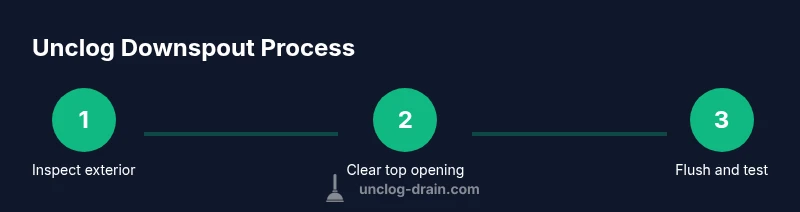
Inspect the downspout exterior
Stand at ground level and visually examine the downspout and gutter for obvious blockages. Look for loose fittings, bent elbows, and obvious debris at the top entry. If you see a clog at the exterior, clear it carefully with gloves and a scoop before flushing the line.
Tip: Check for loose hardware first; a loose connection can mimic a blockage. - 2
Gather and prepare tools
Lay out your gloves, ladder, hose, snake, bucket, and any rags. Ensure the ladder is stable on level ground and a helper can assist if needed. Having everything ready prevents multiple trips up and down the ladder.
Tip: Do a quick ladder safety test before climbing. - 3
Clear top opening and visible debris
Remove leaves, sticks, and pine needles from the top of the downspout with a gutter scoop or gloved hands. Place debris in the bucket and set aside. This step often resolves the majority of minor clogs and makes flushing more effective.
Tip: Keep debris away from the downspout mouth to avoid recontamination. - 4
Flush the line with water
Attach the hose to the spigot and flush downward from the top, watching for any resistance. If water speeds through, the clog is likely near the top; if it stalls, you may have a deeper obstruction. Repeat until the flow is consistent.
Tip: Start with low pressure and increase gradually to avoid damage. - 5
Use the plumber's auger for stubborn clogs
Insert the snake into the downspout elbow and gently rotate while pushing forward. When you feel resistance, back up slightly and reattempt. Pull back debris as you go and keep the tool straight to protect joints.
Tip: Never twist the snake too aggressively to avoid bending the pipe. - 6
Test, reassemble, and finalize
Flush again to confirm free flow. Reattach any fittings, replace caps or screens, and lower water away from the foundation to ensure proper drainage. Document results and adjust maintenance plans as needed.
Tip: Test under light rain if possible to verify real-world performance.
Common Questions
What causes downspouts to become clogged?
Leaves, debris, pine needles, and ice buildup can block downspouts. Regular gutter maintenance helps prevent these clogs. Inspecting the system after storms is also recommended.
Leaves and debris are the main culprits, along with ice in winter. Regular checks keep downspouts flowing.
Can I unclog a downspout without disconnecting it from the gutter?
Yes in many cases. Access the top, remove surface debris, and flush with a hose. If the clog is deep, you may need a snake to clear bends.
Usually you can clear it from the top, but deep clogs might need a snake.
What tools are best for DIY unclogging?
A garden hose, plumber’s auger, a gutter scoop, gloves, and safety glasses are typically sufficient for most clogs.
A hose and a snake usually solve most problems.
Is it safe to use a drill or high pressure nozzle to clear a downspout?
Avoid using drills or high pressure nozzles as they can damage joints and seals. Use a snake and controlled water flush instead.
No, high pressure can crack joints; stick to careful flushing and a snake.
How often should downspouts be cleaned?
Clean on a regular maintenance schedule, typically seasonally, and after major storms or heavy leaf fall.
Clean them on a regular schedule, especially after storms.
What should I do if water backs up into the gutter or home?
Stop flushing and inspect the entire run for additional blockages. If backups persist, consider consulting a licensed plumber.
If water backs up, stop and check the whole path; persistently backing up needs a pro.
Watch Video
Key Points
- Inspect and clear top entry before flushing.
- Use a snake for stubborn blockages, never force them.
- Test drainage after cleaning to confirm success.
- Maintain gutters seasonally to prevent future clogs.
- Prioritize safety and ladder stability at all times.