Outdoor Drain Unclog: A Practical DIY Guide
Learn practical, safe DIY methods to unclog outdoor drains. This guide covers tools, step-by-step instructions, safety tips, and prevention strategies from Unclog Drain to keep yard and driveway drains flowing.


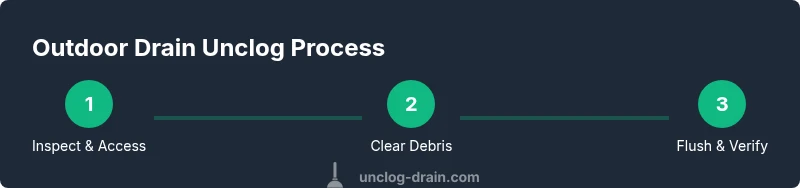
To unclog an outdoor drain, you’ll clear surface debris, insert a drain snake to break up blockages, and flush with warm water or a safe cleaner. Start at the access point, push the snake slowly, rotate to grab the clog, and pull out debris. Finish with a thorough rinse and inspect for lingering flow issues.
What counts as an outdoor drain and common layouts
Outdoor drains are designed to carry rainwater away from surfaces such as patios, driveways, and yards. They appear in several common layouts: curb inlets at the street edge, trench drains across driveways, yard catch basins near landscaping beds, and grated drains along stairs or walkways. These systems funnel runoff into a municipal storm system or a subsurface outlet. Regular, simple checks help catch debris before a blockage forms. According to Unclog Drain, understanding where water should flow and where the access points sit makes every unclogging effort faster and safer. Begin by locating the nearest cleanout or access point and tracing the path of water with a bright flashlight; this awareness guides your approach and minimizes guesswork when you start clearing.
A well-mapped drain layout also helps you plan your safety steps and tool setup. Outdoor drains face unique risks: mud, slick surfaces, and messy water can complicate access. By knowing the route water takes and where the outlet ends, you can anticipate potential splash zones and plan to protect nearby plants. This section sets the stage for effective, methodical clearing rather than rushed poking at the grate.
Common causes of outdoor drain clogs
Outdoor clogs develop from regular debris and soil movement. Leaves, pine needles, grass clippings, mulch, and sediment accumulate at the grate or inside the pipe, gradually reducing flow. Tree roots are a frequent culprit, infiltrating joints and narrowing cross-sections, especially in older homes. Landscaping changes—like new mulch beds or soil grading—can redirect debris toward the drain, increasing buildup. Heavy rain can also push silt and sediment into the pipe, creating a stubborn choke that resists simple flushing. Understanding these causes helps you select the right method—snaking for organic blockages, flushing for loose material, or camera inspection if roots or pipe damage are suspected. Unclog Drain emphasizes that prevention is more economical than remediation; keeping debris off the grate and directing runoff away from the inlet saves time and reduces repeat clogs.
If you’re facing recurring outdoor clogs, take note: the clog pattern can indicate drainage design flaws, such as improper slope or blocked downstream cleanouts. In those cases, structural adjustments may be warranted to maintain long-term drainage health. By recognizing the typical culprits and their signs, you’ll know when a quick DIY clear is enough and when a more thorough assessment is needed.
Safety and planning before you start
Outdoor drain work involves water, mud, and potentially sharp metal grate edges. Plan for daylight and dry conditions when possible, and assemble personal protective equipment: sturdy gloves, eye protection, and non-slip footwear. Clear the work area of bystanders and pets to prevent slips and splashes. If you’re near electrical outlets or a nearby sump pump, switch off power to avoid shock hazards and keep cords away from moisture. Before opening a cleanout or removing a grate, verify that the downstream area is safe for runoff to avoid erosion or flooding in flowerbeds or sidewalks. Check local regulations if you are dealing with public storm drains; some jurisdictions restrict access or require permits for certain cleanouts. With a solid plan and the right safety gear, you can reduce risk and focus on a methodical unclog.
A practical plan also means choosing the right time to work. If you suspect root intrusion or a collapsed pipe, prepare for a longer job and potential professional assistance. Staying organized—gathering tools, bagging debris, and outlining a step-by-step sequence—keeps the project efficient and minimizes waste. Finally, have a hose ready for a final rinse and a bucket to capture debris for easy disposal. Planning helps you work safely and effectively, even when weather or drainage conditions are imperfect.
Tools and materials overview
A well-chosen toolset makes outdoor unclogging smoother and safer. Start with basic hand tools and add a drain snake or auger for ongoing clogs. A bright flashlight helps you see inside the grate, while a stiff brush or old toothbrush loosens surface debris. A sturdy bucket collects debris, and a garden hose with a good nozzle provides a powerful flush once the clog is broken up. Pliers, a screwdriver, or grate removal tool supports grate access if it’s stubborn. For tougher clogs or suspected roots, a longer auger or a specialized auger attachment improves reach and resilience. Finally, gloves and eye protection are indispensable for dealing with wet, dirty water. By assembling these essentials before you begin, you minimize interruptions and keep the workflow steady. This section aligns your toolkit with the likely clog scenarios described in the previous sections, so you can choose the right approach without scrambling for tools mid-clear.
Having the right items on hand also reduces cleanup time. Keep a spare trash bag, a spare grate key if applicable, and a small pry tool for stubborn grates. After you finish, store tools in a dry area to prevent rust and maintain readiness for the next outdoor clog.
Techniques for clearing outdoor clogs
Clearing an outdoor drain starts with surface debris removal, then moves to mechanical clearing with a drain snake or auger. Start by feeding the snake into the pipe at the access point and slowly rotate the handle to extend the coil into the clog. Apply gentle forward pressure to move the blockage, then reel back to retrieve debris. Repeat until you feel the blockage yield or water drains freely. If you encounter roots, stop and reassess; forcing through roots can crack pipes and cause longer-term damage. In tough cases, switch to a longer snake or add a root-removal accessory designed for pipe work. If you have access to a garden hose with a powerful nozzle, you can also flush the line after breaking apart the clog to push debris toward the outlet. When the flow improves, continue flushing until water clears. Finally, reseal the grate and test drainage by pouring water into the opening; you should see a rapid, uninterrupted flow.
For finicky lines, small bursts of water pressure can help dislodge stubborn material without splashing; just keep the nozzle away from plants to avoid root damage. Remember to work slowly and maintain firm footing on safe ground. With patience and persistence, many outdoor clogs yield to a careful combination of mechanical clearing and flushing.
Prevention and maintenance for outdoor drains
Prevention is the best medicine for clogged outdoor drains. Establish a routine to clear the grate of leaves and debris monthly, especially during autumn and after storms. Direct runoff away from bearing surfaces and landscaping, and install debris screens or grates to minimize future buildup. Consider creating a small landscape buffer—such as a mulch ring—that keeps soil from washing toward the drain. For deeper preventative checks, schedule periodic cleanouts downstream and monitor signs of slow drainage after heavy rains. In regions with clay soils or old piping, root intrusion remains a risk; plan for periodic camera inspections or professional evaluations to catch root ingress before it becomes a severe blockage. The Unclog Drain team recommends documenting each cleanup and noting recurring patterns; this helps you spot trends and address underlying drainage design issues before they escalate.
Tools & Materials
- Protective gloves(Nitrile or rubber; snug fit for grip and dexterity)
- Safety goggles(Impact-rated if available; splash protection)
- Sturdy footwear(Non-slip boots with closed toes)
- Drain snake / hand auger(Length varies; 3-6 ft is common for residential outdoor drains)
- Long grabber or pliers(Useful for snagging debris at the grate)
- Bucket(Contain debris and dirty water)
- Stiff brush or old rag(Loosen surface debris before snaking)
- Flashlight(Bright, handheld; helps visibility inside the grate)
- Screwdriver or grate removal tool(Needed for stubborn grate access)
- Garden hose with spray nozzle(For high-pressure flush after clearing)
- Biodegradable cleaner or hot water(Mild cleaners are preferred; hot water can aid flushing)
- Trash bags(Dispose debris after removal)
Steps
Estimated time: 60-90 minutes
- 1
Put on safety gear
Before touching the drain, equip gloves, eye protection, and sturdy footwear. Clear the area and plan your approach to avoid slips while handling wet debris.
Tip: Keep a splash guard nearby and work with a partner if possible. - 2
Clear surface debris
Remove leaves, twigs, and dirt from the grate and surrounding area to expose the opening. This prevents debris from immediately falling back into the pipe when you work.
Tip: Use a stiff brush to loosen compacted debris before snaking. - 3
Access the drain interior
Loosen and remove the grate or access cover with the proper tool. Do not pry aggressively; ensure you won’t drop debris into the pipe.
Tip: Take a photo of grate orientation for reassembly. - 4
Insert the drain snake
Feed the snake into the pipe at the access point while turning the handle to extend the coil. Push gently and maintain steady pressure to avoid kinking.
Tip: Keep the snake aligned with the pipe to prevent binding. - 5
Break up the clog
Rotate and push to advance the snake through the clog, then pull back debris in small portions. Stop if you hit roots or heavy resistance.
Tip: If you encounter roots, do not force; plan a root-removal option or professional help. - 6
Flush the line
Attach a garden hose and use a strong stream to flush loosened material toward the outlet. Monitor flow and back off if water backs up.
Tip: Start with moderate pressure to avoid splashing and plant damage. - 7
Inspect and finish
Reinstall the grate, test drainage by pouring water into the opening, and ensure water drains freely. Clean up the work area and dispose of debris properly.
Tip: If drainage remains slow, repeat the process or escalate to professional help.
Common Questions
What is the safest method to unclog an outdoor drain?
The safest method is to use a drain snake or auger; avoid or minimize chemical cleaners outdoors as they can harm plants and wildlife. Mechanical clearing reduces risk and provides better control over the blockage.
The safest method is using a drain snake or auger; avoid harsh chemicals outdoors to protect plants and wildlife.
Can I use chemical drain cleaners outdoors?
Chemical cleaners can pose environmental risks and may damage plants or soil organisms. If you must use chemicals, choose a biodegradable product and follow the label strictly; better options are mechanical clearing or enzymatic cleaners.
Outdoor chemicals can harm the environment; use mechanical clearing or environmentally friendly cleaners when possible.
Will a garden hose flush out a clog outdoors?
A garden hose can help push out loosened debris after breaking up a clog. Direct the flow away from plants and electrical sources, and monitor the water to ensure it drains smoothly.
A garden hose flush can help after breaking up the clog; watch for smooth drainage and keep it away from plants.
How can I tell if roots are the cause?
Signs include slow drainage after rain, visible roots near the inlet, or a recurring blockage. A camera inspection by a professional confirms root intrusion and pipe condition.
Roots often show up as slow drainage and visible growth near the inlet; a pro camera check confirms the issue.
When should I call a professional?
If you encounter persistent clogs, large root intrusion, pipe cracks, or repeated blockages after DIY clearing, schedule a professional inspection to assess pipe condition and drainage design.
Call a professional if clogs persist or you see root intrusion or pipe damage.
Are outdoor drains the same as indoor ones?
Outdoor drains handle runoff and may be exposed to more debris and roots; while the clearing principles are similar, access, weather, and environmental risks differ. Adapt your approach to outdoor conditions and safety.
Outdoor drains deal with runoff and debris; the basics are similar, but outdoor work needs special safety considerations.
Watch Video
Key Points
- Inspect outdoor drains regularly to prevent blockages.
- Use a drain snake for hard blockages instead of chemicals.
- Flush with water after breaking up debris to verify clearance.
- Root intrusion may require professional help.
- Maintain drains with routine cleaning and preventative measures.