Clogged vs Unclogged: A Practical Comparison for Homeowners
Explore the differences between clogged and unclogged drains, how to diagnose them, safe DIY steps, maintenance tips, and when to seek professional help to protect your home.


Clogged drains require immediate relief and careful risk management, while unclogged drains indicate normal flow and routine maintenance. The key distinction is whether water backs up or drains smoothly. For mild issues, safe DIY steps can restore flow; if blockages persist, professional help is often the best path to prevent damage and recurring clogs.
Defining clogged vs unclogged: what the states mean
In the world of home plumbing, the terms clogged and unclogged describe how freely water flows through a drain. A clogged drain shows reduced flow, frequent backups, and a smell or gurgling sound. An unclogged drain allows water to move quickly and steadily with minimal resistance. The distinction matters because it guides the next steps: whether you can safely apply DIY methods or whether to shift priorities toward professional intervention. For readers of Unclog Drain, recognizing the line between a minor slowdown and an actual blockage is the first defense against bigger problems. When a drain is clogged, even simple tasks can become messy, risk overflow, or attract mold and pests if left untreated. The unclogged state, in contrast, indicates healthy, unobstructed piping, typically requiring routine maintenance rather than dramatic action. Throughout this guide, we’ll explore how to assess your drains, what tools are appropriate, and how to decide between do-it-yourself fixes and professional help. The goal is practical, safe, and effective outcomes that protect your home and pocketbook.
Why the distinction matters for homeowners
Recognizing whether a drain is clogged or simply slow is more than a semantic exercise. Clogs can escalate quickly if ignored, leading to standing water, sewer odors, and even mold growth in damp environments. For homeowners, the difference affects risk, time, and cost. A true clog typically requires more deliberate action, possibly involving inspection tools like a drain snake or professional equipment. A drain that is only sluggish may respond to straightforward maintenance steps, potentially saving you time and money. The Unclog Drain team emphasizes that early identification is a practical form of home protection: the sooner you know you’re dealing with a clog, the sooner you can plan the safest, most effective remedy. This approach reduces the chance of overflow, damaged fixtures, and costly emergency visits.
Common causes that flip a drain from unclogged to clogged
Drains tend to move from unclogged to clogged due to particular recurring problems. Hair accumulation dominates bathroom drains, while grease and cooking fat dominate kitchen sinks. Soap scum, mineral buildup, and insoluble residues from products can gradually reduce flow. Foreign objects—feminine hygiene products, wipes labeled flushable, or small utensils—are common in toilets and sometimes in sinks. Over time, tree roots can intrude sewer lines, creating backups that manifest as a clogged condition even in seemingly unrelated fixtures. Environmental factors like hard water and seasonal changes can aggravate mineral deposits, especially in older plumbing systems. Understanding these typical causes helps you design a prevention plan that targets the contributing factors rather than merely reacting to symptoms.
Diagnostic signs: how to tell clogged vs unclogged
A drain is usually considered clogged when water backs up or drains with noticeable resistance. Visual cues include standing water in a sink, a toilet that won’t fully empty after flushing, or gurgling sounds as air fights its way through the pipes. You may notice odors in the area around the drain or a damp ring around the base of fixtures. Conversely, an unclogged drain drains quickly with little effort, shows no backups, and lacks unusual noises. Slow draining can still indicate a developing clog—especially if the rate worsens after washing large loads or running multiple fixtures. In professional terms, a partial obstruction is more common than a complete blockage; catching it early often prevents a full-blown clog. The Unclog Drain analysis highlights that the path to clarity starts with a simple test: run water in related fixtures and observe crossing signs to determine whether a blockage is localized or systemic.
Quick DIY checks you can perform safely
Begin with safe, low-risk steps before investing in tools or professional help. First, remove a standing water issue by using a plunger on the affected fixture. For sinks, a cup-shaped plunger suffices; for toilets, a flange plunger is recommended. If the plunger clears the obstruction, run hot water with dish soap to help dislodge any residual soap scum. If a plunger alone doesn’t work, try a drain snake or auger. Insert the cable slowly, rotate, and pull back any snaggy material. Enzymatic cleaners can be used as a maintenance step rather than a primary fix, preserving pipe integrity while gradually breaking down organic matter. Avoid chemical drain cleaners for sensitive pipes and if you’re unsure about pipe material since harsh chemicals can damage older plumbing. Always wear gloves, protect floors, and consider turning off water valves if the clog is severe or if you smell sewage. The goal is to restore flow safely without compromising the plumbing system or your household.
Tools and methods: plunger, snake, enzymatic cleaners—what works
Different tools address different clog types. A mechanical plunger works well for simple blockages near the opening of a drain. A drain snake or auger reaches deeper into pipes to clear hair, grease, or sediment. Enzymatic cleaners promote long-term maintenance by digesting organic buildup without harsh chemicals; they are best used as a prevention step rather than an emergency fix. In many situations, combining methods yields the best results: a first-pass with a plunger, followed by a snake if water still backs up, and a maintenance treatment with enzymes once flow is restored. Special cases—such as older, narrower pipes or suspected sewer-line issues—may require professional equipment and supervision. Always assess the risk of damage before attempting advanced techniques, and remember that patience can be essential when dealing with stubborn blockages.
When to call a professional vs handle yourself
The decision to call a professional often rests on blockage severity, risk of overflow, and the likelihood of systemic plumbing issues. If water backs up across multiple fixtures, if you smell sewage, or if your own attempts with plungers and snakes fail after several tries, it’s time to seek expert help. A licensed plumber can perform camera inspections to locate hidden blockages, inspect sewer lines for root intrusion, and use professional-grade tools to clear obstructions without harming the pipe network. Professionals also help you distinguish between localized drain problems and broader sewer line failures, providing long-term solutions and preventive advice. The Unclog Drain guidance emphasizes that timely professional intervention can minimize damage, reduce downtime, and prevent escalating repair costs. Always verify credentials, ask about line-wide issues, and request a written plan that includes steps, expected duration, and costs.
Maintenance strategies to prevent future clogs
Prevention is the most cost-effective strategy for keeping drains flowing freely. Start with simple routines: use drain screens to trap hair and solids, don’t pour grease down the kitchen sink, and run hot water through the drain after cleaning sessions. Regularly clean P-traps with a brush and mild soap to remove build-up, and keep a maintenance schedule that includes a monthly enzyme treatment or baking-soda-and-vinegar flush. For toilet clogs, avoid flushing items that aren’t designed to break down, and consider a mechanical backup plan with a toilet auger for occasional maintenance. Inspect plumbing connections beneath sinks to ensure seals are intact and to detect slow leaks that can worsen build-up. Seasonal checks—especially in hard-water areas—help manage mineral deposits. Consistent maintenance reduces the probability of emergencies and supports the overall integrity of your drainage system. The Unclog Drain approach blends practical routines with a realistic budget and a clear plan for action when issues arise.
Scenario-based comparisons: kitchen sink vs bathroom sink vs toilet
Each fixture presents distinct clog characteristics and planning needs. A kitchen sink most often encounters grease, food particles, and soap scum; prevention focuses on disposing of grease properly and using screens that trap solids. A bathroom sink frequently deals with hair and cosmetics; preventive steps emphasize hair catchers and routine trap cleaning. Toilets are prone to blockages from toilet paper, wipes, and non-flushables; the best strategy is to avoid flushing non-degradables and to use a toilet plunger or auger for occasional maintenance. When diagnosing, observe which fixtures are affected to pinpoint the likely source (sink trap, main line, or toilet drain) and tailor the intervention. For serious multi-fixture clogs, consider that the line may be compromised, requiring professional intervention to prevent overflow and to protect the home from sewer backups.
Cost considerations and value of unclogging now vs later
Costs vary depending on the approach. DIY tools and safe methods typically involve modest upfront costs, while professional service can range higher depending on severity, accessibility, and whether camera inspection or root penetration is required. The most economical path often combines early diagnosis with safe, incremental DIY steps, followed by professional help if the problem persists. When you catch a blockage early and address it with routine maintenance, you may reduce the risk of more expensive repairs later. From a value perspective, investing in prevention—screens, routine traps cleaning, and regular maintenance—pays off over the life of the plumbing by keeping flows steady and avoiding emergency calls. The Unclog Drain guidance emphasizes that prevention and prompt action yield better long-term outcomes for homeowners.
Actionable 5-step plan to prevent and respond
- Install drain screens on every fixture to catch hair and debris.
- Create a monthly maintenance routine that includes a safe, enzyme-based cleaner or a baking-soda-and-vinegar flush.
- Avoid pouring grease or coffee grounds into drains; dispose of them in the trash instead.
- Use a plunger or snake only as a first-line response to slow drainage, and call a pro if needed.
- Schedule annual or semi-annual plumbing checks to identify early signs of mineral buildup or potential blockages and keep the system healthy. Following this plan helps ensure drains stay unclogged and minimizes the likelihood of emergency issues.
Comparison
| Feature | clogged drain | unclogged drain |
|---|---|---|
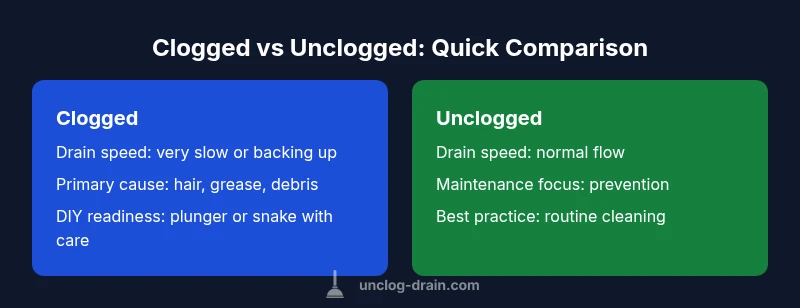
| Drain speed | Very slow or standing water | Normal draining with restored flow |
| Primary causes | Hair, grease, debris, mineral buildup | Regular wear, preventive maintenance, no active blockage |
| Repair approach | DIY methods (plunger, snake) or pro if persists | Maintenance, safe use and prevention |
| Cost range | DIY tools $10-$60; pro service $100-$350 | Maintenance tools or routine care: low ongoing cost |
| Best for | Emergency relief and rapid clearance | Long-term flow health and prevention |
Advantages
- Clarifies when to DIY vs call a pro
- Encourages proactive maintenance
- Helps homeowners set realistic expectations for time and cost
- Promotes safer, safer-use practices during DIY repairs
- Supports prevention-driven budgeting
Weaknesses
- DIY attempts can cause damage if misapplied
- Delays in seeking professional help can worsen blockages
- Over-reliance on enzymatic cleaners may not resolve severe clogs
- Some scenarios require specialized equipment beyond basic tools
Unclogged drains offer the best balance of reliability, cost, and peace of mind; act quickly on clogs and invest in prevention to keep drains in good shape.
Choose proactive maintenance to keep drains flowing. Prioritize safe DIY steps for mild issues, escalate to professionals for persistent or complex blockages, and adopt preventive habits to minimize future clogs.
Common Questions
What is the key difference between a clogged drain and a drain that is simply slow?
A clogged drain shows backup and resistance, while a slow drain simply drains more slowly than usual. A true clog often requires a targeted remedy, whereas a slow drain may improve with routine maintenance or mild interventions. If backups worsen or multiple fixtures are affected, a professional assessment is warranted.
Clogged means backup and resistance; slow just drains slower than normal. If backups occur or multiple fixtures are affected, seek help.
Can enzyme-based cleaners safely unclog a stubborn clog?
Enzyme-based cleaners are generally safer for regular maintenance and light buildup, but they may not clear a stubborn clog quickly. They work best as part of a preventive routine rather than a primary fix for a full blockage. For persistent problems, mechanical methods or professional help are recommended.
Enzymes are safer for maintenance but might not clear a tough blockage—use them as prevention, not sole fix.
Is it worth trying DIY methods for a toilet clog vs a sink clog?
DIY methods can help with mild toilet or sink clogs, but toilets pose higher risks of overflow and waste exposure. For toilets, start with a flange plunger and use caution with chemical cleaners. If the toilet remains blocked after several attempts, call a professional to avoid spillover and damage.
DIY can help with mild clogs, but toilets require extra care; when in doubt, call a pro.
How long should I try DIY methods before calling a professional?
If a clog shows no improvement after a few attempts (typically 15-30 minutes of steady effort with plunger and/or snake), it’s wise to pause and seek professional help. Pro plumbers can diagnose hidden blockages and protect your pipes from damage.
If there’s no improvement after 15-30 minutes, call a professional.
What maintenance steps most effectively prevent clogs?
Install drain screens, avoid pouring grease down drains, perform periodic enzyme or baking soda-vinegar flushes, and clean traps regularly. Regular inspection and proactive maintenance reduce buildup and keep drains flowing smoothly.
Use screens, avoid grease, and schedule regular maintenance to prevent clogs.
Key Points
- Distinguish clogged vs unclogged early to guide action
- Prioritize safe DIY methods for minor clogs
- Invest in preventive maintenance to reduce recurring issues
- Know when to escalate to a professional to prevent damage
- Create a simple, repeatable maintenance plan