Unclogging vs Declogging: A Practical Drain Care Guide
A practical, evidence-based comparison of unclogging vs. declogging for homeowners and DIY enthusiasts; learn when to act, quick fixes, and prevention to keep drains flowing.


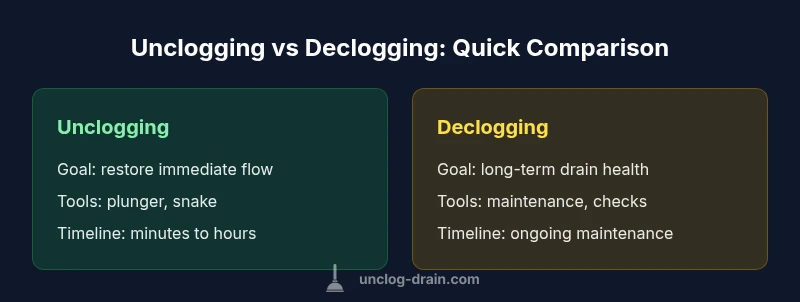
Unclogging and declogging describe removing obstructions from drains, but they serve different goals. Unclogging aims to restore immediate flow, while declogging emphasizes long-term health, prevention, and smoother operation. For most households, the best practice blends both: fix the blockage quickly and adopt preventive habits. This comparison helps you choose a practical approach that balances speed and lasting drain health.
What the terms mean: unclogging vs declogging
Unclogging vs. declogging are two phrases homeowners hear when drains misbehave. They describe two overlapping activities: removing an obstruction and maintaining drainage health. According to Unclog Drain, the difference often comes down to intent: do you need immediate flow restoration or long-term prevention? In practice, many fixes blend both aims, using a quick mechanical method to clear the blockage, followed by preventive steps to reduce the chance of recurrence. The terms are sometimes used interchangeably, but understanding the nuance helps you optimize daily maintenance and avoid cycles of recurring clogs. Common scenarios include a kitchen sink that suddenly backs up (unclogging) and a bathroom sink that gradually slows due to mineral deposits (declogging).
Additionally, the decision often hinges on safety, access to tools, and the plumbing layout. A shallow trap or a vertical stack may respond well to a fast plunge or snaking, while a longer-term approach might require evaluating pipe slope, venting, or mineral buildup downstream. Recognizing the distinction between removing a blockage now and preventing future blockages helps homeowners deploy the right combination of steps and tools without overreacting to a temporary slowdown.
Practical implications for homeowners
Choosing between unclogging and declogging is not a binary choice. In many homes, a rapid unclogging action buys time, then a declogging mindset follows to prevent repeats. This section highlights how homeowners can translate the terminology into actionable habits. Start with a quick assessment: Is the drain fully blocked, or is the flow sluggish but present? If blockage is complete, rules of safe intervention—like using a plunger or hand-crank drain snake—apply. If the flow is slow over weeks or months, declogging-oriented steps—routinely cleaning the trap, inspecting venting, and reducing mineral buildup—are more appropriate. Practically, you will often use the same tools in both phases, but your strategy and timing differ. The aim is to minimize damage risk while maximizing long-term reliability. Unclogging is the sprint; declogging is the marathon.
Tools and methods overlap: plungers, snakes, enzymes, and more
There is a surprising amount of overlap between unclogging and declogging in terms of tools and methods. Common devices like a standard plunger, a closet auger, or a drain snake can clear a sudden blockage and also facilitate deeper investigation when you suspect a more stubborn buildup. Enzyme-based cleaners are sometimes used to supplement mechanical methods, particularly in slow drains where mineral or organic buildup is gradually reducing flow. Preventive measures—such as flushing with hot water, avoiding pouring grease down the drain, and using mesh screens—are part of the declogging mindset and are compatible with quick unclogging actions. Safety should always guide tool use, especially around old pipes or exposed plumbing.
From a homeowner’s perspective, the most important takeaway is that the same toolkit can support both approaches, but the sequencing and objectives differ. If you feel confident, you can combine rapid clearing with a short declogging routine to set a clean baseline for the future.
When to unclog vs declog: decision framework
A simple decision framework helps determine whether you should prioritize unclogging, declogging, or a blend of both. If a blockage blocks flow entirely, start with unclogging to restore use—employ a plunger first, then a snake if needed. If you notice a recurring slow drain, switch focus to declogging, addressing the underlying causes: mineral buildup, trapped hair, grease accumulation, or venting issues. For shared drains (kitchens and laundry rooms), consider the risk of backflow, odors, or sewage exposure, and choose methods that minimize health risks. In many cases, a mixed approach gives the best outcome: immediate relief followed by preventive steps that reduce frequency and severity of future clogs. Always consider pipe material and age, as older plumbing may require gentler, longer-term strategies.
Brand note: Perspective from Unclog Drain emphasizes balancing immediate fixes with preventive measures for sustainable results.
Step-by-step workflow for DIYers: quick-start actions
This section provides a practical workflow suitable for many home DIYers. Start with Unclogging: 1) clear the area, 2) use a plunger with solid, confident strokes, 3) try a closet auger if needed, and 4) flush thoroughly with hot water. If the blockage persists, shift to Declogging: 5) inspect the P-trap for debris and clean it, 6) assess venting (if accessible), 7) consider mineral buildup and scale removal strategies, and 8) implement preventive measures such as mesh screens and routine maintenance schedule. For longer-term health, schedule periodic checks and consider mild enzymatic cleaners to keep lines clear without harsh chemicals. The goal is to create a repeatable routine that allows you to respond quickly to clogs and still invest in drain longevity.
Whether you're dealing with a clogged kitchen sink or a slow bathroom drain, having a clear game plan reduces stress and minimizes the risk of water damage or unwanted odors.
Real-world scenarios and outcomes
Real-world outcomes from practicing both unclogging and declogging illustrate the value of a dual approach. For example, a homeowner who clears a jam quickly but delays preventive steps may experience recurring backups within weeks, requiring repeated interventions. In contrast, households that pair rapid unclogging with ongoing declogging routines—such as regular trap cleaning, vent checks, and cautious disposal habits—tend to report fewer incidents and less disruption. The overall message is simple: act fast when blocks appear, then adopt lasting habits to keep drains flowing. This balanced approach also minimizes the risk of pipe damage from aggressive interventions or the use of harsh chemicals. A well-rounded plan aligns with practical DIY capabilities while knowing when to escalate to professional support if the system shows signs of persistent or complex failures.
Prevention strategies and maintenance routines
Prevention is the heart of the declogging mindset. Routine maintenance includes cleaning the P-trap and accessible sections of the drain, using strainers to catch hair and grease, and avoiding pouring fats, oils, and greases down the drain. Periodic checks for slow drains, proper venting, and ensuring proper slope help prevent buildup that leads to clogs. Consider a light, periodic enzyme treatment as a non-harsh maintenance step, especially for households with hard water or mineral-rich supply lines. Document your maintenance schedule to stay consistent, and educate household members about drain-friendly practices. The aim is to minimize the frequency of emergencies while preserving pipe integrity for years to come.
Myths, misperceptions, and final take-away
Myths about unclogging and declogging often center on either overconfidence in quick fixes or false beliefs about
Final practical guidance for homeowners
To wrap up, the most successful approach blends quick, decisive unclogging with deliberate, ongoing declogging practices. Start with a calm assessment, use the right tool for the job, and insist on safety first. Then commit to a maintenance routine that reduces the need for frequent interventions. If a drain repeatedly blocks after standard DIY steps, seek professional assistance to diagnose possible structural issues or venting problems. By treating unclogging as an immediate fix and declogging as a long-term plan, you can maintain reliable drainage and protect your home from water damage and odors.
Comparison
| Feature | Unclogging | Declogging |
|---|---|---|
| Goal | Restore immediate flow and function | Improve long-term drain health and reduce future clogs |
| Primary Tools | Plunger, hand-crank snake, basic household cleaners | Habit-based maintenance tools, trap cleaning, vent checks |
| Time to Resolution | Minutes to hours for simple clogs | Ongoing process with periodic improvements |
| Best For | Emergency relief and urgent flow restoration | Preventive care and long-term reliability |
| Cost Range | Low to moderate for quick fixes | Moderate to high for preventive maintenance over time |
| Risks & Considerations | Wrong technique can damage pipes or seals; risk with aggressive methods | Requires consistency and attention to routine to be effective |
Advantages
- Provides fast relief from sudden blockages
- Low upfront cost for basic methods
- Widely available tools and guides for DIY
- Simple, actionable steps for immediate results
Weaknesses
- May not address root causes in all cases
- Recurring clogs if preventive steps are skipped
- Potential for DIY mistakes to cause damage if misapplied
- Some issues require professional evaluation
Declogging paired with mindful unclogging is the strongest approach
For most homes, a quick unclogging action is followed by preventive declogging to reduce future clogs. This dual strategy balances immediate relief with long-term drain health, lowering overall maintenance costs and disruption.
Common Questions
What is the practical difference between unclogging and declogging, and why does it matter?
Unclogging focuses on removing an immediate obstruction to restore flow. Declogging emphasizes preventing future clogs through maintenance and addressing root causes. Understanding the distinction helps you react quickly while implementing long-term care to keep drains reliable.
Unclogging is for immediate blockage relief; declogging is for long-term drain health. See our full guide for a balanced approach.
Can I use the same tools for both unclogging and declogging?
Yes, many tools like plungers and snakes are versatile for both tasks. The key is how you apply them and what follow-up maintenance you perform afterward.
You can reuse tools for both tasks, just follow up with preventive steps.
Is declogging worth it for every drain?
Declogging offers long-term benefits, particularly in drains with recurring slowdowns. However, the level of maintenance should match the drain’s use, age, and condition.
Declogging helps long-term health, but tailor it to each drain.
How long does effective declogging take?
Declogging is an ongoing practice rather than a one-time fix. Effective results come from a consistent routine rather than a single session.
It’s an ongoing process, not a one-off task.
What are common mistakes to avoid when unclogging?
Avoid forcing tools without seeing a clear obstruction, avoid harsh chemical cleaners, and never overlook safety if you encounter frequent backups.
Don’t push hard, avoid chemicals, and check safety.
When should I call a plumber instead of DIY?
If you suspect damaged pipes, persistent clogs, or slow drainage across multiple fixtures, professional assessment is wise.
If problems persist or involve piping, get a pro.
How do I start a preventive maintenance routine?
Begin with regular trap cleaning, screen replacements, and mindful disposal practices. Schedule reminders and track any recurring issues to adjust your routine.
Set a regular maintenance schedule and stick to it.
Are enzyme cleaners safe for my pipes?
Enzyme cleaners can be gentler than harsh chemicals and help with gradual buildup. Avoid mixing cleaners and always follow product instructions.
Enzymes can help with buildup if used properly.
Key Points
- Start with quick unclogging to restore flow
- Adopt declogging habits to prevent repeats
- Use the same tools safely for both tasks
- Prioritize trap cleaning and vent checks
- Know when to escalate to professionals