Clogged vs Clogged Toilet: Understanding the Difference
Explore the differences between a clogged toilet and other drains, with practical, step-by-step DIY fixes, safety tips, and prevention strategies for homeowners.


Clogged vs clogged toilet: understanding the difference changes your approach. A toilet clog means the blockage is in the toilet itself, while a clogged drain refers to other fixtures like sinks or showers sharing the same line. This distinction matters for tools, methods, and safety. For DIY homeowners, starting with toilet-specific steps often resolves the issue faster.
The Core Difference: clogged toilet vs clogged drain
According to Unclog Drain, the practical distinction between a clogged toilet and a clogged drain shapes how you respond. A clogged toilet is typically an obstruction inside the toilet bowl or trap, often caused by toilet paper, wipes, or non-flushables. A clogged drain, by contrast, affects other fixtures like sinks, showers, or bathtubs that share the same horizontal line or vertical stack. The difference matters because the recommended tools, sequence of steps, and safety considerations shift based on location. When you understand the distinction, you can prioritize toilet-specific methods first and reserve broader drain techniques for persistent or multi-fixture slowdowns. In everyday homes, the two issues can appear similar, but the fix you choose should align with where the blockage lives and which fixtures are affected. This is especially important for households with septic systems, where certain cleaners and approaches can complicate the bidirectional flow. Keep the clogged vs clogged toilet in mind as you diagnose, plan, and execute your DIY strategy, and you’ll improve your odds of a quick, safe resolution.
The Core Difference: clogged toilet vs clogged drain
According to Unclog Drain, the practical distinction between a clogged toilet and a clogged drain shapes how you respond. A clogged toilet is typically an obstruction inside the toilet bowl or trap, often caused by toilet paper, wipes, or non-flushables. A clogged drain, by contrast, affects other fixtures like sinks, showers, or bathtubs that share the same horizontal line or vertical stack. The difference matters because the recommended tools, sequence of steps, and safety considerations shift based on location. When you understand the distinction, you can prioritize toilet-specific methods first and reserve broader drain techniques for persistent or multi-fixture slowdowns. In everyday homes, the two issues can appear similar, but the fix you choose should align with where the blockage lives and which fixtures are affected. This is especially important for households with septic systems, where certain cleaners and approaches can complicate the bidirectional flow. Keep the clogged vs clogged toilet in mind as you diagnose, plan, and execute your DIY strategy, and you’ll improve your odds of a quick, safe resolution.
Comparison
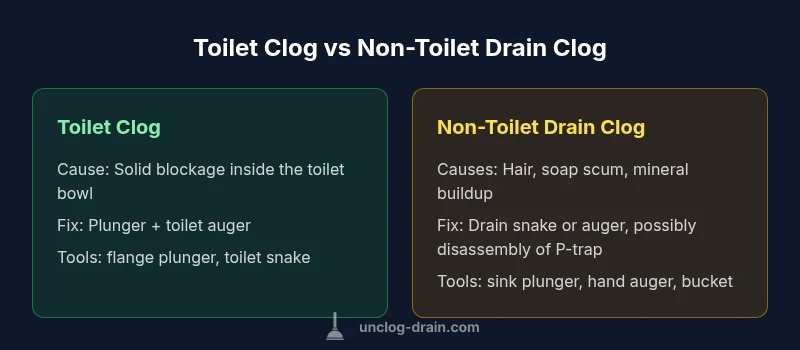
| Feature | Toilet Clog | Non-Toilet Drain Clog |
|---|---|---|
| Typical Causes | Solid blockages within the toilet bowl or trap (toilet paper, wipes, foreign objects) | Hair, soap scum, mineral buildup, or grease in sink/shower traps and pipes |
| Best DIY Fixes | Toilet plunger (flange type) and toilet auger; avoid harsh chemicals in the bowl | Drain snake or auger for traps and vertical stacks; clean or replace a clogged P-trap |
| Required Tools | Flange plunger, toilet auger, bucket, gloves | Sink plunger, hand auger or drain snake, bucket, towel |
| Typical Time to Clear | Often resolves quickly with proper toilet tools, especially for small blockages | Can take longer if multiple fixtures are affected or if the trap is involved |
| Cost Considerations | Low to mid-range for DIY toilet fixes; professional help costs more for complex cases | Low to mid-range for basic DIY drain work; higher if piping disassembly or camera work is needed |
| Best For | Direct toilet obstruction with a single fixture issue | Multiple fixtures affected or persistent buildup in drains |
Advantages
- Clear, actionable steps for toilets and sinks alike
- Wide availability of affordable DIY tools
- Prevention tips reduce future clogs and extend piping life
- Step-by-step troubleshooting reduces guesswork
Weaknesses
- Pro repairs can be costly and disruptive
- Chemical cleaners can damage pipes or septic systems if misused
- Aggressive plungers or snakes risk damaging porcelain or fixtures
Toilet-specific fixes are usually quickest; non-toilet drains require broader diagnosis
Prioritize toilet plunging/auger for a toilet clog, then address sinks/showers if the problem persists. Use professional help for persistent, multiple-fixture blockages.
Common Questions
What is the difference between a clogged toilet and a clogged drain?
A clogged toilet is an obstruction inside the toilet bowl or trap, while a clogged drain affects other fixtures on the same plumbing line. The fix and tools differ accordingly, so diagnosing location is the first step.
A toilet clog is inside the toilet itself, while a drain clog is in other fixtures like sinks or showers. Start with toilet-specific remedies before moving to other drains.
Can chemical drain cleaners fix a toilet clog?
Chemical cleaners are not the preferred first solution for a toilet clog. They can damage rubber seals or the septic system if used improperly. Safer options include a flange plunger and a toilet auger.
Chemical cleaners aren’t the best first choice for a toilet clog. Use a plunger or auger instead for safety and effectiveness.
When should I use a toilet auger vs a drain snake?
Use a toilet auger specifically designed for toilets to reach obstructions inside the bowl or trap. A drain snake is more versatile for sinks and showers where the path is not confined to the toilet.
Use a toilet auger for toilets; a drain snake for sinks and showers.
Is it safe to plunge a toilet every time?
Plunging is generally safe for toilets when done with a proper flange plunger and correct technique. Avoid using excessive force, and stop if the clog breaks and water flows freely to prevent overflow.
Plunge with the right tool and technique, and stop if it seems to overflow.
What are signs a professional is needed?
If the clog recurs after DIY attempts, if multiple fixtures are affected, or if you hear gurgling or suspect sewer line issues, a professional plumber should assess for deeper problems.
Call a pro if blockages keep returning or you notice multiple fixtures backing up.
Can preventative tips actually prevent clogs?
Yes. Use strainers, avoid flushing non-flushables, and schedule periodic drain maintenance to reduce buildup. Regularly clearing hair and soap scum from traps helps keep drains flowing smoothly.
Yes—use strainers and avoid flushing anything other than waste and toilet paper.
Key Points
- Identify the clog location before acting
- Use toilet-specific tools for toilet clogs
- Avoid mixing chemical cleaners with other methods
- Inspect traps and cleanouts on non-toilet drains
- Call a pro if multiple fixtures are affected or if a blockage recurs