Clog vs Block: Understanding Drain Obstructions in Homes
A rigorous, analytical comparison of clog vs block in home drains, their causes, DIY remedies, prevention, and when to call a professional. Learn practical steps to restore flow safely and protect your plumbing.


Clog vs Block: The terms describe the same drainage obstruction, with the emphasis differing. Clog highlights buildup that narrows flow; block indicates a near or complete stoppage. For most homes, simple DIY steps resolve both, but persistence or multi-fixture involvement calls for escalation to professional help.
What clog vs block really means in home plumbing
Clog vs block is more about how the obstruction behaves than a precise label. According to Unclog Drain, these terms describe the same underlying issue: a blockage that slows or stops drainage in household pipes. In many homes, a simple screen of hair and soap scum becomes a starting point for a larger problem if ignored. Understanding the spectrum helps homeowners choose safe, effective remedies and reduces the risk of pipe damage. This guide treats clog vs block as a practical continuum, with actions aligned to the severity of the obstruction. The aim is to restore steady drainage while preserving pipe integrity and avoiding unnecessary costs. By framing the issue as a spectrum, homeowners can match technique to symptom—plunger for partial slowdowns, auger for deeper snags, and professional help for complex scenarios.
How obstructions form: debris, grease, roots, and mineral buildup
Most clogs begin with everyday debris—hair, soap scum, cooking grease, and mineral scale—that gradually congeals into a compact blockage. In the kitchen and bathroom, different materials dominate: kitchen sinks accumulate grease and food particles; bathroom drains collect hair and body oils. The distinction between clog vs block matters because blockages from tree roots or collapsed pipes require different interventions than routine hair buildups. Unclog Drain Analysis, 2026 shows that preventive maintenance dramatically reduces the rate of severe obstructions, underscoring the value of early intervention and proper tool use. Regular cleaning, drain screens, mindful disposal practices, and periodic drain checks stay ahead of the issue. The takeaway is simple: address buildup early, and you’re far less likely to confront a full block later.
Diagnosing the problem: symptoms, tests, and when you should proceed with DIY
Symptoms give clues about whether you are dealing with a clog or a block. Slow draining, recurring backups, and gurgling noises often point to partial clogs; standing water with little or no drainage suggests a more complete block. Simple at-home diagnostics include checking other fixtures, observing water level in the trap, and performing a controlled plunge to gauge resistance. If the plunger fails to clear the obstruction, switch to a hand auger and work slowly to minimize pipe damage. For stubborn cases, a professional diagnostic may be warranted. Remember to prioritize safety: never mix chemicals with other cleaners, and avoid using heat to blast blockages, which can warp pipes. The goal is to confirm the problem without creating new damage.
DIY remedies: plunger, hand auger, safe cleaners, and best practices
DIY fixes work best for mild clogs and early-stage blocks. Start with a solid, properly sealed plunger and use an up-and-down action to build pressure. If the plunger does not clear the obstruction, a hand auger (drain snake) can mechanically break up hair, soap, and mineral buildup. Avoid caustic chemical cleaners, which can damage pipes and irritate skin; instead, use eco-friendly products as a complement to mechanical methods. For best results, work slowly, wear gloves, and keep the work area clean to minimize spray and mess. If you have a septic system, follow local guidelines to preserve beneficial bacteria and prevent system overload.
Prevention strategies: routine maintenance, habits, and product choices
Prevention is cheaper than repair when dealing with clog vs block. Install mesh screens on all drains, dispose of grease in the trash, and run hot water through sinks after washing greasy dishes. Regularly inspect p-traps for odors or blockages, and schedule semi-annual maintenance checks. Choose drain-safe cleaners and avoid mixing chemicals; store tools in a dedicated spot and label them clearly. A proactive approach reduces the likelihood of recurrence and keeps your plumbing flowing smoothly. Even small habits, like brushing hair off the drain cover and promptly addressing slow drainage, accumulate into a robust prevention plan.
When to escalate: signs you need a professional assessment (and what to expect)
If multiple fixtures drain slowly at once, or if you notice sewage odors, constant backups, or wet areas around the fixtures, escalate to professional help. A licensed plumber can perform camera inspections, identify root intrusion, pipe collapses, or venting issues that DIY methods cannot address. The Unclog Drain Team notes that professional evaluation often reveals the true cause and guides an effective, long-term solution, minimizing disruption and preventing future blockages. Expect a tailored plan, possible trench or patch repairs, and recommendations to prevent future obstructions.
Decision framework: DIY vs professional — a practical checklist
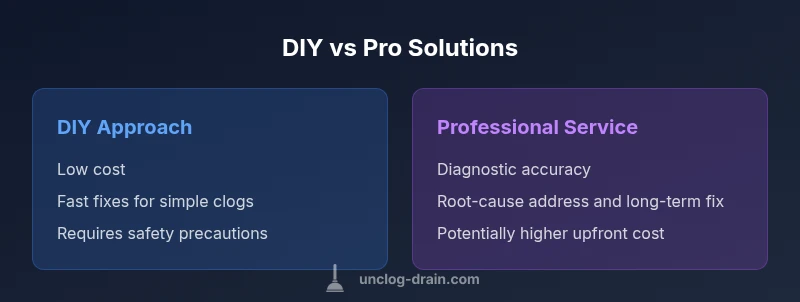
Use this quick framework to decide when to DIY and when to call a pro. Start with safe DIY steps for minor clogs; if the obstruction persists across fixtures, involves the main sewer line, or you suspect roots, schedule a professional assessment. Consider the age of your pipes, the presence of any leaks, and the potential health risks before proceeding. This framework balances cost, risk, and outcome to help you choose the right path for clog vs block scenarios. Always prioritize safety and avoid shortcuts that could lead to bigger problems.
Real-world scenarios: kitchens vs bathrooms and shared drains
In kitchens, grease-buildup clogs may form slowly and respond to mechanical methods; in bathrooms, hair often creates partial clogs that can escalate to blocks if not addressed. Shared drains—such as a main line for a condo or a multi-unit house—require careful coordination, and delays can affect multiple fixtures. Understanding typical patterns helps homeowners anticipate problems and apply targeted strategies before the issue becomes a block rather than a clog. Close attention to drainage habits and seasonal changes further reduces risk.
Comparison
| Feature | DIY Approach | Professional Service |
|---|---|---|
| Typical cost range | Low to moderate (plunger, snake, safe cleaners) | Moderate to high (diagnosis, camera inspection, potential repairs) |
| Turnaround time | Same-day relief for simple clogs | 1-3 days depending on scope and scheduling |
| Tools used | Plunger, hand auger, basic cleaners | Industrial equipment, cameras, hydro-jetting as needed |
| Best for | Fast relief for mild obstructions | Root intrusion or complex pipe issues |
| Risk to pipes | Low with proper technique | Higher if misdiagnosed or aggressive methods used |
| Long-term outcome | Temporary relief; may recur without maintenance | Addresses root causes for lasting results |
Advantages
- Low upfront cost for simple fixes
- Immediate relief with basic tools
- Good learning experience for DIY enthusiasts
- Empowers homeowners to act quickly
Weaknesses
- DIY errors can worsen blockages
- Temporary fixes may recur without maintenance
- Root causes or pipe damage often require a pro
DIY fixes cover most clogs; call a pro for persistent blocks or complex root causes.
The Unclog Drain team recommends starting with safe DIY methods for simple clogs and escalating to professional help for persistent blocks or complex root causes, ensuring a durable solution.
Common Questions
What is the difference between a clog and a block in plumbing?
A clog and a block describe the same obstruction, with a clog typically being partial and a block representing a near or complete stoppage. Diagnosis and remedies follow the same general path—start with safe DIY methods and escalate if necessary. Understanding this helps you choose effective approaches without overreacting.
Clogs and blocks are similar problems. Start with safe DIY steps, then call a pro if it doesn't clear or if the issue affects multiple fixtures.
Can a kitchen sink clog turn into a bathroom block?
Yes, a partial clog in one drain can migrate toward a larger blockage if debris accumulates or if pressure is repeatedly applied. Regular maintenance and addressing clogs early reduce the risk of a full block spreading to other fixtures.
A small kitchen clog can become a bigger block if ignored; address it early to prevent spreading.
What are the safest DIY methods for minor clogs?
Begin with a well-sealed plunger and proper technique. If that fails, use a hand auger carefully to break up hair or buildup. Avoid caustic cleaners and never mix with other chemicals.
Try a plunger first, then a hand auger if needed; avoid harsh chemicals.
How can I prevent clogs and blocks in the future?
Install drain screens, dispose of grease properly, run hot water after cleaning, and inspect traps regularly. Routine maintenance and mindful disposal are the best defenses against clog vs block.
Use screens, skip grease down the sink, and check traps regularly.
When should I call a plumber for a clog or block?
If multiple fixtures are affected, backups persist after DIY attempts, or you suspect root intrusion or pipe damage, call a licensed plumber for a professional diagnosis and treatment.
Call a plumber if several fixtures are affected or if you suspect roots.
Do chemical drain cleaners help with clogs or blocks?
Most chemical cleaners are not recommended for routine use; they can damage pipes and harm septic systems. Mechanical methods are safer and often more effective, with chemicals as a last resort under guidance.
Chemicals can damage pipes; use mechanical methods first and consult a pro if unsure.
Key Points
- Identify symptoms early to distinguish clog vs block
- Start with safe DIY methods before escalating
- Avoid harsh chemical cleaners that can damage pipes
- Know when professional help is necessary
- Establish a simple prevention routine