Difference Between Clogged and Blocked: A Practical Guide for Home Drainage
Explore the practical difference between clogged and blocked drains, how it affects repair steps, safety, and when to call a pro. Learn diagnostic tips, DIY fixes, and prevention to keep pipes flowing smoothly in your home.


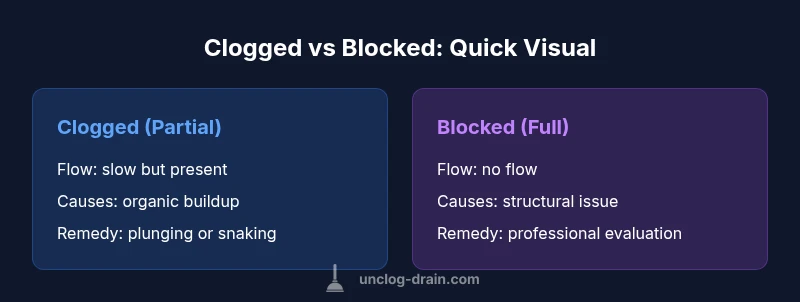
In plumbing, the difference between clogged and blocked matters for choosing fixes. A clogged drain usually means a partial obstruction with slow flow, while a blocked drain is a full or near-full stoppage. Recognizing this helps you pick safer, faster remedies and avoid overdoing chemical cleaners. According to Unclog Drain, accurate diagnosis saves time and protects pipes.
Difference between clogged and blocked: what it means in practice
In everyday home plumbing, many homeowners use the terms clogged and blocked interchangeably, but the two conditions describe different states of flow. The practical difference matters because it guides the choice of solution and the speed at which you can regain full function. A clogged drain is typically a partial obstruction where water still moves, perhaps slowly, around debris or buildup. A blocked drain, conversely, is a more complete or near-complete stoppage where little or no water can pass. This distinction matters across fixtures: a kitchen sink with a partial clog might still drain after a few seconds, while a blocked toilet may back up immediately when flushed. By recognizing the signs early, you can select the least invasive remedy and minimize the risk of damaging pipes or causing sewer gas backup. The Unclog Drain team emphasizes that careful observation—flow rate, sounds, and frequency of backups—often yields the clearest clue about which state you’re dealing with.
bold: true},
How flow is affected: water and wastewater dynamics
Flow dynamics differ markedly between a clogged and a blocked drain. A partial obstruction slows water down, creating longer drain times and potential backups under heavy use. The presence of standing water, gurgling sounds, or repeated flushes that fail to clear a fixture often signals a partial clog. In contrast, a complete or near-complete blockage stops flow entirely, causing immediate backups or overflows in sinks and toilets. Understanding these dynamics helps you tailor remedies—partial clogs may respond to plunging or simple flushings, while full blocks may require professional assessment to prevent pipe damage or sewer gas intrusion. From a safety perspective, identifying whether you face a partial vs. total obstruction reduces exposure to aggressive cleaners and minimizes the risk of blowing out a trap seal or forcing waste back into living spaces.
bold: true},
Common causes and materials
Clogs typically form from organic buildup: hair, soap scum, grease, shampoo residues, and mineral deposits. In kitchen sinks, food particles and fats can bind with soap to form a stubborn mass. Toilets often clog from toilet paper, wipes labeled flushable (even if marketed that way), or children’s toys. Blocks emerge from more severe or sudden events: collapsed pipes, broken sewer lines, or a heavy influx of solid waste during storms. Each fixture has its own common culprits: hair and fibers dominate bathroom drains; grease and food scraps clog kitchen lines; objects or tree roots may block sewer laterals. Recognizing the material type informs the best strategy—partial organic clogs often respond to mechanical methods, while inorganic or structural blocks may require professional intervention to avoid pipe damage.
bold: true},
Diagnosis: how to tell if it's clogged or blocked
Diagnosis begins with simple tests and careful observation. Look for flow rate: does water drain slowly but eventually clear (likely a clog) or does it back up immediately with any attempt to drain (likely a block)? Listen for sounds: gurgling or air pockets signal partial obstructions; a hiss with a sudden surge may indicate a full blockage. Check multiple fixtures: if several drains are slow, a main line issue is likely. A visual check of accessible traps can help (but never attempt to peek into sewer lines without proper equipment). If the issue persists across fixtures or you observe repeated backups, it’s wise to assume a block rather than a simple clog. In all cases, avoid overreliance on chemical cleaners, which can worsen certain problems or damage pipes. The Unclog Drain approach emphasizes systematic observation and fixture-specific signs to determine the right remedy.
bold: true},
Impact on different fixtures: drains, toilets, sinks
Different fixtures show distinct behavior when clogged or blocked. A partially clogged sink drain might drain eventually but slowly and gurgle during use, whereas a blocked sink could hold water and fail to drain at all. Toilets are particularly sensitive: a partial clog may cause slow flushing with occasional pre-flush backups; a full blockage may lead to immediate overflows. Showers and bathtubs can reveal lurking root causes or debris accumulation in the trap or pipe line, leading to slow drainage or sudden stoppage. Main sewer lines affected by a block can cause widespread backups across multiple fixtures. Understanding fixture-specific symptoms helps homeowners apply targeted remedies—plunging for minor, localized clogs; professional inspection for suspected mainline blocks.
bold: true},
Safety considerations when dealing with clogs and blocks
Safety comes first when dealing with drains. Wear gloves and eye protection to guard against splashes, especially when working with chemical cleaners or when dislodging debris. Never mix chemical drain cleaners with other cleaners or with bleach—dangerous fumes can result. Ventilate the area well, especially in closed bathrooms or kitchens. If you suspect a main sewer block or overflowing sewage, evacuate the area and call a licensed plumber immediately. Avoid sending metal objects or hard tools into pipes, which can damage the plumbing or push the clog further. For DIY steps, choose non-corrosive tools and follow manufacturer instructions. When in doubt, err on the side of caution and consult professional guidance to avoid costly damage or health risks.
bold: true},
Home remedies vs professional intervention
DIY remedies work best for minor, localized clogs and partial obstructions. Simple plunging, natural cleaners (like baking soda and vinegar) can help loosen organic buildup in some cases, while hot water flushes may aid kitchen sinks with grease. Avoid aggressive chemical cleaners for main lines or unknown blockages, as they can damage seals or trigger hazardous reactions. Professional intervention becomes advisable for persistent backups, suspected mainline blocks, or if multiple fixtures are affected. A plumber may perform a camera inspection, use power augers, or employ jetting to clear pipes and assess the condition of the line. The goal is to restore proper flow with minimal risk to your system, and, importantly, to identify underlying issues that could lead to future problems.
bold: true},
Tools and techniques: plungers, augers, drain snakes
A curated set of tools helps distinguish between clogged and blocked drains. A basic plunger is effective for many shallow, localized clogs and is often the first line of defense. For tougher obstructions, an auger or snake—ranging from hand tool models to small closet augers—can break up or retract the clog without damaging pipes. For mainlines or stubborn blocks, professional equipment such as motorized augers or high-pressure jetters may be necessary. Always align your technique with the fixture and the suspected problem state; a partial clog may respond to plunging and water flushes, while a full block may require more invasive measures. Safety considerations and correct tool usage are essential to avoid pipe damage and mess.
bold: true},
Step-by-step quick fixes for minor clogs
- Start with a simple test: run warm water for a minute to gauge baseline flow. 2) Use a plunger designed for the fixture; create a tight seal and apply steady pressure with controlled motions. 3) If the plunger works, repeat a few times until the water runs freely. 4) For kitchen sinks, consider a non-caustic drain snake to loosen buildup behind the trap. 5) Flush with hot water after attempts to wash away residue. If these steps don’t restore flow within an hour, stop and assess whether a more serious clog or block is present and seek professional help. Never mix cleaners or use metal tools beyond the plunger’s reach.
bold: true},
When to move from DIY to professional help
If a DIY attempt yields only a marginal improvement or if water backs up in more than one fixture, professional assessment is warranted. Signs you should call a plumber include repeated backups after DIY attempts, a strong sewage odor, or visible pipe damage. A pro can perform camera inspection to pinpoint the exact location and cause of the blockage, assess pipe integrity, and determine whether structural repair or replacement is needed. Early professional intervention can prevent costly water damage, sewer gas exposure, and long-term disruption to your home’s plumbing system.
bold: true},
Preventative maintenance to avoid future clogs and blocks
Prevention is more effective than cure. Regularly remove visible hair and debris from drains, use mesh strainers on sink and shower outlets, and limit the amount of grease and cooking fats that enter the drain. Periodic flushing with hot water or a mild cleaning routine using baking soda and water can help reduce buildup. Schedule annual inspections of trap seals and vent pipes to prevent sewer gas from entering living spaces. If you have hard water, consider adjustments to reduce mineral buildup, and keep an eye on trees or roots near sewer lines that can cause progressive blockages over time. By adopting these practices, you minimize the risk of both clogs and blocks and keep the system running smoothly.
bold: true},
Real-world examples: case studies of clogged vs blocked scenarios
Case A involves a bathroom sink with a partial clog caused by hair and soap scum. A few sessions with a plunger and a gentle snake cleared the path, restoring normal drainage within a couple of hours without chemical cleaners. Case B discusses a blocked main line in a family home after heavy rainfall, leading to backups across bathrooms and the basement laundry area. A licensed plumber diagnosed a tree-root intrusion and performed line repair plus root management. These cases illustrate how the same problem type—drain obstruction—can present as a clog or a block, and how the approach varies accordingly. Effective maintenance afterward reduced recurrence in both scenarios.
bold: true}],
comparisonTable
prosCons
verdictBox
keyTakeaways
faqSection
mainTopicQuery
Comparison
| Feature | Clogged (partial) | Blocked (full) |
|---|---|---|
| Flow status | Partial flow; water drains slowly | No flow or near-complete stoppage |
| Typical causes | Organic buildup (hair, grease, soap), mineral deposits | Structural issues, collapsed pipe, or impacted mainline |
| Removal difficulty | Easier with plunging or snaking; often DIY | Usually requires professional intervention |
| Repair time | Short to moderate; may resolve in hours | Longer; may involve pipe repair or replacement |
| Best tools | Plunger, hand auger | Motorized auger or pipe inspection tools |
| Cost context | Low to moderate with DIY fixes | Moderate to high with professional service |
Advantages
- Helps diagnose the exact state of the drain quickly
- Reduces reliance on harsh cleaners by clarifying the problem
- Guides whether DIY or professional help is more appropriate
- Improves home safety by avoiding unsafe improvised fixes
Weaknesses
- DIY attempts can fail on deeper or mainline blocks
- Misdiagnosis may lead to inappropriate or unsafe methods
- Overuse of DIY methods can delay professional assessment when needed
- Partial fixes may mask underlying pipe issues that worsen over time
Differentiate early to choose the right fix and reduce risk
Knowing whether you face a partial clog or a full block dictates the correct approach. A partial clog is usually resolvable with DIY methods and careful diagnosis, while a full block often requires professional intervention. Clear differentiation saves time, money, and potential damage to your plumbing system.
Common Questions
What is the practical difference between a clogged drain and a blocked drain?
A clogged drain usually means a partial obstruction with slower water flow, while a blocked drain indicates a full or near-full stoppage with little to no flow. Recognizing this distinction guides the most effective fix and minimizes risk.
A clogged drain flows slowly; a blocked drain stops flow altogether. Start with the partial clog remedy before moving to more involved solutions.
How can I tell if my drain is clogged or blocked without professional tools?
Observe flow rate, listen for gurgling, and check multiple fixtures. If several drains are slow, or if water backs up immediately, you’re likely dealing with a block. If only one fixture drains slowly, you may have a clog.
Watch how fast water drains and listen for unusual sounds—these clues help you decide on a DIY step or a plumber call.
Do chemical drain cleaners work for blocked drains?
Chemical cleaners can help some organic clogs but are often ineffective for structural blocks and can damage pipes, seals, or septic systems if misused. For suspected mainline blocks or repeated backups, professionals use safer, more effective methods.
Chemicals aren’t a guaranteed fix for blocks and can cause damage if misused.
When should I call a plumber for a clogged or blocked drain?
Call a plumber if a DIY fix doesn’t restore flow, if backups occur in multiple fixtures, or if you suspect a mainline block or structural pipe issue. Early professional input can prevent costly damage.
If DIY fixes don’t work or if the problem recurs, get a pro involved.
Can prevention reduce both clogs and blocks?
Yes. Regular maintenance, strainers, proper disposal practices, and periodic flushing with hot water can reduce buildup and prevent major failures, keeping drains flowing smoothly over time.
Prevention is cheaper and easier than repair, so adopt good habits now.
Key Points
- Diagnose first: partial clog vs full block changes the remedy
- Avoid chemical overuse; target the actual obstruction
- DIY fixes work for minor clogs but watch for warning signs
- Call a pro for mainline issues or persistent backups
- Regular prevention reduces future clogging risks