Can Hot Water and Vinegar Unclog a Drain? A Practical DIY Guide
Learn whether hot water and vinegar can unclog a drain, when to try it, and safe steps for mild clogs. Unclog Drain explains limits, best practices, and alternatives for stubborn blockages.


Question: can hot water and vinegar to unclog drain work? In many cases, they help loosen minor clogs and residue in sinks or showers, but they won’t fix deep or solid blockages. This method is safest when used with care and proper temperatures. Start with boiling water, add white vinegar, then flush with hot water and observe results.
Can this method help at all? A quick reality check
The question can hot water and vinegar to unclog drain ever work? In many households, this duo helps loosen light buildup like soap scum or mineral deposits, especially in traps or straight runs of PVC pipes. However, it is not a magic cure for everything. If your drain is completely blocked or makes gurgling sounds, you should stop and consider mechanical methods or a professional assessment. We’ll cover when to try the approach, and how to do it safely, with guidance from Unclog Drain to keep your home running smoothly.
How the chemistry plays a role in drain care
Hot water softens and helps flush light deposits from pipes. Vinegar brings acetic acid into the mix, which can assist in dissolving mineral buildup and minor organic residue. Together, they can loosen stuck materials enough to improve flow in some situations. It’s important to know that vinegar is a relatively mild acid compared to commercial cleaners, so it’s unlikely to clear serious clogs formed by solid objects, hair, or grease.
When to attempt this method safely in practice
Before you start, confirm the pipe material and local code guidance. PVC and many plastic components tolerate hot water well, but repeated exposure to very high temperatures can stress older metal piping connections. This method is best for routine maintenance or fresh, light blockages near the trap. Avoid mixing vinegar with bleach or other cleaners, as harmful gases can form and damage pipes.
A practical plan for mild, non-grease clogs
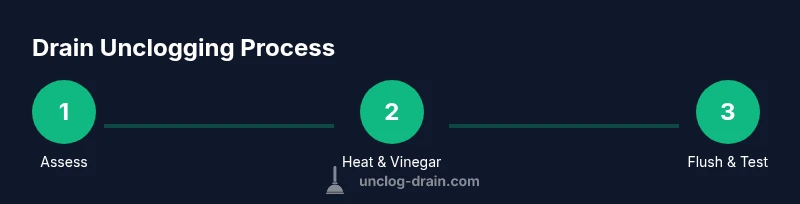
To begin, boil a pot of water. Then pour a cup of white vinegar slowly into the drain and let it sit for 5–10 minutes to interact with residues. Finally, flush with the boiling water again to push loosened material through the trap and towards the main line. If the drain clears, run hot water for an additional 1–2 minutes to ensure no residue remains. If flow doesn’t improve, move to mechanical methods.
Common mistakes that reduce effectiveness and safety risks
Do not mix vinegar with bleach or other cleaners. Avoid using vinegar for long or repeated high-heat exposure on metal pipes that may be corroded. Don’t rely on this method for grease-clogged drains or toilets, where specialized tools or professional help are usually required. Always work slowly and monitor for unusual smells or backflow.
Alternatives and signals to stop and reassess
If you notice a strong odor, unusual noises, or a drain that never clears after a few attempts, stop and switch to a plunger, auger, or call a plumber. For persistent problems, consider mechanical clearing tools, enzyme-based cleaners designed for septic systems, or professional inspection. Regular maintenance is often the best defense against future clogs.
Quick maintenance ideas to prevent future clogs
Run hot water with a splash of mild dish soap after each use to minimize residue buildup. Use a drain screen to catch hair and solids. Clean the trap periodically and address standing water quickly. When in doubt, schedule a small preventative check to keep drains flowing freely and avoid emergency calls.
Tools & Materials
- Boiling water(Have a kettle or stove-ready pot; handle with care)
- White vinegar(Typically 5–8% acidity)
- Measuring cup(To measure vinegar accurately)
- Cooking pot or kettle(For boiling water safely)
- Drain cover or stopper(Optional to contain splashes)
- Gloves(Protect hands when handling hot water)
- Dish soap (optional)(Add a small amount to help break up grease)
Steps
Estimated time: 40-60 minutes
- 1
Inspect the drain area
Visually inspect for obvious blockages and test drain flow. If water backs up quickly, proceed carefully and consider a mechanical approach instead of chemical or heat methods.
Tip: Safety first: wear gloves and keep kids/pets away from drains during the process. - 2
Boil water
Bring a liter or more of water to a full boil. The hot water helps loosen residues and starts the flushing process.
Tip: Avoid pouring boiling water directly into very cold PVC pipes; do so gradually if needed. - 3
Add vinegar to the drain
Pour about 1 cup of white vinegar into the drain. The acetic acid can soften mineral buildup and organic residue.
Tip: Pour slowly to minimize splashing and avoid splattering on yourself. - 4
Let it sit
Allow the vinegar solution to sit for 5–10 minutes to interact with residues.
Tip: Do not rush to the next step; the dwell time improves effectiveness. - 5
Flush with hot water
Carefully pour the boiling water back into the drain to push loosened material through the system.
Tip: Pour in a steady stream; avoid creating a plume from splashes. - 6
Test the drain
Run water to see if the flow improves. If slow drainage persists, stop and switch to another method.
Tip: If necessary, repeat a shorter cycle once more; don’t overdo it in one session. - 7
Assess safety and next steps
If there’s no improvement after two cycles, avoid repeated chemical or heat attempts and consider mechanical methods.
Tip: Persistent clogs can indicate deeper issues; a professional assessment may be needed. - 8
Clean up
Rinse tools, wipe surfaces, and store materials properly. Document what worked for future maintenance.
Tip: Keep a small log of what you tried and the results for future reference.
Common Questions
Can hot water and vinegar unclog a drain safely for all pipe types?
Most PVC and plastic pipes tolerate this method when done carefully, but metal pipes can be sensitive to sudden temperature changes. If in doubt, test slowly and limit exposure.
This method is usually safe for PVC, but use caution with metal pipes and monitor the temperature.
Will this fix a grease clog or a toilet clog?
No. Grease clogs generally require mechanical tools, and toilets require plungers or augers designed for that fixture.
Grease and toilets need specialized tools—stick to plunger or auger for toilets.
Should I use baking soda and vinegar instead?
Baking soda and vinegar can create a fizzing reaction, but it’s not a stronger clearing method than plain hot water and vinegar for minor clogs.
Baking soda plus vinegar isn’t a guaranteed fix for tougher clogs.
What if the drain still drains slowly after several attempts?
Stop using the home remedy and try a mechanical approach such as a plunger or snake. If unresolved, contact a plumber.
If it stays slow after trying, switch to mechanical methods or call a pro.
Is this method good for bathroom sinks with metal traps?
Metal traps can handle hot water, but frequent exposure can accelerate wear. Inspect for corrosion and replace parts if needed.
Metal traps can work, but watch for wear and corrosion over time.
Can this be used more than once a week?
Limit repeated use in a short period; aggressive repeated cycles can irritate pipes or seals. If repeated attempts are needed, consider alternatives.
Limit repeats; if needed often, call a plumber.
Watch Video
Key Points
- Start with mild, non-bleach methods.
- Vinegar helps only light residue; not solid blockages.
- Boiling water can aid flushing but avoid damaging older pipes.
- Know when to escalate to mechanical tools or a plumber.