Which Vinegar to Unclog Drain: A DIY Guide
Discover which vinegar to unclog drain works best for light buildups, how to safely use it with baking soda, and when to call a professional. Practical tips from Unclog Drain.


For light buildups, white distilled vinegar is the practical choice to explore first, not a guaranteed cure for major clogs. The answer to which vinegar to unclog drain hinges on context: vinegar helps with odor and mild residue when used with baking soda, and it is not a substitute for mechanical clearing tools.
What this guide clarifies about which vinegar to unclog drain
When homeowners ask which vinegar to unclog drain, they’re usually seeking a quick, affordable fix for light buildup or minor slow drainage. According to Unclog Drain, plain white distilled vinegar is the most practical option for DIY drain treatments because it’s reliable, inexpensive, and widely available. Apple cider vinegar can be used, but it offers no proven advantage for clog removal over white vinegar. This guide explains when vinegar helps, which type to use, and the steps you can safely try before calling a plumber. It also covers safety considerations, how long to wait, and why a strong clog may require mechanical tools or professional service.
Understanding the limitations is essential: vinegar is an acid, not a solvent that dissolves stubborn clogs like grease and hair consistently. The most reliable approach for a blocked drain often combines mechanical methods (plunger, snake) with chemical aids for mild buildup. In this context, the vinegar you choose matters less than your method, timing, and safety. The Unclog Drain team emphasizes testing the drain after a few minutes to assess improvement and stopping if you smell strong fumes or feel unusual reactions.
How vinegar works in drain systems
Vinegar is acetic acid, a mild household acid that can help loosen mineral buildup and neutralize odors when used in small amounts. In a typical DIY treatment, it’s most effective as a supplementary aid rather than a stand-alone solution for a stubborn clog. The fizz from combining vinegar with baking soda can help dislodge light debris by creating gentle pressure changes inside the pipe. However, vinegar alone does not “dissolve” hair, grease, or soap scum at clog depth. For many homeowners, vinegar is a useful part of a broader, mechanical clearing process rather than a solo miracle cure.
White vinegar vs apple cider vinegar: which is better?
White distilled vinegar is the default choice for most drain-safe DIY tests because it is clear, inexpensive, and consistent. Apple cider vinegar has a similar acidity but a stronger aroma and color that can leave a residue in the drain cavity—something you may notice if you rely on it frequently. In practical terms, the difference in unclogging power between white vinegar and apple cider vinegar is minimal for routine, light buildups. Most households will achieve the same basic results with white vinegar, making it the preferred starting point for the question which vinegar to unclog drain.
When vinegar helps and when it doesn’t
Vinegar helps mainly with mild buildup, mineral deposits, and odor control. It is not a substitute for a clogged drain that is significantly slowed by hair, soap scum, or grease. If the drain remains slow after a single treatment, do not persist with chemical approaches alone; mechanical methods (plunger or snake) or professional tools are more likely to succeed. The Unclog Drain analysis shows many slow drains improve with a brief, well-timed vinegar soak combined with flushing, but a stubborn clog often requires a different approach. If your home uses a septic system, use vinegar sparingly and avoid upsetting the balance of beneficial bacteria.
Practical steps you can take today (before calling a plumber)
A simple, safe DIY routine can be tried on most minor clogs: start with a dry drain, avoid boiling liquids if the plumbing is plastic, and choose white vinegar as your base. Do not mix vinegar with bleach or other cleaners, as this can release hazardous fumes. Allow time for the solution to work, then flush with hot water. If you’re dealing with a toilet or a main sewer line, or if the odor becomes pronounced or you notice gurgling throughout the house, pause and seek professional help immediately.
Alternatives and complements to vinegar-based methods
Other methods that pair well with vinegar for mild buildups include using a plunger with proper seal, a hand-crank snake for minor obstructions, and safe enzymatic cleaners designed for household drains. A cautious combination of these approaches often yields the best results without resorting to harsh chemical drain cleaners. Remember: vinegar is a tool, not a universal solution, and it works best when integrated into a broader, careful plan.
Safety first: handling, timing, and best practices
Always wear gloves and safety glasses when working with acids and cleaners. Keep children and pets away, work in a well-ventilated area, and avoid pouring vinegar into hot water if you’re unsure about the pipe material. Never mix vinegar with chlorine bleach, as that creates toxic chlorine gas. For most minor clogs, a 15-minute waiting period before flushing with hot water is enough to observe improvement. If you don’t see progress after multiple attempts, don’t force it—move to mechanical methods or call a professional.
Prevention: how to keep drains clear between fixes
To minimize future clogs, run hot water down the drain after each use, use a drain screen to catch debris, and avoid pouring grease or fibrous materials down the sink. Periodic maintenance with a small amount of baking soda and water can help curb buildup. If you have a history of slow draining, consider a routine with enzyme-based cleaners that are drain-safe and septic-safe, combined with regular physical cleaning of the P-trap under sinks.
Final notes and next steps
If the clog persists after safe vinegar-based attempts, you should escalate to higher-level tools or a professional service. The Unclog Drain team recommends keeping a simple toolkit handy—plunger, a drain snake, a bucket, and a mild enzymatic cleaner—to address many everyday clogs quickly. While vinegar has its place in light maintenance, more serious blockages require a plan that includes mechanical clearing or professional assessment.
Tools & Materials
- White distilled vinegar(5% acetic acid typical; use plain, undiluted; do not mix with bleach)
- Apple cider vinegar(Optional alternative; similar acidity but may leave aroma residue)
- Baking soda(Sodium bicarbonate; 1/2 cup is common for a standard DIY treatment)
- Plunger (cup plunger with flange)(Ensure a good seal; use for initial clearing attempts)
- Bucket(Catch spills; helps keep the work area dry)
- Measuring cup(Accurate amounts help maintain fizz control)
- Boiling water(Use safely; only after most fizzing steps to flush debris)
- Gloves(Protect hands from splashes and fumes)
- Safety goggles(Optional, adds eye protection during fizzing steps)
Steps
Estimated time: 30-60 minutes total
- 1
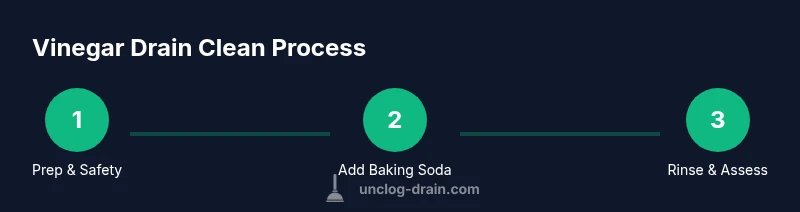
Prepare area and safety
Clear the area around the drain, remove standing water into a bucket, and put on gloves and goggles. This reduces splash exposure and keeps your workspace tidy. If you’re working under a sink, place towels to catch any accidental spills.
Tip: Set a timer so you don’t forget about sitting time; this helps maximize effectiveness. - 2
Add baking soda to the drain
Pour 1/2 cup baking soda directly into the drain to create a base for the fizzing reaction. The baking soda prepares the pipe to receive the acid and helps loosen buildup around the blockage.
Tip: For wider drains, you can use a larger 3/4 cup amount, but start conservative to avoid a messy spill. - 3
Pour vinegar into the drain
Slowly pour 1 cup white distilled vinegar into the drain and cover with a stopper or cloth to contain the fizz. The vinegar reacts with baking soda, creating bubbles that can help lift light debris.
Tip: Avoid pouring boiling vinegar or hot vinegar directly onto PVC joints; wait until the fizz settles before flushing with hot water. - 4
Let the fizz work
Allow the mixture to sit for 10–15 minutes while you tidy the area. Do not hurry the process; the reaction needs time to lift clog contents off the pipe walls.
Tip: Limit the wait time if you smell strong fumes—ventilate the area and stop if irritation occurs. - 5
Flush with hot water
Boil water and slowly pour it down the drain to flush loosened debris away. Hot water helps dissolve and carry away the loosened material.
Tip: If you don’t have boiling water handy, use very hot tap water and repeat once if needed. - 6
Assess and decide next steps
Run the faucet or tub to see if the water drains normally. If the drain remains sluggish, repeat with caution or switch to a mechanical method like a plumber’s snake before seeking professional help.
Tip: Never force the drain beyond its resistance; continuing beyond your capacity can cause pipe damage.
Common Questions
Can vinegar really unclog a drain by itself?
Vinegar alone can help with minor buildup and odor, but it rarely clears a stubborn clog. For most clogs, combine vinegar with baking soda and use mechanical methods if needed. If there’s no improvement after a couple of attempts, move to more robust cleaning methods.
Vinegar alone helps with light buildup, but it usually isn’t enough for a stubborn clog. If it doesn’t improve after a couple of tries, consider other methods or professional help.
Which vinegar should I buy for clog relief?
White distilled vinegar is the most common and reliable option for DIY drain treatments. Apple cider vinegar can be used as an alternative, but it does not provide a clear advantage for unclogging compared to white vinegar.
White distilled vinegar is the go-to for clog relief; apple cider is fine too but not superior for unclogging.
Is it safe to mix vinegar with baking soda for drains?
Mixing vinegar with baking soda creates a fizzing reaction that can help loosen some debris. It’s safe when done in small, controlled amounts and not with other cleaners, but it shouldn’t be relied on for deep or persistent clogs.
Yes, baking soda and vinegar fizz but don’t expect it to solve heavy clogs. Use it as a light maintenance step.
When should I call a plumber?
If the clog recurs after DIY attempts, involves the toilet or main sewer line, or you notice bad odors or wet spots in unexpected areas, it’s time to call a professional. Persistent clogs may require specialized tools.
If DIY attempts don’t fix it or you suspect a main sewer issue, call a plumber.
Does this method work on toilet clogs?
Toilet clogs are often more challenging and may require a plunger designed for toilets or professional service. A mild vinegar and baking soda treatment can help with minor toilet bowl buildup, but do not rely on it for a full blockage.
For toilets, a dedicated toilet plunger or professional help is usually needed; vinegar may assist only with minor buildup.
Watch Video
Key Points
- Vinegar helps with light buildup, not major clogs.
- White distilled vinegar is typically the best starting option.
- Combine baking soda with vinegar for fizzing action, not guaranteed unclogging power.
- Rinse with hot water after treatment to clear residue.
- If the clog persists, The Unclog Drain team recommends consulting a professional.